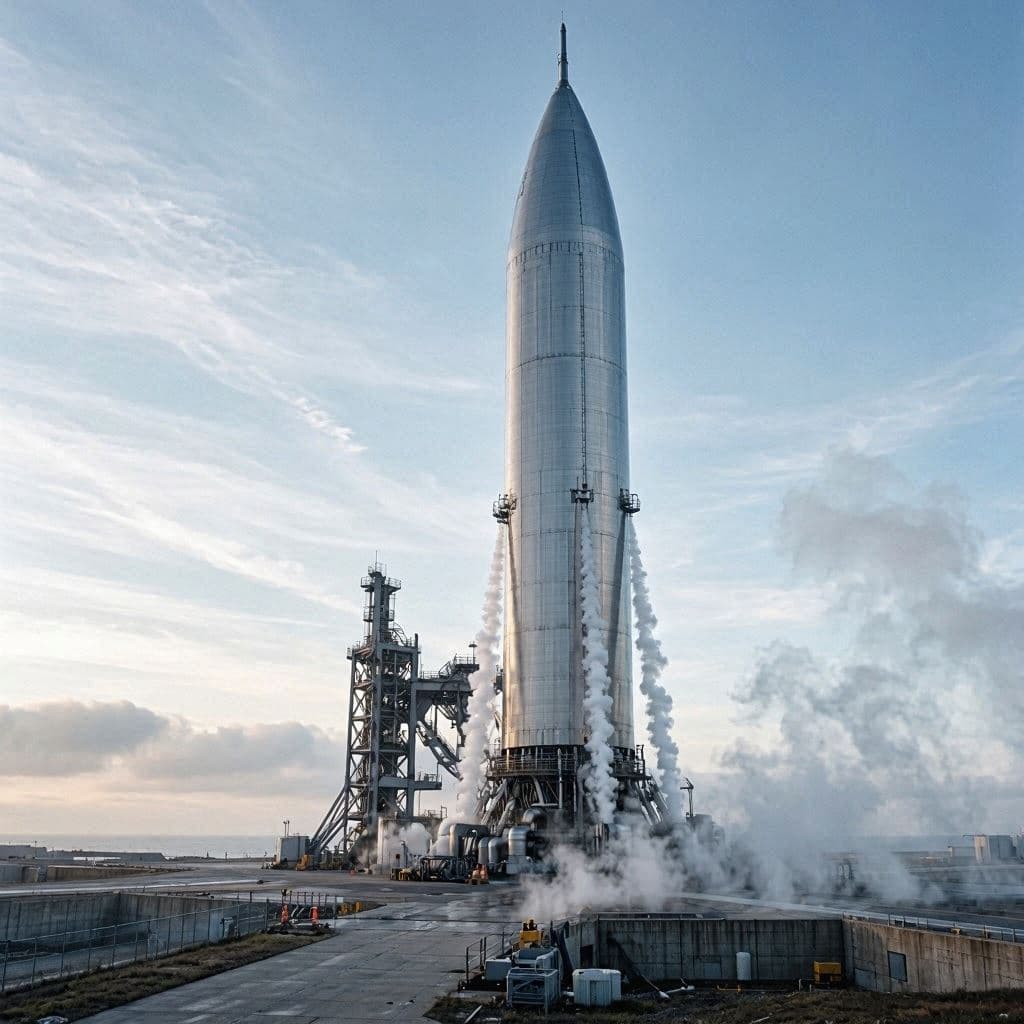
On the coastal plains of Texas, the air hums with anticipation. SpaceX’s Starship, the largest rocket ever built, stands poised for another attempt at reaching orbit. Flight 13 represents the next step in a rapid iterative process that has redefined space exploration. With the vehicle ready for launch today, engineers and enthusiasts alike watch closely, knowing that each test brings humanity closer to its goal of becoming a multi-planetary species. This moment is not just about engineering; it is about the relentless pursuit of the impossible.
Body: Starship is designed to be fully reusable, a feature that could drastically reduce the cost of space travel. Previous flights have tested various aspects of its performance, from liftoff to landing. Some have ended in explosive failures, but each provides valuable data. Flight 13 builds on these lessons, incorporating improvements to the heat shield, engines, and flight software. The goal is to achieve a successful orbital insertion and, ideally, a controlled splashdown or landing.
The launch window is determined by a complex array of factors, including weather conditions and range safety. Today’s update confirms that the vehicle is fueled and systems are green. The Raptor engines, powerful and intricate, are ready to ignite. For the team at SpaceX, this is the culmination of weeks of preparation and analysis. The tension is palpable, mixed with the confidence born of experience.
Public interest in Starship remains high. Live streams attract millions of viewers, turning technical tests into shared global events. People are drawn to the spectacle of the rocket’s size and the ambition of its mission. It represents a tangible link to the future, inspiring a new generation of scientists and engineers. The visibility of the program democratizes space exploration, making it accessible to all.
Beyond the spectacle, the technical stakes are high. Success in Flight 13 would validate key technologies needed for future missions to the Moon and Mars. It would demonstrate that the Super Heavy booster can reliably return to the launch site and that the Starship upper stage can survive reentry. These milestones are critical for NASA’s Artemis program, which relies on Starship for lunar landings.
Challenges remain. The heat shield, composed of thousands of tiles, must withstand extreme temperatures during reentry. Any failure could result in the loss of the vehicle. Engineers monitor telemetry data in real-time, ready to make adjustments if necessary. The margin for error is slim, but the potential reward is immense.
As the countdown proceeds, the focus shifts to execution. Every second counts. The launch is a testament to human ingenuity and the desire to explore. Whether it succeeds or fails, it contributes to the collective knowledge of how to master the skies.
Closing: With Starship ready for Flight 13, the world watches with bated breath. The launch is a reminder of our capacity to dream big and build boldly. As the engines roar to life, we are reminded that the journey to the stars is made one flight at a time.
AI Image Disclaimer: Images included here are AI-generated conceptual illustrations of rockets and launch pads, designed to visualize the themes of space exploration and engineering.
Sources: SpaceX Official Website NASA Spaceflight Blog Ars Technica SpaceNews
Published by Banx Network. This article is part of the Banx decentralized media programme, powered by the BXE token on the XRP Ledger.