Mars is a world defined by absence. Its dry riverbeds and ancient lake basins speak of a wetter past, a time when water flowed freely across its red surface. But where did that water go? To answer this enduring question, scientists are turning to sophisticated analytical tools that can read the chemical memories locked within Martian rocks. By employing Raman spectroscopy and X-ray fluorescence, researchers are piecing together the narrative of Mars’ lost water, transforming silent stones into storytellers of a vanished hydrological cycle.
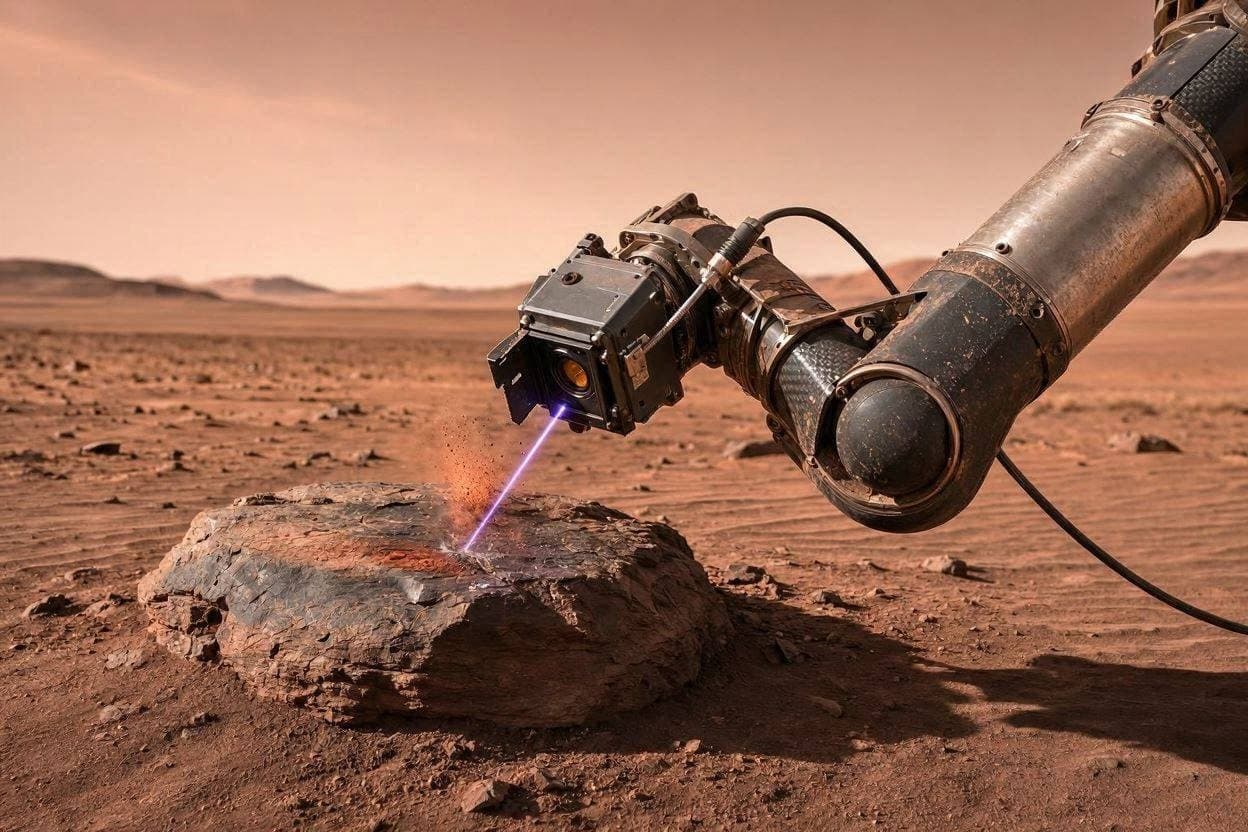
Body: Raman spectroscopy works by shining a laser on a sample and measuring the scattered light, which provides a unique fingerprint of molecular vibrations. This technique allows scientists to identify specific minerals and compounds without destroying the sample. On Mars, instruments like the SuperCam on the Perseverance rover use this method to detect hydrated minerals—those that contain water within their crystal structure. These minerals serve as direct evidence of past aqueous environments.
Complementing this is X-ray fluorescence (XRF), which bombards a sample with X-rays to determine its elemental composition. By identifying elements such as sulfur, chlorine, and iron, XRF helps reconstruct the chemical conditions of ancient waters. Was the water acidic or neutral? Was it salty or fresh? These details are crucial for understanding whether Mars could have once supported life. Together, these techniques offer a comprehensive view of the planet’s geochemical history.
Recent analyses of rocks in Jezero Crater have revealed a complex history of water interaction. Some samples show signs of prolonged exposure to liquid water, while others indicate rapid evaporation. This variability suggests that Mars’ climate was not uniformly wet but experienced fluctuating periods of humidity and aridity. Such nuances are critical for building accurate climate models of the early solar system.
The data collected by these instruments is also helping to identify potential biosignatures. While no definitive evidence of life has been found, the presence of certain organic molecules in association with hydrated minerals raises intriguing possibilities. By mapping the distribution of these compounds, scientists can prioritize samples for future return missions, where they can be studied in greater detail on Earth.
The technological synergy between Raman and XRF represents a leap forward in planetary exploration. These non-destructive methods allow for real-time analysis, enabling rovers to make informed decisions about where to drill and what to collect. This autonomy is essential in an environment where communication delays make remote control impractical.
Beyond Mars, these techniques have broader applications. They are being adapted for use in other extreme environments on Earth, such as deep-sea vents and polar ice cores. The knowledge gained from Mars enriches our understanding of planetary evolution everywhere, highlighting the universal principles that govern water and rock interactions.
Closing: As we decode the chemical signatures of Martian rocks, the story of its lost water becomes clearer. It is a tale of change, loss, and resilience. Through the lens of advanced spectroscopy, we see not just a dead planet, but a world that once held the promise of life, waiting for us to listen.
AI Image Disclaimer: Visuals in this article are AI-generated representations of scientific instruments and Martian landscapes, intended to illustrate the concepts of spectroscopy and planetary analysis.
Sources: NASA Mars Exploration Program Journal of Geophysical Research Science Daily Caltech News
Published by Banx Network. This article is part of the Banx decentralized media programme, powered by the BXE token on the XRP Ledger.