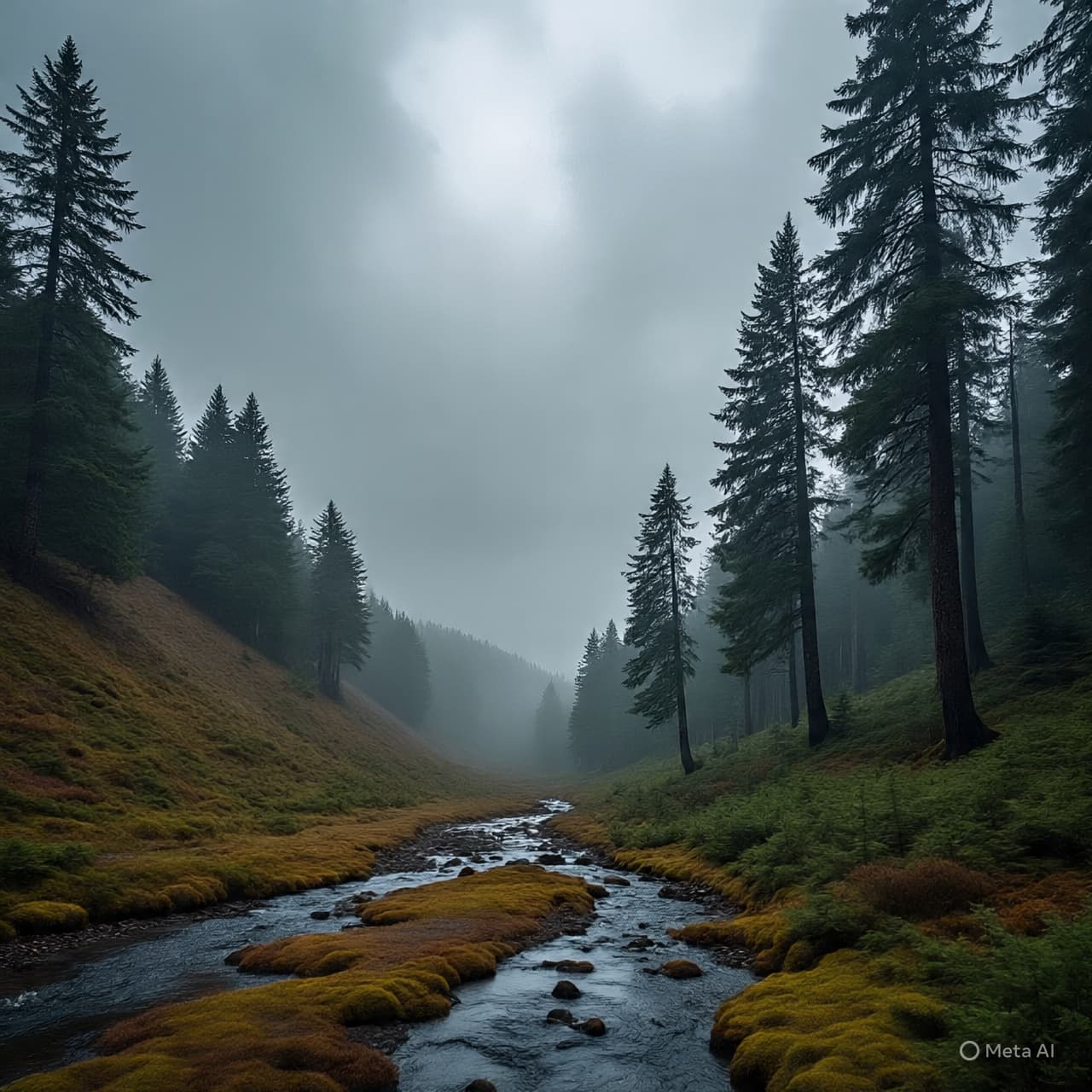
In the hush before a storm, the sky sometimes speaks in whispers — a soft promise of moisture, of change. But when those whispers gather and grow, they become a voice too powerful to ignore. In northwest Oregon, that voice has turned into heavy rain, swelling rivers, and the creeping worry of landslides — a reminder that nature’s currents move not just through the skies but through communities, valleys and hillsides alike.
The coastal ranges, foothills, and cities of northwest Oregon are now under a National Weather Service (NWS) flood watch — a signal that multiple successive atmospheric rivers (ARs) are sweeping across the region. What started as a first wave of heavy rain has already saturated soils and swollen rivers; less than days later, additional moisture pulses threaten to push water levels higher and destabilize vulnerable slopes.
For areas in the coastal mountains, the Willamette Valley, and tributary rivers, rainfall totals could accumulate to several inches — enough to send small creeks and streams over their banks, flood low-lying zones, and strain storm drains in urban zones. In steeper terrain, or places scarred by earlier wildfires, saturated soil and persistent downpours can trigger debris flows or landslides — fast, unpredictable and dangerous.
Officials warn that while the main stem of larger rivers — like the Willamette — may hold for now, smaller tributaries and coastal rivers may surge quickly. Urban flooding remains a risk too, especially where drainage infrastructure is overwhelmed. In recent years, such atmospheric-river events have accounted for significant portions of total winter precipitation in the Pacific Northwest — vital for water supply, but also a source of danger when the rain comes hard, fast, and repeatedly.
Residents are urged to stay alert: monitor forecasts, avoid travel in flood-prone or landslide-prone zones, and treat rising creeks or muddy slopes not as harmless scenery — but as warnings. As the skies pour, the ground below remembers every drop.
In the coming days, the hope is for caution to hold — for waters to recede gradually, for earth to hold firm, and for communities to weather the storm with care rather than crisis.
AI Image Disclaimer: “Visuals are created with AI tools and are not real photographs.”
Sources (media / outlet names): The Watchers; OPB; KLCC; NASA (Earth Observatory); Oregon Department of Geology & Mineral Industries / NWS.
Published by Banx Network. This article is part of the Banx decentralized media programme, powered by the BXE token on the XRP Ledger.