Electricity systems must constantly balance supply with demand. When homes, factories, and businesses need more power, the grid must respond; when generation rises beyond immediate demand, operators need ways to manage the surplus. Battery storage is becoming one tool for addressing that challenge, especially as energy systems incorporate more renewable sources whose output changes with weather and time of day.
In Romania, renewable energy producer R.Power is nearing completion of its first utility-scale battery energy storage system, known as BESS, at Scornicesti. Reports published on October 12, 2026, describe the project as a 127-megawatt installation with 254 megawatt-hours of storage capacity. The project is expected to become one of the larger battery storage assets in Central and Eastern Europe once it enters operation.
Construction began in spring 2026, according to industry reporting. Over the preceding months, the project team completed foundations and installed 46 battery units alongside 23 containerized medium-voltage transformer stations. These components form part of the infrastructure required to house the batteries and connect their output to the electrical system.
The project’s two headline figures describe different aspects of its capability. Its 127 MW rating indicates the approximate rate at which it can deliver or absorb power, while its 254 MWh capacity describes the amount of energy it can store. In simplified terms, that capacity corresponds to two hours of discharge at 127 MW under ideal conditions, although actual operation depends on system limits, efficiency, and operating strategy.
A major remaining step is connecting the installation to Romania’s high-voltage transmission network, operated by Transelectrica. The connection requires substantial engineering work and coordination with the wider grid. Industry reports indicate that connection and entry into service are expected in late 2026 or early 2027, so the project should not yet be treated as an operating storage facility.
Once operational, a battery system can absorb electricity when supply is plentiful and release it when demand or grid conditions make stored power valuable. Depending on market arrangements and technical capabilities, storage may help balance short-term fluctuations, support grid operations, and shift some electricity availability from one period to another. The precise services Scornicesti will provide will depend on its final operating arrangements.
Battery storage does not generate electricity in the way a wind farm or solar installation does. Instead, it changes when previously supplied electricity can be used. That distinction matters: the climate and energy benefits depend partly on where the charging electricity comes from, how often the battery cycles, and the efficiency of the complete system.
The project also reflects a broader change in renewable energy development. Building generation capacity is only one part of the task; transmission connections, storage, and system management can be equally important to making electricity available when consumers need it. As more variable renewable generation enters power markets, projects like Scornicesti may help provide flexibility, although batteries alone cannot resolve every challenge involving grid capacity or long-duration energy supply.
For R.Power, the installation represents a step beyond its earlier focus on solar power into large-scale energy storage. For Romania, its significance will depend on how effectively the system connects to the grid and operates under real conditions. The final measure of progress will not simply be the number of containers placed on a construction site, but whether the completed facility can reliably help electricity move through the system when it is most useful.
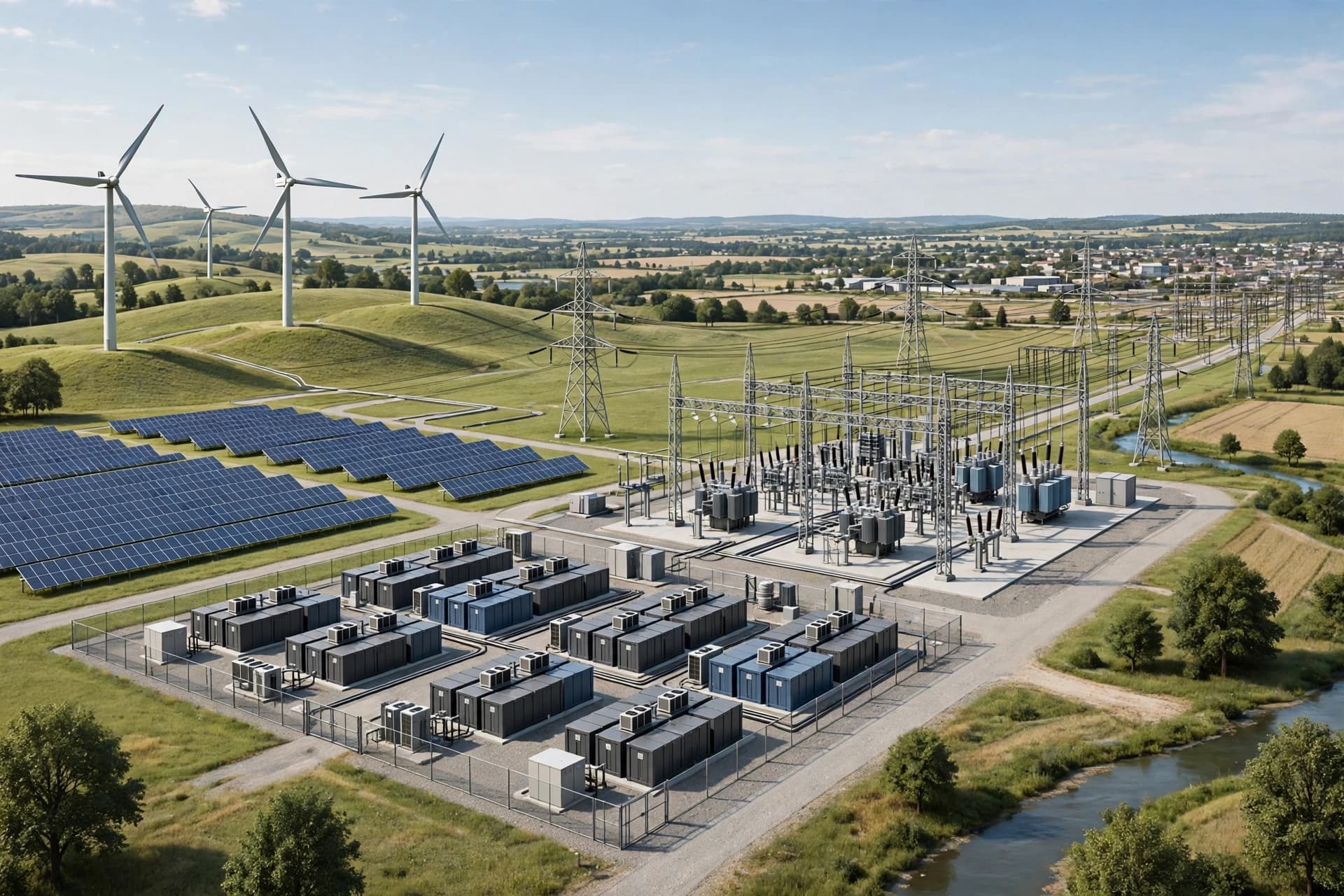
AI Image Disclaimer: Any accompanying AI-generated image is a conceptual illustration of a grid-scale battery storage facility. It does not depict the actual Scornicesti project, its equipment layout, or a verified construction photograph.
Published by Banx Network. This article is part of the Banx decentralized media programme, powered by the BXE token on the XRP Ledger.