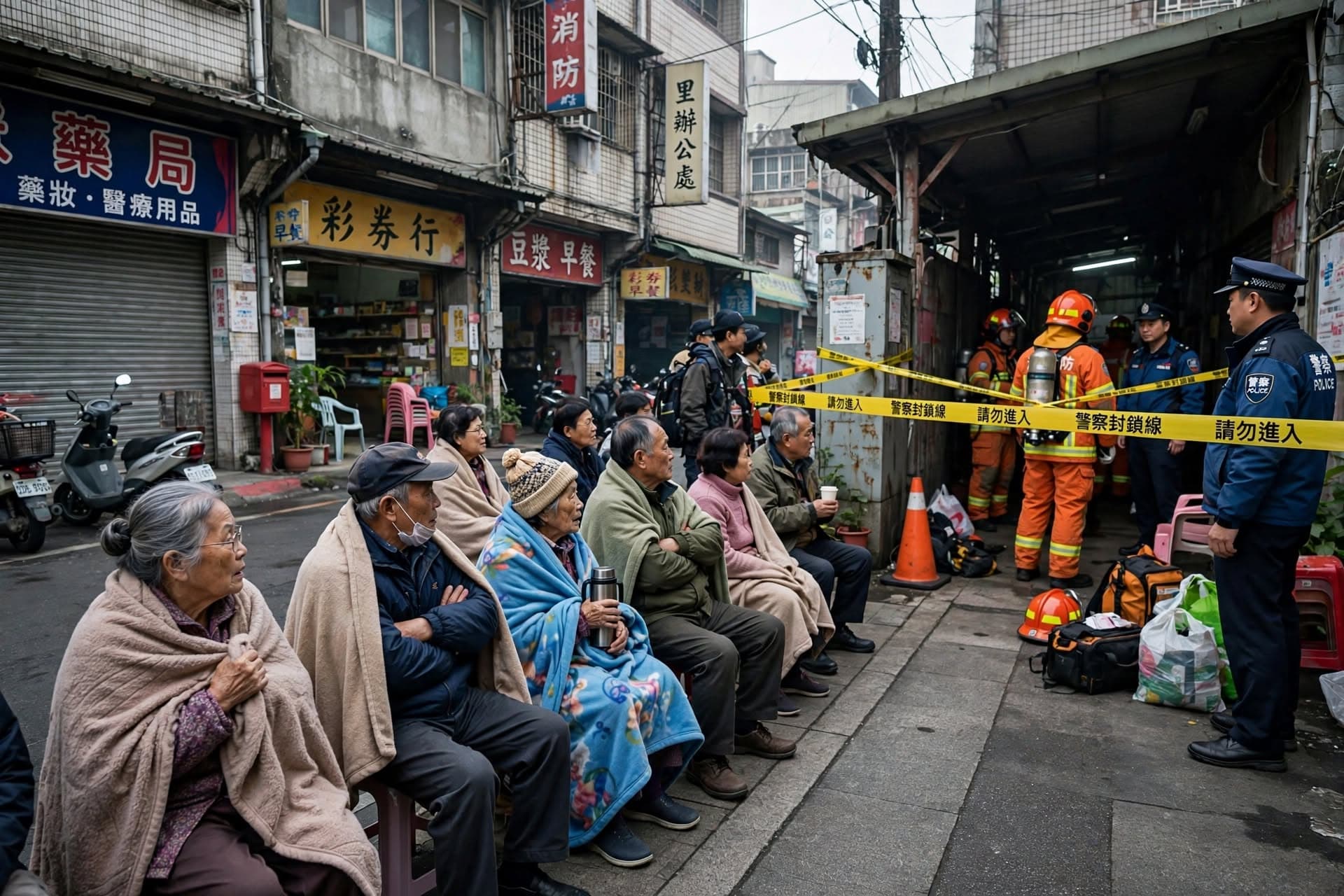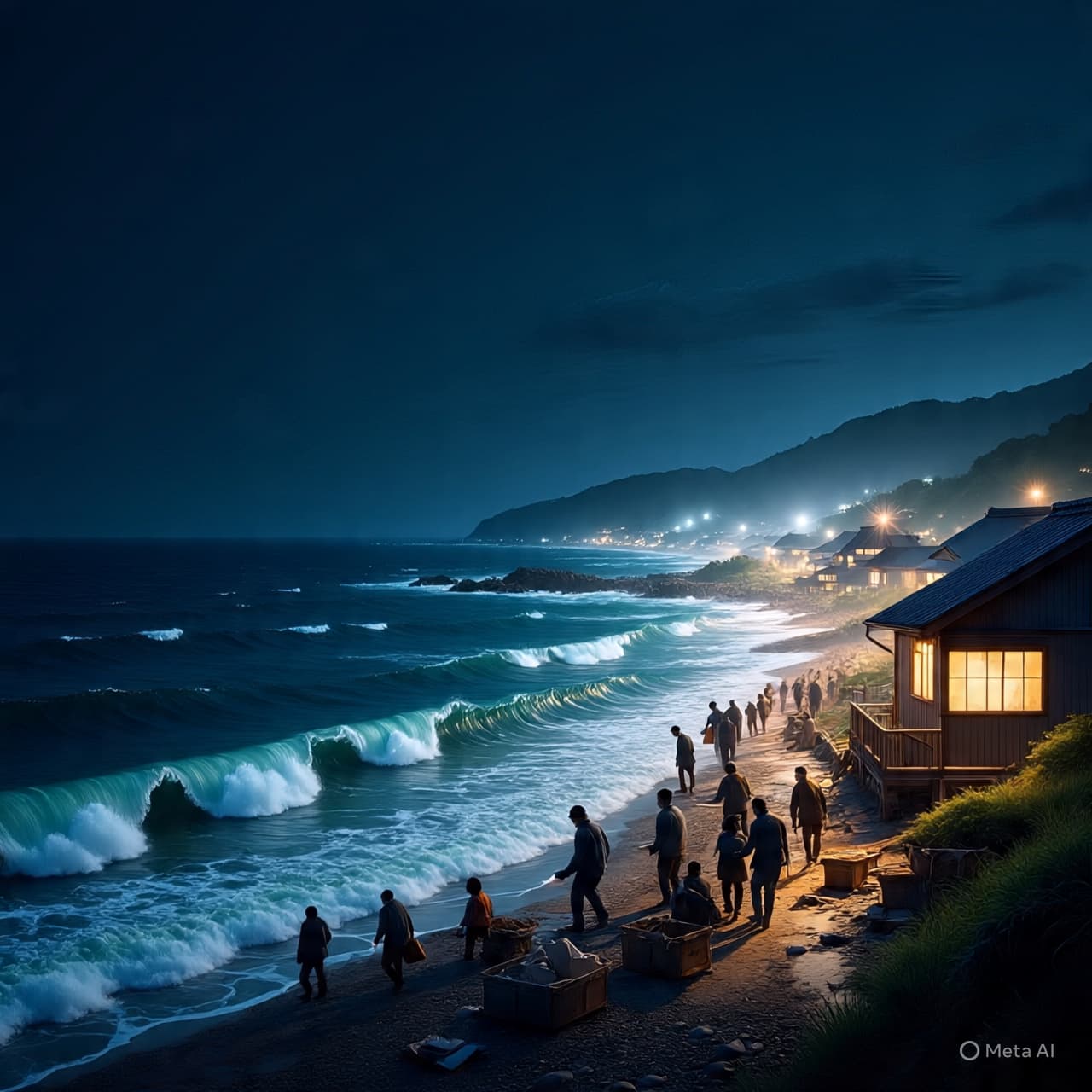
In the quiet hush of a December night, when the ocean often seems to hum a lullaby, the sea around Japan stirred with an unexpected urgency — as if the deep was whispering a warning long before breaking its silence. At 11:15 p.m. local time on December 8, the earth beneath the Pacific off northeastern Japan convulsed with a force that briefly seemed to upset the rhythm of waves and hearts alike: a quake of magnitude 7.6. What followed was a rush — of alarm, of trembling shores, of people moving to higher ground — as authorities issued a tsunami warning for the coasts of Hokkaido, Aomori, and Iwate.
In that moment, every trembling building, every shutter flickering in the wind, was a reminder that beneath calm surfaces lies a restless world. The water, heavy and expectant, seemed to hold its breath. The warning — of waves possibly reaching three meters — carried the weight of memory: an echo of past disasters, and a call to vigilance in a land that knows too well how quickly the sea can turn from gentle to merciless.
Along the northeast coast, thousands heeded the call. Roughly 90,000 people were advised to evacuate immediately. The tremor — registering “upper-6” on Japan’s seismic intensity scale in some cities — was powerful enough to unsettle furniture, crack walls, and send shock through communities already familiar with seismic stirrings.
As the hours passed, the feared towering tsunami did not fully materialize. Ports along the coast reported wave heights of 20–70 cm — sobering but far from the 3-meter surge initially feared. Injuries were reported — among them people hurt in a hotel in Hachinohe, and a car sinking into a road collapse — but as of early assessments there were no widespread fatalities or catastrophic structural collapses.
Electricity flickered out for many; rail and public transport services were suspended across the region; and the government, with steady resolve, activated emergency teams. Nuclear power plants were checked — and, as luck and engineering combined, no anomalies were detected.
In the quiet that followed — when sirens faded, and the sea returned to its deeper rhythm — there remained a mixture of relief and reflection. Nature had spoken: a trembling, a surge, a warning. Japan — shaped and hardened by earthquakes through history — once again stood alert, humbly acknowledging the power beneath its shores.
What matters now is not just the absence of disaster this time, but the reaffirmation of vigilance, preparedness, and respect for forces beyond human control. No harsh judgments. Just cautious hope — and quiet gratitude for safety, for resilience, and for another night where the sea remained water, not wrath.
AI Image Disclaimer: Visuals are created with AI tools and are not real photographs — they serve as conceptual representations.
Sources: Reuters, The Guardian, Al Jazeera, Associated Press, UPI.
Published by Banx Network. This article is part of the Banx decentralized media programme, powered by the BXE token on the XRP Ledger.