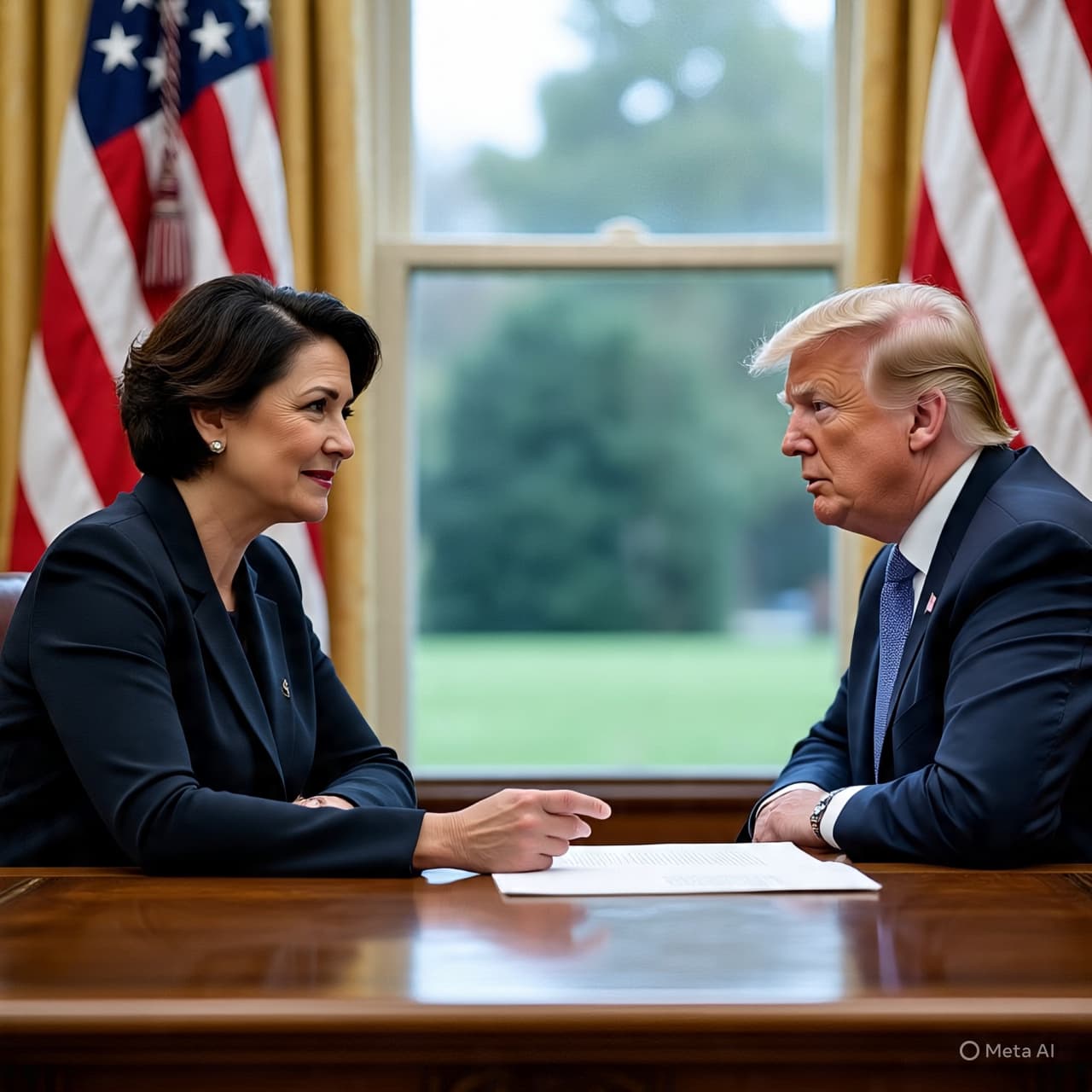
On a brisk January afternoon in Washington, a compelling moment of global politics played out at the White House. María Corina Machado, the Venezuelan opposition leader and recipient of the 2025 Nobel Peace Prize, sat across from President Donald Trump, her visit stirring international attention and raising questions about the future of Venezuela and the meaning of diplomatic symbols. In a political landscape marked by upheaval and shifting alliances, the meeting was both symbolic and strategic — a convergence of personalities shaped by recent history and contrasting ambitions.
Machado’s path to this meeting was far from conventional. Once a leading voice against authoritarian rule in her homeland, she was blocked from the 2024 presidential race yet emerged as a dominant figure in Venezuela’s struggle for democratic change. The Norwegian Nobel Committee awarded her the Peace Prize last year in recognition of her role unifying the opposition in its quest for free elections and civil liberties.
Her relationship with the United States — and with Trump in particular — has been complex. In the months leading up to her visit, Machado publicly expressed gratitude toward the U.S. for its role in the operation that led to Nicolás Maduro’s capture. In a gesture that captured headlines, she suggested she would like to share or even give her Nobel Peace Prize to Trump, framing it as a tribute to what she called a “historic” step toward Venezuela’s democratic transition. The Nobel Institute quickly clarified that such an award cannot be transferred or shared once bestowed.
Yet the offer became part of a broader narrative. Trump, who has long sought the Nobel himself, welcomed the praise but remained cautious in his support for Machado’s leadership role in Venezuela. Despite hosting her in the nation’s capital, the White House has shown a preference for working with Delcy Rodríguez, Maduro’s former vice president and the current interim leader, whom Trump described in recent remarks as “terrific” and cooperative on regional issues.
In the Oval Office meeting, discussions reportedly spanned Venezuela’s political transition, U.S. interests in Venezuelan oil resources, and the broader goal of stability in Latin America. Machado’s presence at the White House, even without a full endorsement for her as Venezuela’s leader, reflects both her international prominence and the United States’ delicate diplomatic balancing act. Meanwhile, bipartisan support from some U.S. senators suggests that her influence may endure beyond a single visit.
The scene in Washington was more than a photo opportunity; it was a reflection of the tangled interplay between recognition, realpolitik, and the aspirations of a nation emerging from years of crisis. For Machado, the Nobel remains a testament to her struggle — and her offer to share it, despite the Nobel Institute’s ruling, underscored the symbolic weight she places on alliances and acknowledgment. For Trump, the encounter offered a chance to shape perceptions of U.S. influence in the region without fully committing to a singular vision of Venezuela’s future.
In this moment of converging narratives, the visit stood as an emblem of how individual ambition, global recognition, and strategic interests can intersect on the world stage — with ramifications that stretch far beyond the walls of the White House.
AI Image Disclaimer Images in this article are AI‑generated illustrations, meant for concept only.
Sources
• ABC News
• El País
• The Guardian
• France24
• Reuters / AP News
Published by Banx Network. This article is part of the Banx decentralized media programme, powered by the BXE token on the XRP Ledger.