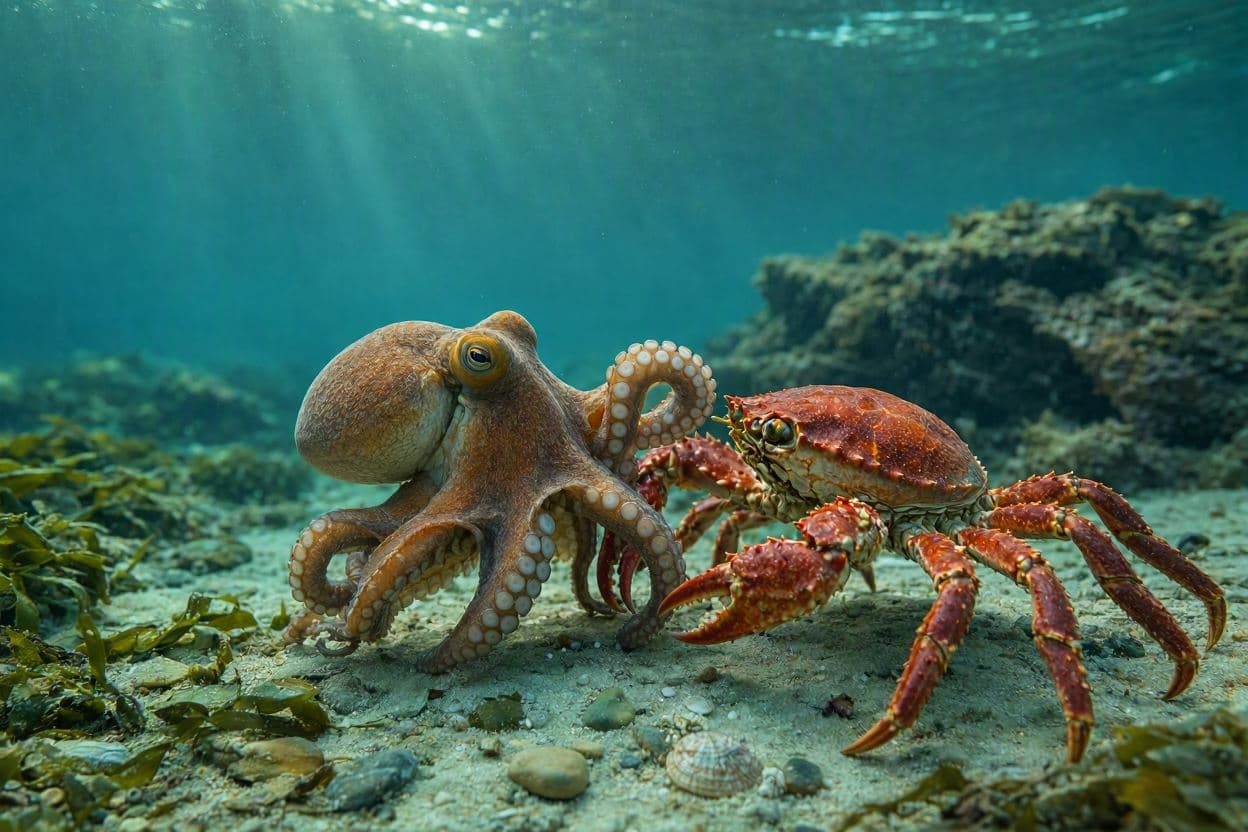
Nature is a theater of endless competition, where species vie for dominance in a delicate balance of power. In the waters off South Korea, this drama has taken a surprising turn. To combat an invasive population of red king crabs that threatens local ecosystems and fisheries, authorities have deployed an unlikely army: 130,000 octopuses. This bold biological intervention highlights the creative, if controversial, methods used to restore ecological equilibrium.
The red king crab, native to the North Pacific, has seen its population surge in Korean waters, partly due to warming seas and overfishing of its natural predators. These crabs are voracious eaters, consuming vast amounts of shellfish and disrupting the food chain. Their expansion poses a significant threat to local biodiversity and the livelihoods of fishermen who rely on native species.
Octopuses, natural predators of crabs, have been chosen as the weapon of choice in this ecological battle. By releasing a large number of these cephalopods, scientists hope to reestablish a natural check on the crab population. The octopuses are expected to hunt the crabs, reducing their numbers and allowing other marine life to recover. This approach leverages existing predator-prey dynamics rather than introducing foreign chemicals or mechanical removal methods.
The scale of the release is unprecedented. One hundred and thirty thousand octopuses represent a significant biological input, requiring careful planning and monitoring. Researchers have selected healthy specimens and released them in strategic locations where crab densities are highest. The goal is to maximize predation efficiency while minimizing stress on the octopus population itself.
Critics argue that such interventions carry risks. Introducing a large number of predators could have unintended consequences, potentially affecting other non-target species or disrupting the ecosystem in new ways. There are also concerns about the welfare of the octopuses, which are intelligent and sensitive creatures. Balancing ecological needs with ethical considerations is a complex challenge.
Supporters, however, see it as a necessary step. Traditional methods of controlling invasive species have often failed or caused collateral damage. Biological control, when done carefully, offers a more sustainable solution. The success of this experiment could provide a model for managing other invasive species around the world, offering hope for beleaguered ecosystems.
Monitoring will be key to evaluating the project’s impact. Scientists will track crab populations, octopus survival rates, and overall biodiversity changes in the affected areas. Data collected over the coming months and years will determine whether this "shell shock" tactic was effective or if adjustments are needed.
The release has been completed, and researchers are now observing the initial interactions between octopuses and crabs. The outcome will inform future conservation strategies, marking a significant chapter in the ongoing effort to protect marine biodiversity.
AI Image Disclaimer: Please be aware that any images accompanying this article are AI-generated illustrations designed to evoke the themes of marine biology and ecological balance.
Sources: BBC News The Guardian National Geographic Korea Herald Scientific American
Published by Banx Network. This article is part of the Banx decentralized media programme, powered by the BXE token on the XRP Ledger.