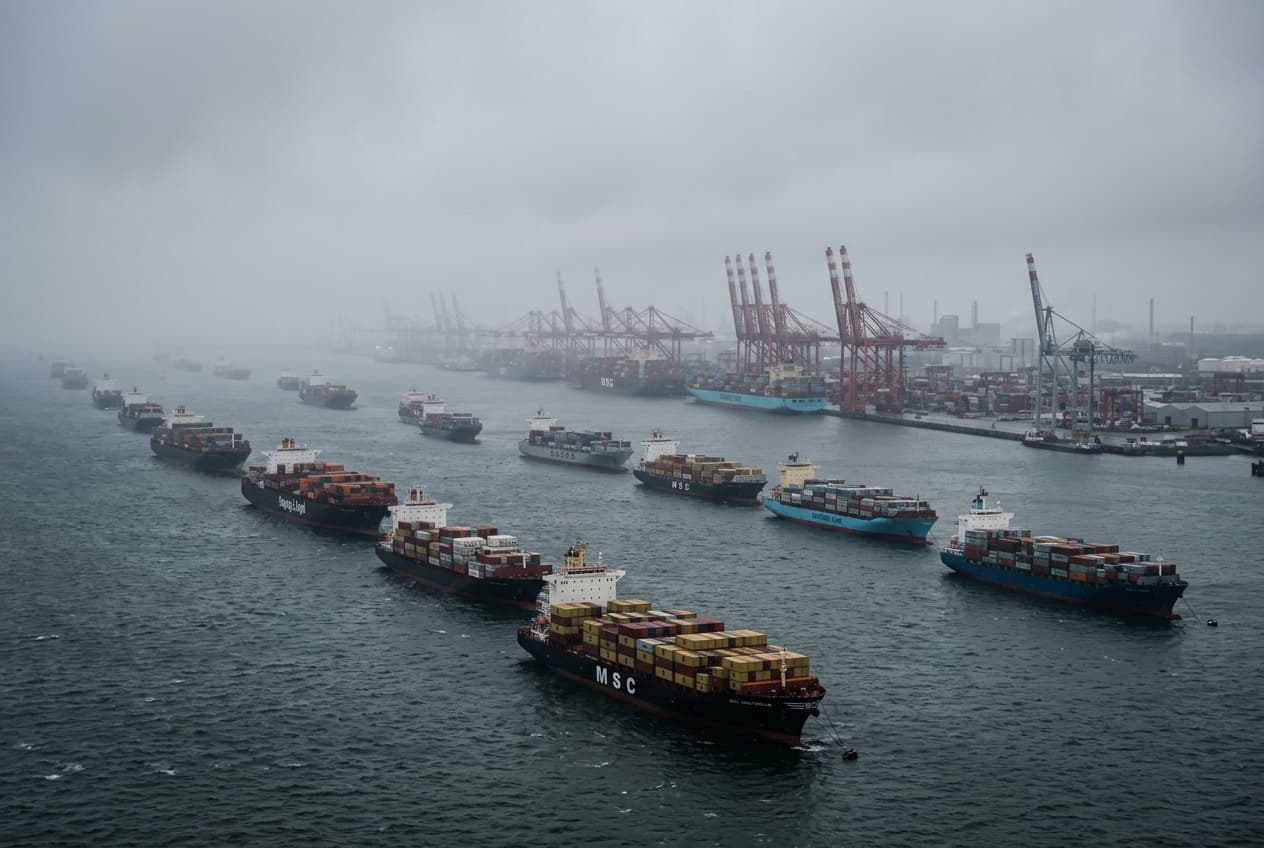
Rotterdam, Netherlands—Dockworkers walked off the job at dawn today, shutting down three major container terminals and leaving dozens of incoming cargo ships idling in the North Sea. The sudden stoppage follows six weeks of failed negotiations between union representatives and terminal operators over wage adjustments and automated crane systems. Shipping companies estimate that millions of euros in commercial freight are already stuck at sea, with no immediate resolution on the table.
Work came to a complete halt at 06:00 local time when union stewards pulled crews off the gantries. Customs inspectors and truck drivers arriving at the gates found locked access points and long queues forming along the outer perimeter roads. Port authorities scrambled emergency logistics crews to manage traffic, but freight movement inside the main logistics hub has effectively stopped. Freight handlers confirm that refrigerated containers holding perishable goods remain plugged into ground power, though power checks will stop if the picket lines hold through tomorrow morning.
Contract negotiations stalled late last night after port management refused to cap the expansion of automated loading software. Labor leaders argue the technology violates existing safety protocols and serves as a backdoor strategy to cut staff levels by thirty percent over the next two years. Management counters that automation is necessary to handle projected container volume increases over the coming decade. Neither side showed willingness to compromise when talks broke down at midnight.
Terminal operator representatives issued a brief statement calling the walkout illegal under current collective bargaining frameworks. Union leaders countered by stating that safety violations at automated berths gave workers the legal right to suspend duties immediately. Local law enforcement established a perimeter around the main gate access points, monitoring the strike lines while keeping freight lanes clear for non-port traffic. No arrests have been reported, but tensions remain high near the primary freight gates.
Dozens of container ships now sit anchored off the Dutch coast, waiting for clearance to dock. Maritime routing tracking shows at least twelve ultra-large container vessels changing course toward alternative ports in Germany and Belgium. However, logistics experts warn that neighboring ports are already operating near full capacity and cannot absorb the redirected traffic without severe delays. Logistics managers across Europe are already calculating the cascading cost to manufacturing plants relying on just-in-time delivery systems.
Warehouse managers in industrial zones nearby report that outgoing shipments are rapidly filling storage yards. Without continuous rail and truck transport out of the port terminals, regional distribution centers face operational bottlenecks within forty-eight hours. Several logistics operators have suspended new bookings for ocean freight until clear loading schedules resume. The economic impact is expected to spread across European supply networks if the docks remain inactive through the end of the week.
Government officials from the Ministry of Infrastructure held emergency meetings early this afternoon to evaluate the strike’s impact on national trade flows. While ministers urged both parties to return to the negotiating table with a mediator, the government has refrained from issuing an emergency order to force dockworkers back to work. Economic analysts note that prolonged disruption at Europe's largest port could drag quarterly trade figures down significantly.
Negotiators from both sides remain inside their respective headquarters with no formal meetings scheduled for the rest of the day. The union announced plans to hold a mass rally outside the port authority headquarters tomorrow morning. Emergency maintenance teams are currently the only personnel permitted past the gate lines to monitor hazardous cargo yards.
Published by Banx Network. This article is part of the Banx decentralized media programme, powered by the BXE token on the XRP Ledger.