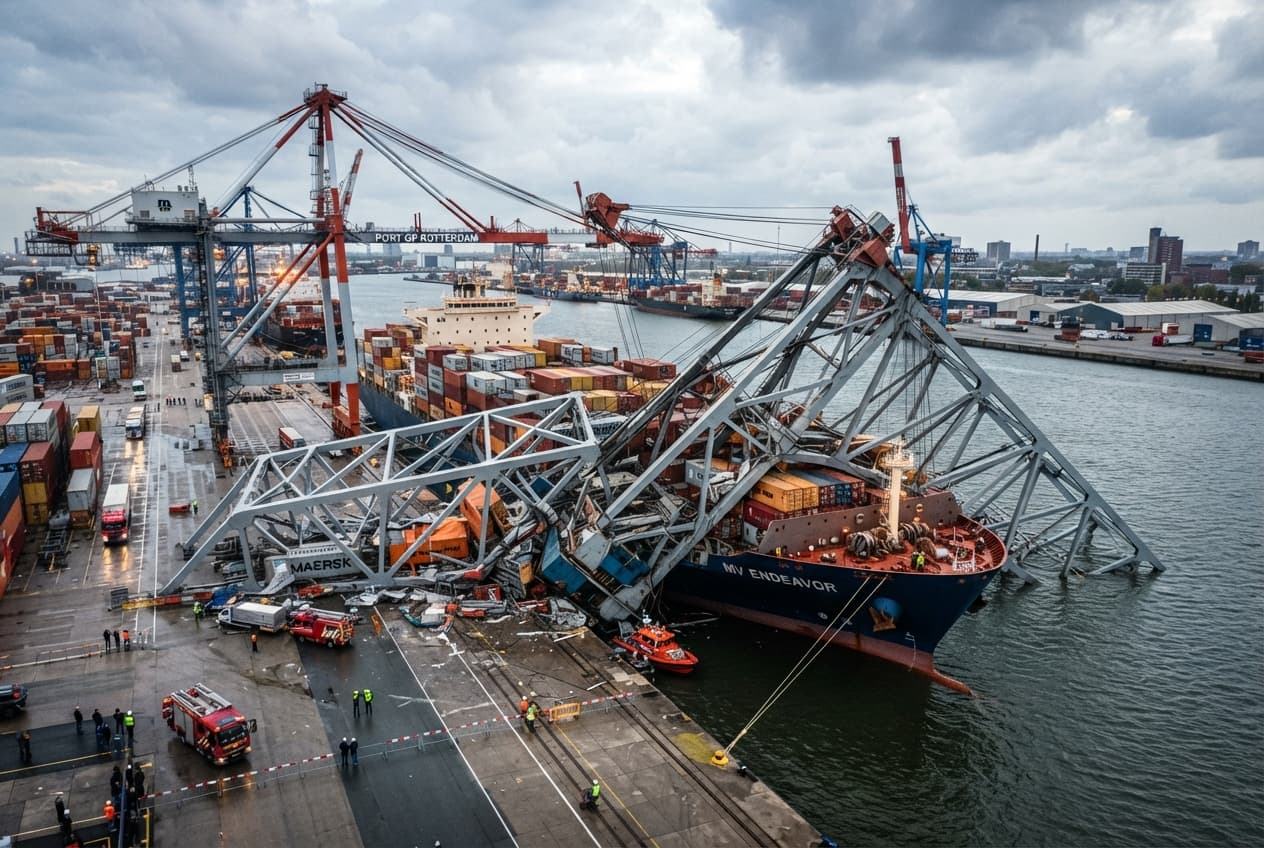
Rotterdam, Netherlands—A massive container gantry crane buckled and crashed onto a moored cargo vessel early Monday morning, shutting down the continent's busiest shipping terminal and trapping three dockworkers beneath twisted steel beams. Emergency rescue teams deployed hydraulic cutters and heavy lifting gear to clear the debris while harbor tugboats sprayed cooling water across leaking fuel lines on the damaged deck. The sudden structural failure severed power cables across three adjacent berths, cutting off automated container transport systems throughout the basin.
Vessels steaming toward the harbor dropped anchor in the North Sea waiting area as port authorities suspended all incoming and outgoing maritime traffic indefinitely. Harbor pilots received emergency orders to hold their positions until structural engineers could verify the integrity of neighboring dock structures and rail lines. Port police cordoned off a wide security perimeter around the wrecked gantry while maritime safety investigators climbed aboard the listing freighter to inspect the impact zone.
"The load-bearing weld seams on the landside support leg fractured instantly under maximum operational weight, leaving zero safety margin for the crew below," a senior port safety inspector stated at the site.
Paramedics airlifted the injured workers to a trauma center with severe crush injuries while labor union representatives rushed to the docks to demand immediate safety audits across all regional terminals. Maintenance logs recovered from the terminal office showed that the collapsed crane had missed its scheduled quarterly ultrasound inspection due to chronic staffing shortages among engineering contractors. Shipping lines warned that the terminal closure would trigger immediate supply chain bottlenecks across manufacturing hubs throughout Western Europe.
Terminal operators brought in floating sheerleg cranes late Monday afternoon to begin the grueling task of lifting the shattered gantry components out of the shipping channel. Salvage divers descended into the murky basin to check for submerged debris that could puncture hulls or foul propeller shafts of passing vessels. Customs officials scrambled to reroute perishable container cargo to secondary terminals in Antwerp and Hamburg to minimize spoilage risks.
Longshoremen gathered outside the terminal gates demanding accountability from port management over deferred maintenance budgets and aging infrastructure. Port executives declined to answer questions from reporters, promising only a formal technical briefing once preliminary forensic reports were finalized. Heavy transport trucks lined up along the highway perimeter backed up for miles as automated booking systems went dark following the power outage.
Federal labor inspectors seized electronic control records from the crane operating cabin to reconstruct the final seconds before the collapse occurred. Engineers warned that clearing the main shipping lane could take up to seventy-two hours of continuous round-the-clock heavy lifting operations.
Port authorities continue coordinating with salvage contractors while marine safety inspectors analyze the fractured steel fragments recovered from the quay.
Published by Banx Network. This article is part of the Banx decentralized media programme, powered by the BXE token on the XRP Ledger.