
Winter light arrives late in Kyiv, brushing the facades of apartment blocks with a pale sheen before slipping behind low clouds. In courtyards, the hum of generators has become as familiar as the rustle of dry leaves. Energy here is not an abstraction; it is warmth in a radiator, light in a stairwell, the quiet assurance that the grid will hold through another cold night.
In recent days, that assurance has become entangled in a dispute far beyond Ukraine’s borders. Ukrainian officials have accused Hungary and Slovakia of engaging in “blackmail” over energy supplies, as negotiations continue around transit fees and gas flows through Ukrainian pipelines. The language from Kyiv has been firm, reflecting concern that energy routes — long a lever in regional politics — are again becoming instruments of pressure.
Hungary, led by Prime Minister Viktor Orbán, and Slovakia under Prime Minister Robert Fico, have both maintained pragmatic ties with Moscow even as much of the European Union has moved to reduce reliance on Russian energy. Their governments argue that securing stable supplies is a matter of national interest, especially as domestic economies contend with inflation and industrial demand. For Kyiv, however, any suggestion of leveraging transit arrangements during wartime touches a deeper nerve.
Ukraine remains a key transit country for natural gas moving from Russia toward parts of Europe, even after volumes declined sharply following Moscow’s full-scale invasion in 2022. Transit contracts and technical agreements have allowed some flows to continue, providing Kyiv with revenue and Europe with partial supply. Yet each negotiation unfolds against the broader backdrop of war, sanctions, and shifting alliances.
Officials in Kyiv have emphasized that energy cooperation should not undermine European solidarity. The European Commission has repeatedly called for unity in reducing dependence on Russian hydrocarbons, encouraging diversification through liquefied natural gas imports, renewables, and alternative pipeline routes. Still, geography and infrastructure impose their own realities. Pipelines built decades ago trace lines that are not easily redrawn.
For households in Hungary and Slovakia, the debate carries immediate consequences. Heating systems, factories, and municipal budgets are tethered to reliable gas deliveries. Leaders in Budapest and Bratislava have argued that abrupt changes risk economic strain. Meanwhile, Ukraine faces its own energy vulnerabilities, with power plants and substations targeted in repeated missile and drone attacks. Repair crews move quickly between damaged sites, racing against time and temperature.
The word “blackmail,” used by Ukrainian officials, signals more than frustration. It reflects a perception that energy — once a bridge between East and West — has hardened into a bargaining chip in a fractured continent. Hungarian and Slovak representatives have rejected that characterization, describing their positions as practical rather than political.
Beyond statements and counterstatements lies a quieter truth: Europe’s energy map is still being rewritten. New terminals rise along coastlines, contracts shift toward Norway, the United States, and Qatar, and renewable projects accelerate. Yet in the present moment, pipelines through Ukraine continue to carry not only gas but also the weight of wartime diplomacy.
As evening settles over Kyiv, windows glow against the early dark. Somewhere to the west, valves are adjusted, meters checked, agreements weighed. The dispute may resolve through negotiation, as many have before. But it underscores how, in this long war, even the invisible currents of energy can become visible lines of tension — threads that bind cities together, and sometimes pull them apart.
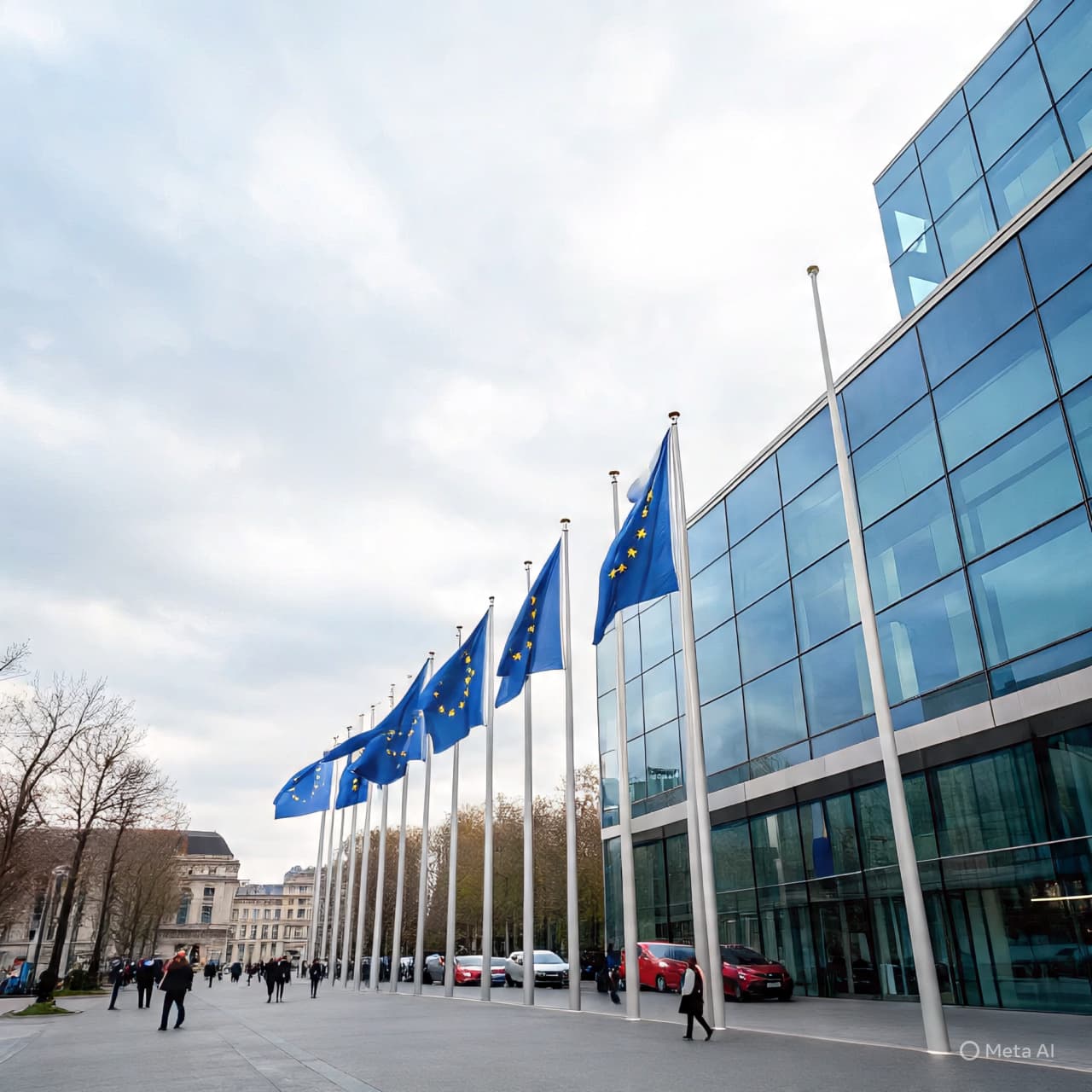
AI Image Disclaimer Visuals are AI-generated and serve as conceptual representations.
Sources Reuters BBC News Politico Europe European Commission Associated Press
Published by Banx Network. This article is part of the Banx decentralized media programme, powered by the BXE token on the XRP Ledger.


