
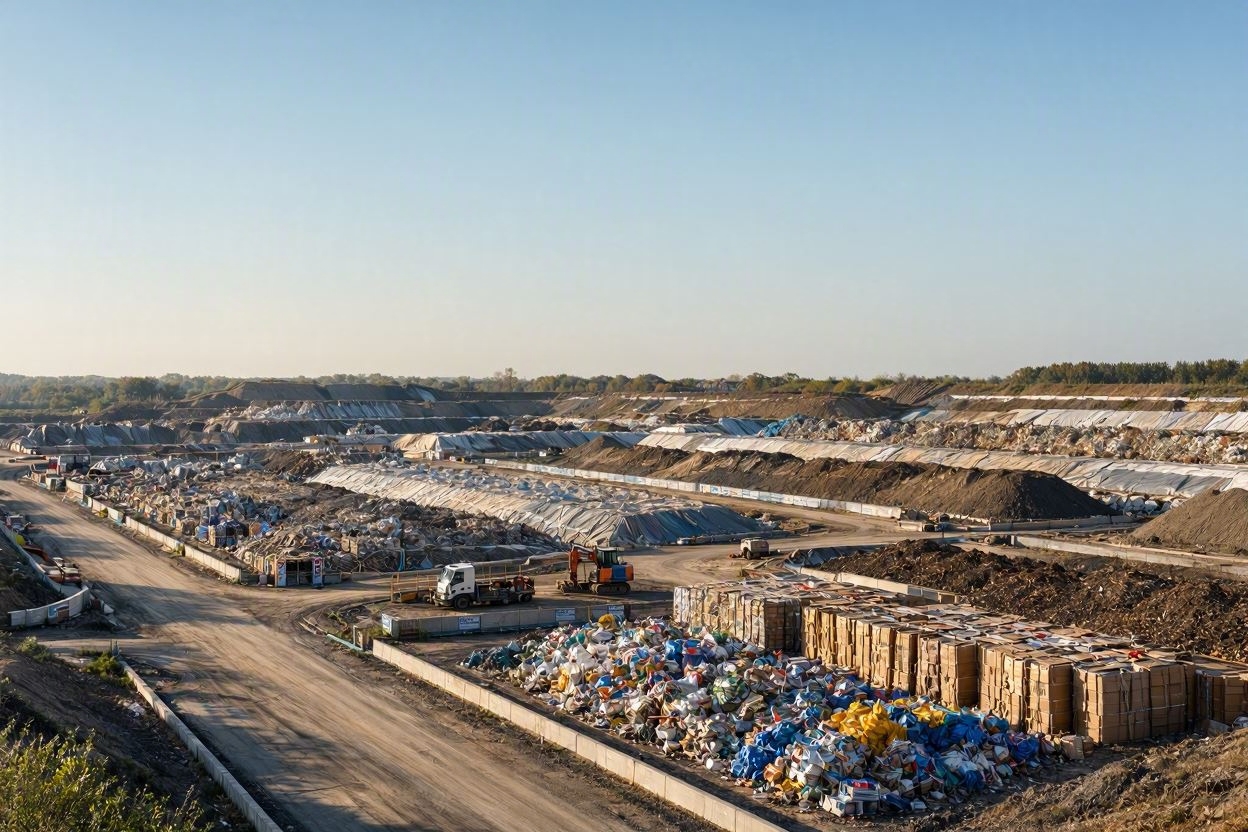
In the industrial outskirts of Calgary, where the machinery of waste management hums beneath the vast prairie sky, a judicial ruling has cast a spotlight on the delicate balance between operational efficiency and environmental stewardship. A judge has determined that a private recycling and landfill operator repeatedly disregarded regulations concerning the height and management of garbage piles at a local facility. This decision underscores the critical importance of adherence to safety and environmental standards in an industry that serves as the backbone of urban sanitation.
The case centered on allegations that the operator allowed waste mounds to exceed legal limits, creating potential hazards for workers, nearby residents, and the surrounding ecosystem. Such violations can lead to issues like spontaneous combustion, pest infestations, and leachate contamination, posing risks that extend far beyond the fence line of the facility. The court’s finding that these rules were "flouted" suggests a pattern of negligence rather than isolated incidents, raising questions about corporate accountability.
For the community, the revelation is unsettling. Landfills and recycling centers are often out of sight and out of mind, yet their proper functioning is essential for public health. When operators cut corners, the burden falls on the environment and the people who live nearby. The judge’s remarks highlight a breach of trust, reminding us that regulatory frameworks exist not merely as bureaucratic hurdles but as vital safeguards for collective well-being.
The operator has faced scrutiny for its handling of municipal solid waste, a task that requires meticulous planning and strict compliance. Inspectors had previously flagged concerns, yet the violations persisted. This persistence indicates a systemic issue within the company’s management practices, prompting calls for stricter oversight and more rigorous enforcement mechanisms by provincial authorities.
Environmental advocates have welcomed the ruling, viewing it as a victory for transparency and accountability. They argue that private entities managing public resources must be held to the highest standards, ensuring that profit does not supersede safety. The decision serves as a precedent, signaling that non-compliance will have tangible legal and financial consequences.
For the city of Calgary, the incident prompts a review of its contracts and monitoring protocols with private waste providers. Ensuring that partners adhere to agreed-upon standards is crucial for maintaining the integrity of the waste management system. The city may implement more frequent inspections or impose stricter penalties for future violations to prevent recurrence.
As the facility works to rectify the issues, the focus shifts to remediation and compliance. Reducing pile heights and improving monitoring systems are immediate steps required to align with regulations. These efforts, while costly, are necessary to restore confidence in the operator’s ability to manage waste responsibly and safely.
In the end, the ruling is a reminder that environmental protection requires constant vigilance. It is not enough to have rules; they must be followed with diligence and respect. By holding operators accountable, the justice system reinforces the principle that a clean and safe environment is a right, not a privilege, for all residents.
AI Image Disclaimer: The visual representations in this article are AI-generated illustrations designed to convey the themes of waste management and regulatory compliance.
Sources: CBC News Calgary, Global News Calgary, City of Calgary Records, Court Documents
Published by Banx Network. This article is part of the Banx decentralized media programme, powered by the BXE token on the XRP Ledger.