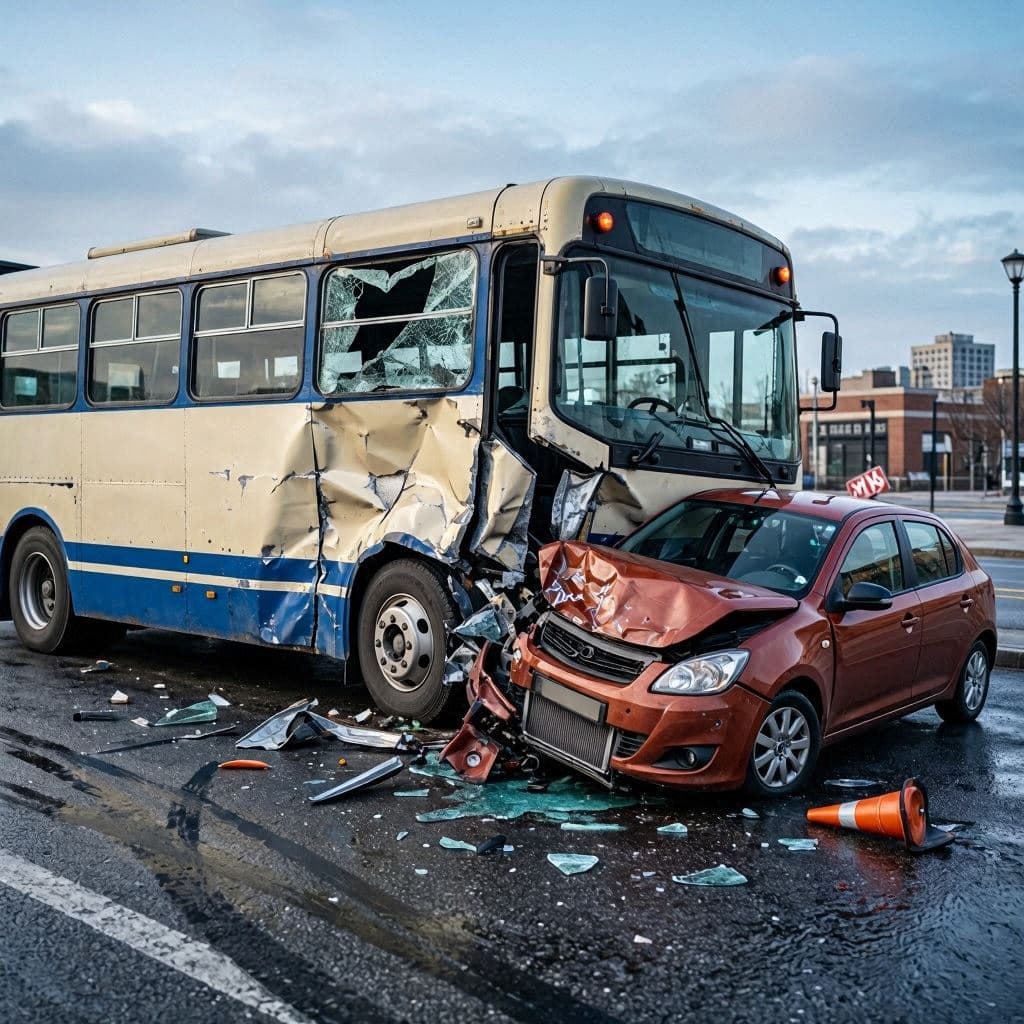
On the busy roads of daily commute, where routine usually governs movement, a moment of chaotic physics has left witnesses stunned. In a rare and terrifying accident, a car became airborne before crashing through the side of a bus, embedding itself in the vehicle’s structure. The incident, described as a "freak crash," defies typical traffic patterns and highlights the unpredictable nature of road safety. For those involved, it was a sudden intrusion of danger into an ordinary day. For observers, it is a stark reminder of the forces at play when vehicles lose control, inviting reflection on the importance of vigilance and engineering safety.
The event underscores the vulnerability of passengers in large vehicles when struck by high-impact projectiles. It serves as a call for continued improvement in road design and vehicle safety standards.
The crash occurred during peak traffic hours, involving a sedan that lost control due to excessive speed or mechanical failure, according to preliminary reports. The car launched off a ramp or curb, gaining significant height and momentum before colliding with the side of a moving bus. The impact was severe, causing extensive damage to both vehicles and injuring several passengers.
Emergency services responded quickly, extracting trapped individuals and providing medical attention. Firefighters used specialized tools to cut through the metal wreckage, demonstrating the complexity of such rescues. The bus driver and passengers were shaken but largely grateful for the swift action of first responders. Investigations are ongoing to determine the exact cause of the car’s launch.
Witnesses described the scene as surreal, with the car appearing to fly before striking the bus. Videos circulated on social media captured the moment of impact, sparking discussions about road safety and driver behavior. While the footage is dramatic, it serves as a powerful educational tool for highlighting the dangers of speeding and reckless driving.
Structural engineers are examining the bus’s integrity to understand how the vehicle withstood such a forceful impact. Modern buses are designed with safety features to protect passengers, but collisions of this magnitude test the limits of those designs. Findings from this incident may inform future manufacturing standards and safety protocols.
For the victims, recovery will involve physical healing and psychological support. Trauma from such a violent event can have long-lasting effects, requiring comprehensive care. Community support and counseling services are essential in helping them navigate the aftermath.
Traffic authorities have reviewed the location of the crash to identify any hazardous conditions that may have contributed to the accident. Measures such as improved barriers, signage, or speed limits may be implemented to prevent similar incidents. Public awareness campaigns are also being reinforced to encourage safe driving practices.
The term "freak crash" suggests rarity, but each accident offers lessons for prevention. By analyzing these events, experts can identify patterns and develop strategies to reduce risk. It is a continuous process of learning and adaptation in the field of transportation safety.
As traffic flows return to normal, the memory of the incident remains. It is a reminder that safety is a shared responsibility, requiring attention from drivers, engineers, and policymakers alike.
The airborne car crash into a bus highlights the unpredictable dangers of road travel. It invites continued focus on vehicle safety, road design, and responsible driving to protect all users.
AI Image Disclaimer: Images used in this report are AI-generated depictions intended to illustrate the themes of traffic safety and emergency response.
Sources: Local News Outlets (General) Transport Safety Authority Emergency Services Reports Social Media Verified Footage
Published by Banx Network. This article is part of the Banx decentralized media programme, powered by the BXE token on the XRP Ledger.