Key Highlights
- Experiment conducted by Giovanni Barontini at the University of Birmingham.
- Utilized 24,000 ultracold rubidium atoms to explore time's emergence.
- Findings suggest time may be an emergent phenomenon rather than a fundamental aspect of reality.
The nature of time has perplexed physicists for decades, raising profound questions about its existence and flow. Central to this inquiry is the Wheeler-DeWitt equation, which describes the universe without an external time parameter, suggesting that time as we perceive it may not be a fundamental aspect of reality. In a groundbreaking experiment, physicist Giovanni Barontini at the University of Birmingham sought to explore this concept by creating a miniature universe in his laboratory, using ultracold atoms to investigate whether time could emerge from within a system.
Barontini's experiment, published in Physical Review Research, involved a Bose-Einstein condensate, a state of matter formed at temperatures close to absolute zero. In this state, approximately 24,000 rubidium atoms were trapped and divided by a thin sheet of laser light, creating two distinct regions: a 'bright' sector that was observed and a 'dark' sector that was ignored. The atoms oscillated between these regions, with Barontini designating the moments of significant movement as the 'Big Bang' and 'Big Crunch' of his mini-universe.
The innovative aspect of Barontini's work was his approach to measuring time. Instead of relying on an external clock, he introduced the concept of 'entropic time,' which is based on the entropy or disorder within the system. By monitoring the flow of entropy between the two regions, he was able to establish a sequence of events without any external reference. His findings revealed that time is not a constant; it accelerates when atoms move quickly and decelerates when their movement slows. Remarkably, when the atoms ceased to move, time itself appeared to stop.
Barontini's research suggests that time may not be an inherent feature of the universe but rather an emergent phenomenon arising from the interactions within a system. He posits that the act of ignoring the dark region—thereby relinquishing knowledge about half of the system—contributes to the flow of time in the observable half. 'This study provides the first controlled experimental evidence that 'time' can be defined by changes within a system rather than as the external 'ticking clock' we think of as time,' Barontini stated.
While the experiment does not claim that time is merely an illusion, it challenges traditional notions of time as an external constant. The Wheeler-DeWitt equation presents a static view of the universe, but Barontini's work demonstrates that a system can generate its own internal sense of time, supporting the idea that time can emerge from within rather than being externally imposed. This small universe, crafted in a laboratory, operates under rules designed by its creator, leaving open the question of what this means for our understanding of the actual universe.
The poetic nature of Barontini's experiment lies in its simplicity: a physicist constructs a tiny cosmos from ultracold atoms, divides it with light, and observes the emergence of time from the chaos of atomic motion. This suggests that the universe may not require a clock; it only needs change and an observer to recognize it. As physics continues to evolve, the implications of this experiment could help bridge the gaps between time and gravity, although the ultimate significance of these findings remains to be fully understood. For now, in a Birmingham laboratory, a small universe has managed to keep its own time, marking a significant step in the exploration of time's nature.
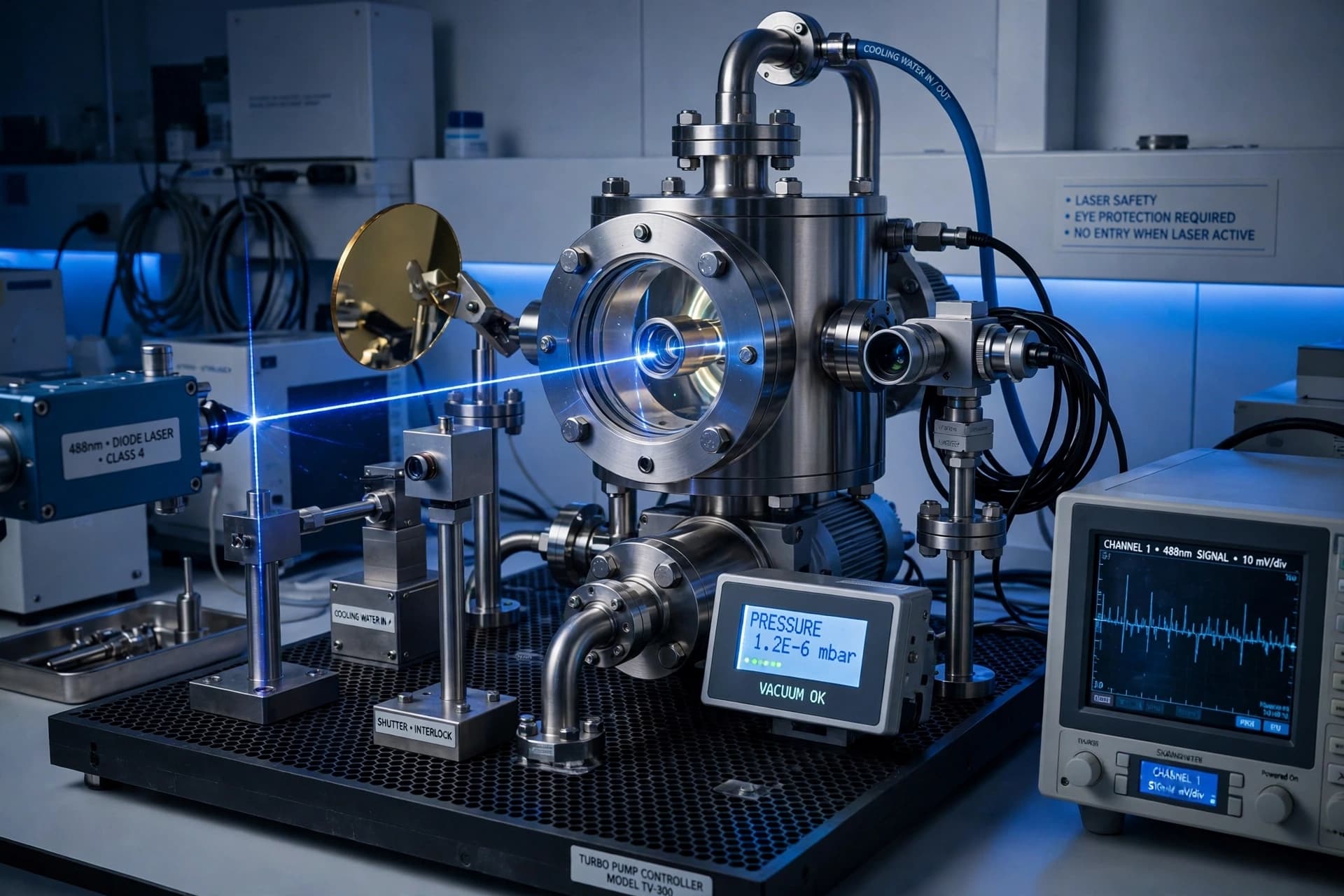
AI Image Disclaimer: The visuals in this article are generated using AI tools and are illustrative only; they do not depict the actual laboratory experiment or the specific apparatus used.
Published by Banx Network. This article is part of the Banx decentralized media programme, powered by the BXE token on the XRP Ledger.