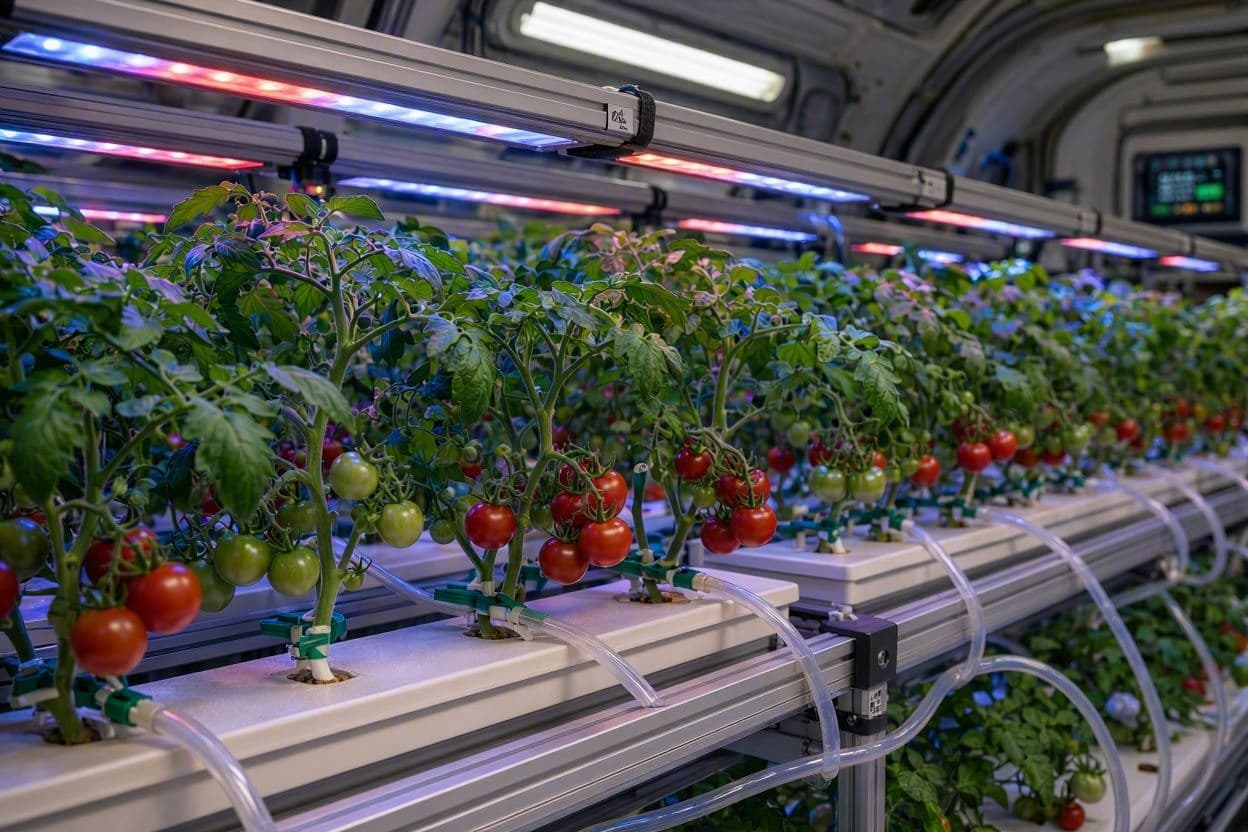
Life on Earth is deeply rooted in gravity, a constant force that guides the growth of plants and the movement of animals. But what happens when this anchor is removed? In the microgravity environment of space, tomato plants have revealed a remarkable adaptability, switching thousands of genes to adjust to their new reality. A recent NASA study sheds light on how these plants use light as a substitute for gravity, offering insights into the resilience of life and the future of agriculture beyond our planet.
The study involved growing tomato plants aboard the International Space Station, comparing their genetic expression to those grown on Earth. The results showed significant changes in thousands of genes, particularly those related to stress response and development. Without gravity to guide root growth downward and stems upward, the plants had to rely on other cues, primarily light, to orient themselves. This genetic flexibility highlights the intricate mechanisms plants use to survive in changing environments.
Light, already crucial for photosynthesis, took on an additional role as a directional signal. The plants adjusted their phototropism, the growth response to light, to compensate for the lack of gravitational pull. This adaptation allowed them to maintain structural integrity and continue growing, albeit in a different manner than their terrestrial counterparts. It is a testament to the evolutionary versatility of plant life.
Understanding these genetic shifts is vital for future long-duration space missions. If humans are to live on Mars or the Moon, they will need reliable sources of fresh food. Growing crops in space requires knowing how plants respond to microgravity, radiation, and limited resources. This study provides a roadmap for optimizing plant growth in extraterrestrial environments, ensuring sustainable food production for astronauts.
The findings also have implications for agriculture on Earth. By understanding how plants cope with stress and adapt to unusual conditions, scientists can develop more resilient crop varieties. These crops could better withstand climate change, drought, or poor soil conditions, enhancing food security for a growing global population. Space research, therefore, benefits life on our home planet as well.
The complexity of the genetic response underscores the sophistication of biological systems. Plants are not passive organisms but active participants in their environment, constantly adjusting their internal processes to external cues. This dynamic interaction between genotype and environment is a key area of study in biology, offering lessons in resilience and adaptation.
NASA’s collaboration with botanists and geneticists exemplifies the interdisciplinary nature of space exploration. It combines engineering, biology, and data science to solve complex problems. This collaborative approach accelerates discovery, bringing diverse expertise to bear on the challenges of living and working in space.
As we look to the stars, the humble tomato plant serves as a pioneer. Its ability to adapt to the void of space inspires confidence in our capacity to expand our reach. It reminds us that life is tenacious, finding ways to thrive even in the most unlikely places.
NASA’s study on tomato plants grown in space reveals how they adjust their gene expression to use light as a growth signal in the absence of gravity. This discovery advances our understanding of plant biology and supports the development of sustainable agriculture for future space exploration.
AI Image Disclaimer: The visual elements accompanying this article are AI-generated interpretations designed to symbolize space agriculture and plant adaptation, using neutral and descriptive imagery of botanical science.
Sources: NASA Official Website Frontiers in Plant Science Space.com
Published by Banx Network. This article is part of the Banx decentralized media programme, powered by the BXE token on the XRP Ledger.