In the silent, rust-colored expanse of the Martian sky, two small moons have circled for eons, watching over a planet that once held water and perhaps life. Phobos and Deimos, often overlooked in favor of their massive planetary host, are more than mere celestial companions; they are archives of cosmic history. Recent analyses suggest that Phobos, the larger and closer of the two, bears the scars of a violent past, hinting at an ancient catastrophe that reshaped its structure and possibly its origin.
For decades, scientists have debated whether these moons were captured asteroids or formed from debris after a massive impact on Mars. The new findings lean toward a traumatic event, where a colossal collision may have shattered a progenitor body or significantly altered Phobos itself. This hypothesis is supported by subtle gravitational anomalies and surface features that do not align with a simple capture scenario.
The "hidden" nature of this revelation lies in the data itself. Unlike visible craters, the signs of this ancient catastrophe are encoded in the moon’s internal density and orbital dynamics. By studying how Phobos wobbles as it orbits, researchers can infer the distribution of mass within its core. These measurements reveal a porous, fragmented interior, suggesting that the moon is not a solid rock but a rubble pile held together by gravity.
This structural fragility points to a history of disruption. If Phobos were a pristine captured asteroid, one might expect a more uniform composition. Instead, the evidence suggests it was reassembled from the wreckage of a larger body, perhaps destroyed in a high-velocity impact. This process would have left it loosely bound, with voids and fractures that persist to this day.
The implications for the Martian system are profound. Such a catastrophic event would have released vast amounts of debris into orbit, some of which may have rained down on Mars, altering its surface geology. Understanding this timeline helps scientists piece together the broader narrative of the solar system’s early years, a period marked by frequent and violent collisions.
Moreover, the fate of Phobos is tied to this history. Its porous structure makes it vulnerable to tidal forces from Mars, which are slowly pulling it closer. In tens of millions of years, it may break apart entirely, forming a ring around the Red Planet. The signs of its past destruction may well predict its future demise, creating a poetic symmetry in its celestial journey.
As we look toward future missions, such as Japan’s MMX (Martian Moons eXploration), the goal is to retrieve samples from Phobos. These samples could provide definitive proof of its origin, confirming whether it is indeed a relic of a ancient disaster. Until then, the moon remains a silent witness, holding its secrets in its dusty, fractured heart.
The story of Phobos is a reminder that even the smallest bodies in our solar system carry the weight of significant history. By uncovering the signs of an ancient catastrophe, we gain a deeper appreciation for the dynamic and often violent processes that shape our cosmic neighborhood.
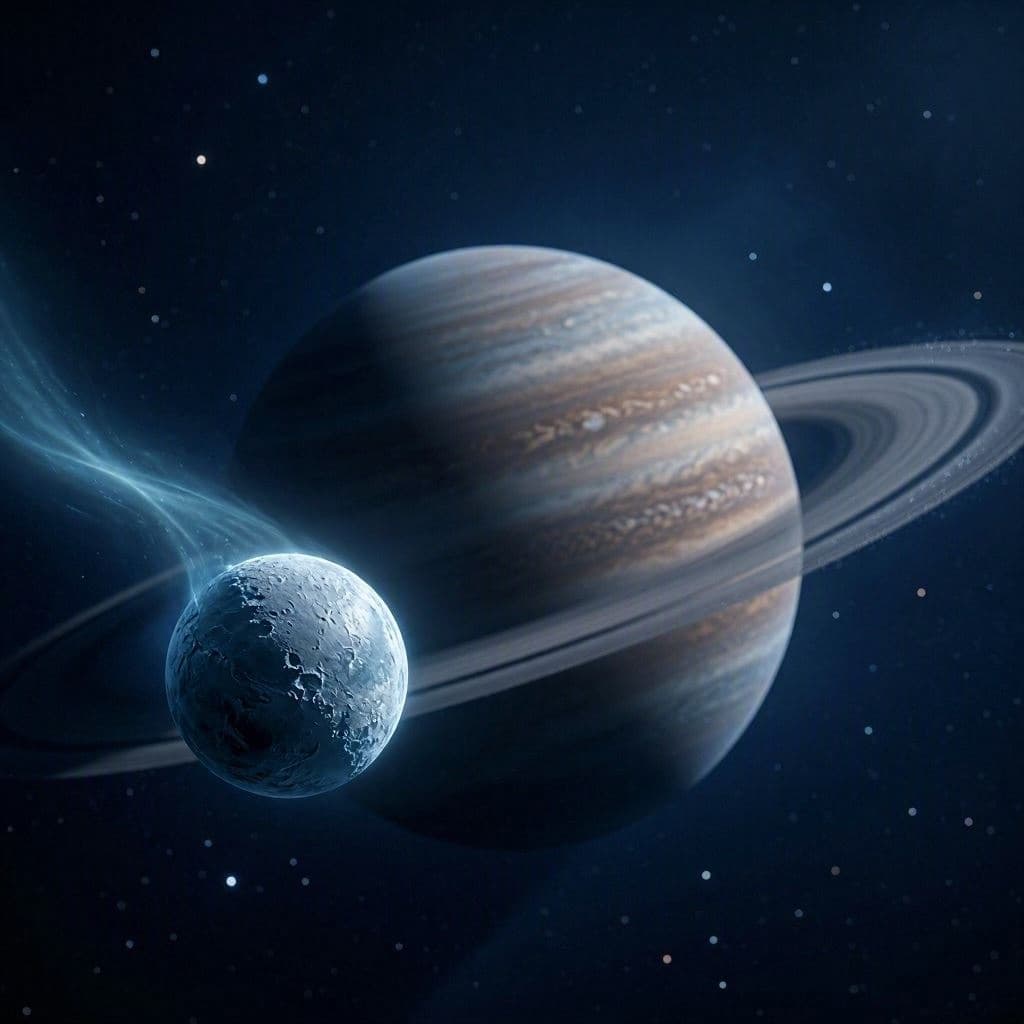
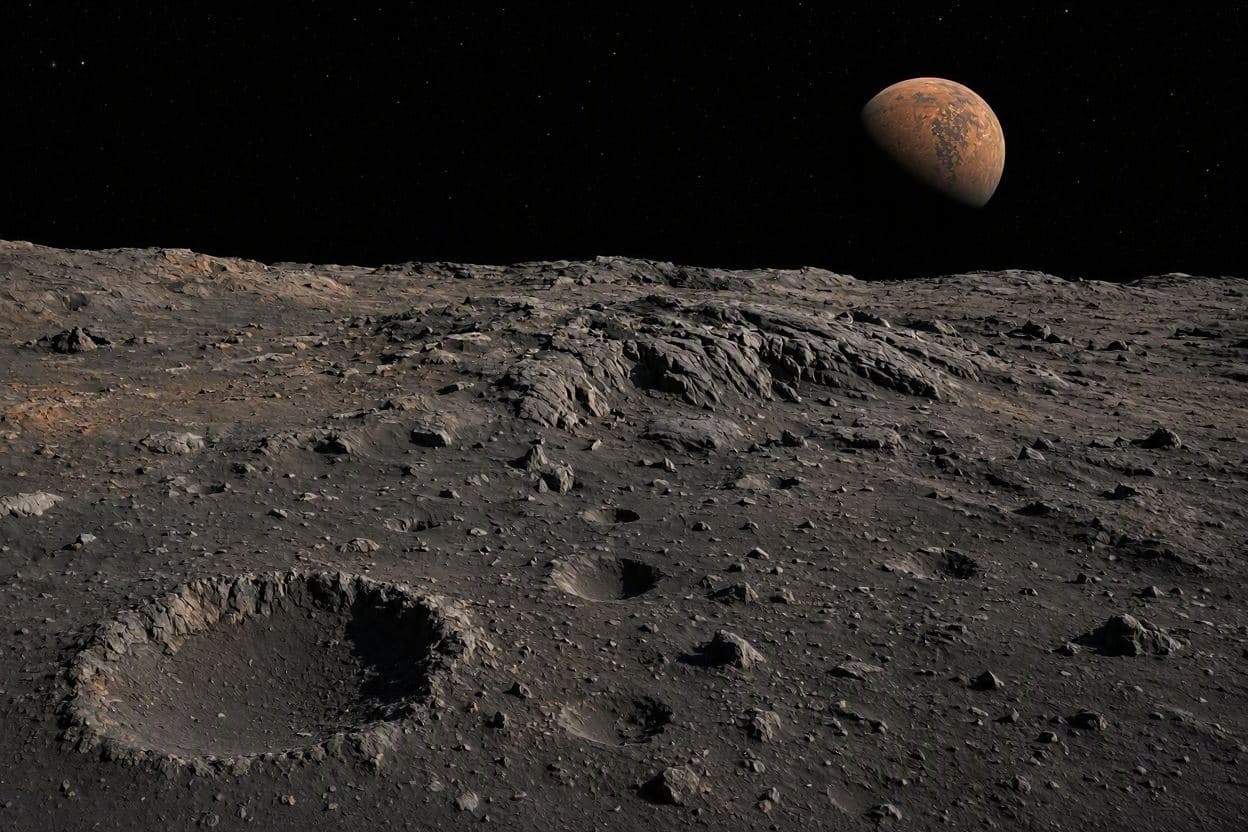
AI Image Disclaimer: The visual representations accompanying this article are generated by artificial intelligence to illustrate the scientific concepts.
Sources: Nature Astronomy NASA Jet Propulsion Laboratory Planetary Science Journal
Published by Banx Network. This article is part of the Banx decentralized media programme, powered by the BXE token on the XRP Ledger.