
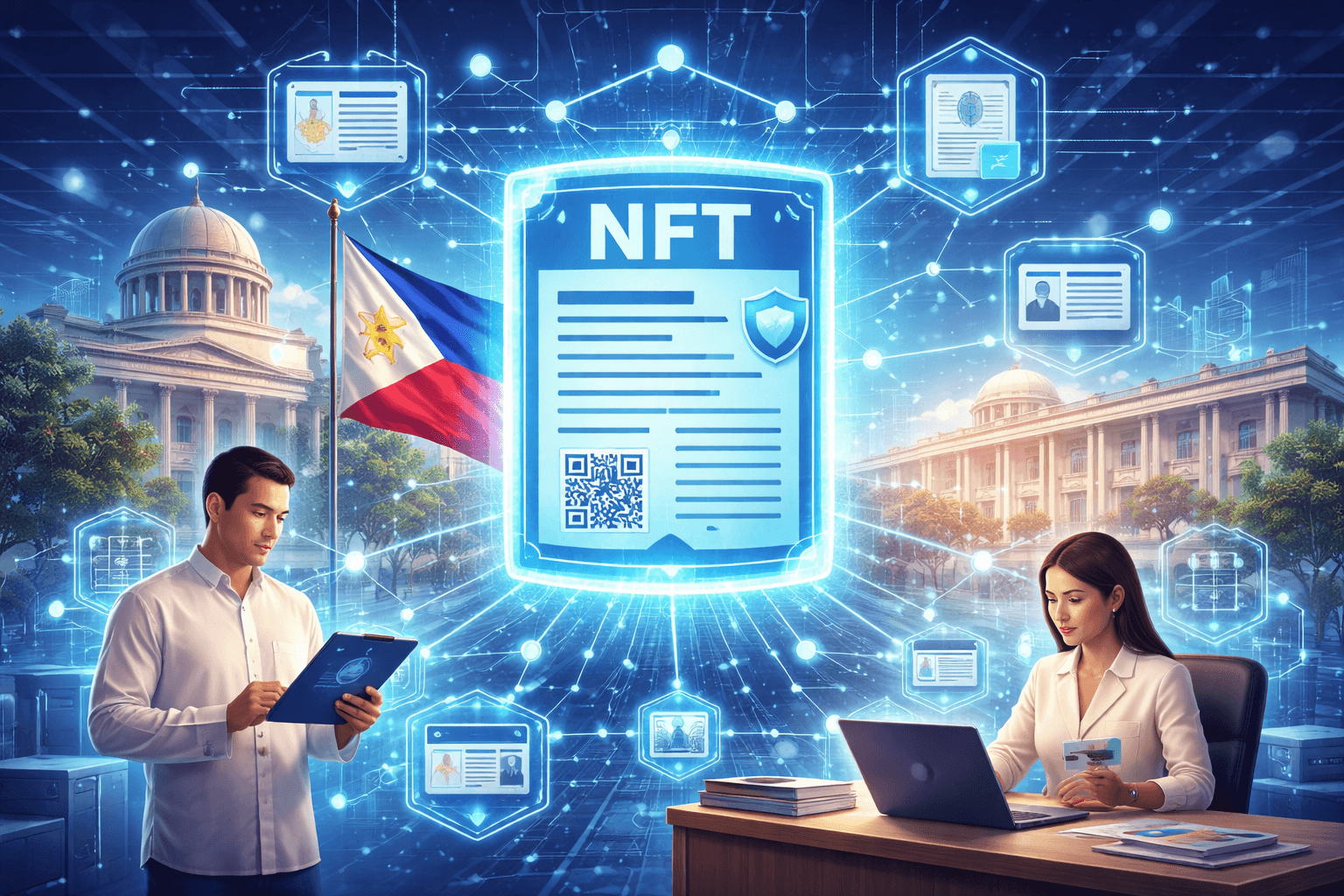
MANILA, Philippines — The Philippine government is taking a major leap into blockchain based public recordkeeping, adopting non fungible token (NFT) and other distributed ledger technologies to secure key government documents and public data — a move aimed at boosting transparency, accountability, and trust in government systems.
Under the initiative known as the Digital Bayanihan Chain, the Department of Information and Communications Technology (DICT) has begun placing national budget records, contracts, and other public documents on blockchain platforms. These records are assigned immutable digital records that act like NFTs — unique digital certificates that ensure each document is tamper proof and permanently verifiable.
Blockchain for Public Records
Beginning with the 2026 General Appropriations Act (GAA), every peso of Filipino taxpayers’ money is now recorded on a blockchain ledger that can be accessed and verified by citizens, watchdog groups, researchers, and auditors. This means budget approvals, allocations, disbursements, and reporting are etched into an unalterable chain of records, preventing manipulation or erasure over time — even across administrations.
DICT officials called the system a “digital seal of truth,” explaining that once a document is “minted” on the blockchain as a tokenized record, it cannot be changed or tampered with. This provides a permanent, independently verifiable ledger of state finances and public transactions.
Web portals such as the Digital Bayanihan Chain enable users to explore these records directly, watching how the national budget flows from congressional approval to expenditure — all with cryptographic proof of authenticity that resembles NFT technology in its unique and traceable digital identity.
Why It Matters
Supporters of the blockchain recordkeeping initiative say this represents a transformational step in public sector transparency. By using blockchain and NFT style digital records, the government aims to reduce corruption, increase efficiency, and foster trust among citizens who can now observe public spending in near real time.
While the movement is initially focused on financial records, lawmakers and technologists see broader applications for blockchain and NFT style recordkeeping — from land titles to procurement contracts — offering a permanent, accessible trail of public documents with reduced risk of fraud.
Looking Ahead
The Philippines’ adoption of blockchain enhanced public records positions it as a global pioneer in using cutting edge technology to strengthen governance and accountability. As the Digital Bayanihan Chain continues to expand, other government agencies and civic groups are expected to explore similar approaches, potentially transforming how public information is stored, verified, and shared with the world.
Published by Banx Network. This article is part of the Banx decentralized media programme, powered by the BXE token on the XRP Ledger.



.jpg&w=3840&q=75 "The Artemis Revolution: How NASA Plans to Build Humanity's Future on the Moon")