Education has long been viewed as a journey that extends far beyond the walls of a classroom. For decades, international field trips have served as bridges to the wider world, offering students tangible experiences of different cultures, histories, and perspectives. However, a recent wave of cancellations across Edmonton and other Canadian school districts suggests a shifting landscape. These decisions, while disappointing for eager students, reflect a complex interplay of logistical, financial, and safety considerations that educators must now navigate with care.
The cancellations stem from a variety of factors, including rising costs, insurance complexities, and heightened risk assessments in certain global regions. For school boards, the responsibility of ensuring student safety is paramount, and the evolving geopolitical climate has made some destinations less viable than in previous years. This cautious approach is not taken lightly, as administrators weigh the educational benefits against potential liabilities.
Financial constraints also play a significant role. Inflation and increased travel costs have made international excursions prohibitively expensive for many families and school budgets alike. When the cost barrier becomes too high, the equity of access comes into question. Schools are increasingly mindful of ensuring that educational opportunities are available to all students, regardless of their socioeconomic background, which sometimes means scaling back high-cost programs.
Furthermore, the post-pandemic era has introduced new layers of complexity to travel planning. Health protocols, varying international regulations, and the lingering effects of supply chain disruptions have made organizing large group trips more challenging. Educators find themselves spending considerable time navigating bureaucratic hurdles, which can detract from the primary goal of enriching the curriculum.
Despite these challenges, the desire for global engagement remains strong among students and teachers. Many schools are exploring alternative ways to bring the world into the classroom, such as virtual exchanges, local cultural immersion programs, and partnerships with international institutions online. These innovations offer creative solutions that maintain the spirit of global learning without the logistical burdens of physical travel.
The decision to cancel trips is often met with mixed emotions. Students who had looked forward to these experiences feel a sense of loss, while parents may worry about the narrowing of their children’s horizons. However, educators emphasize that learning is adaptable. The focus is shifting toward deepening local understanding and leveraging technology to foster global connections in new and meaningful ways.
This trend also invites a broader reflection on the purpose of field trips. Are they merely vacations, or are they essential pedagogical tools? By reevaluating their approach, schools have the opportunity to design more inclusive and sustainable experiential learning models. It is a moment to innovate, ensuring that every student has the chance to grow as a global citizen, even if the journey looks different than before.
As the academic year progresses, the conversation around international travel in education will likely continue. Stakeholders are encouraged to engage in dialogue about how best to balance ambition with prudence. The goal remains the same: to provide students with the tools and experiences they need to thrive in an interconnected world.
The cancellation of international field trips by schools in Edmonton and across Canada highlights the changing dynamics of educational travel. While the reasons are multifaceted, ranging from safety to cost, the focus remains on finding equitable and effective ways to foster global understanding. The shift encourages innovation in how we connect students with the wider world.
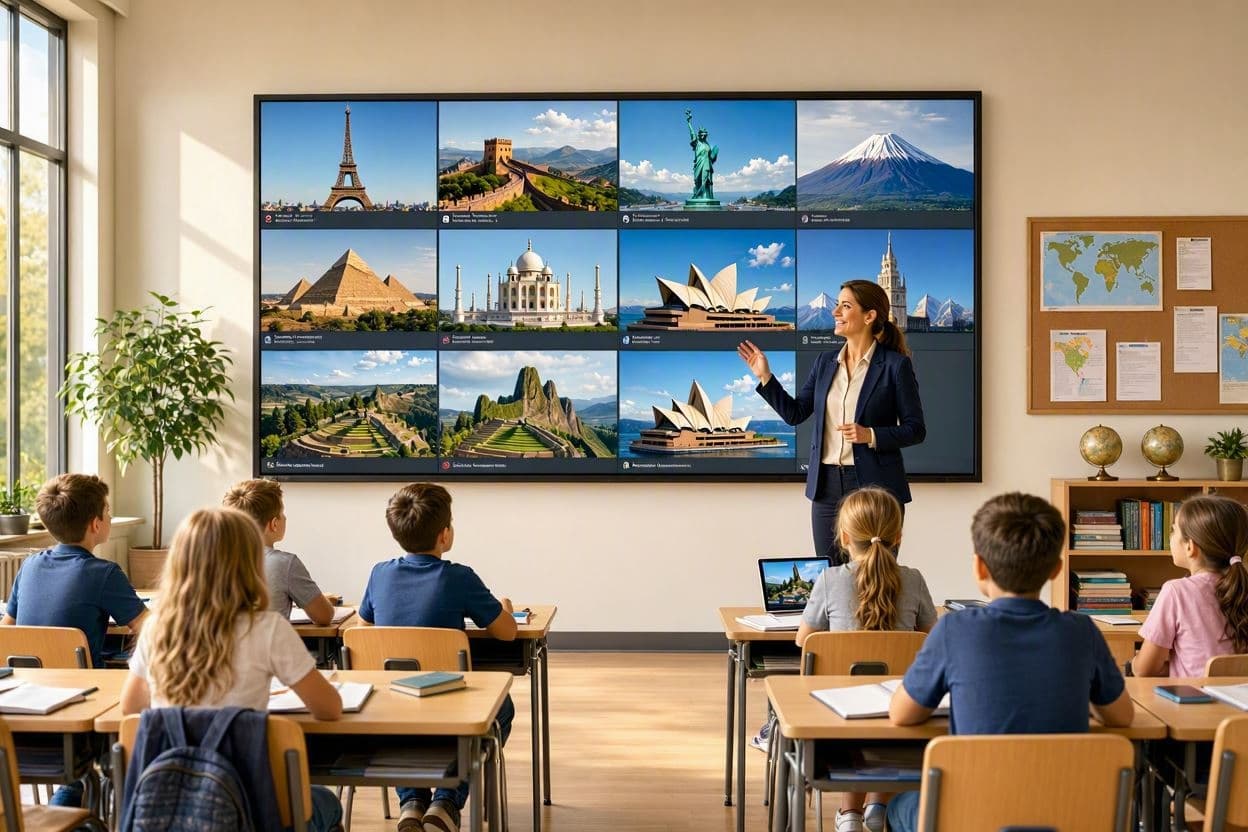
AI Image Disclaimer: The visual representations accompanying this article are AI-generated interpretations designed to symbolize global education and the concept of virtual connectivity, using abstract imagery of classrooms and digital networks.
Sources: Edmonton Journal CBC News Canadian School Boards Association
Published by Banx Network. This article is part of the Banx decentralized media programme, powered by the BXE token on the XRP Ledger.