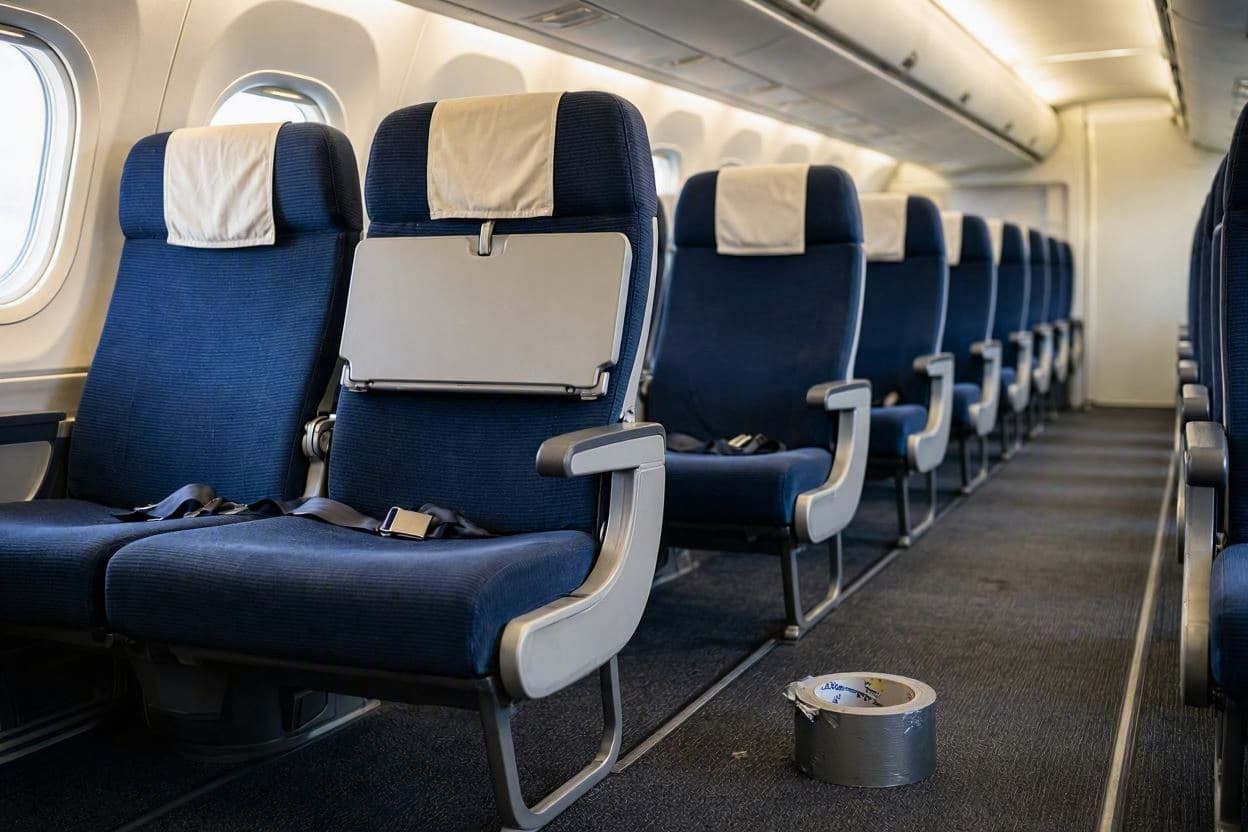
Air travel is built on trust and routine, a shared agreement that passengers will remain seated and safe while crews manage the journey. But when that order is disrupted, the response can be extreme. In a recent incident that has sparked debate about airline authority and passenger rights, a US passenger was restrained with duct tape to his seat after allegedly becoming disruptive. Now, the man claims he has no memory of the event, raising questions about what transpired at 30,000 feet and how such situations are handled.
The flight, operated by a major US carrier, was en route when the passenger reportedly began behaving erratically. Witnesses described shouting and attempts to leave his seat, causing concern among crew members and other travelers. Airline staff, trained to handle unruly behavior, attempted to de-escalate the situation verbally. When these efforts failed, they resorted to physical restraint, using duct tape to secure the man to his chair. The decision, while drastic, was made to ensure the safety of everyone on board.
Upon landing, law enforcement met the aircraft, and the passenger was taken into custody. However, in subsequent interviews, he stated that he "doesn’t remember any of it." This claim of amnesia adds a layer of complexity to the case. Was it a result of medical issues, substance use, or psychological distress? Without clarity, it is difficult to determine intent or culpability. Investigators are now looking into his medical history and any potential substances involved to understand the root cause of the behavior.
The use of duct tape as a restraint has drawn criticism from some advocates, who argue that airlines should have access to more appropriate tools, such as approved restraint devices. Duct tape, while effective, can be seen as improvised and potentially harmful if applied incorrectly. Airlines defend the action as a necessary measure in an emergency, emphasizing that crew members are not equipped with professional restraints and must use available resources to protect the flight. It is a dilemma that highlights gaps in current regulations.
For fellow passengers, the experience was likely frightening. Being trapped on a plane with an unstable individual creates a sense of vulnerability. The quick action of the crew, however, likely prevented a more dangerous escalation. Many travelers have expressed support for the airline’s decision, prioritizing collective safety over individual comfort. It is a reminder that air travel requires strict adherence to rules for the benefit of all.
Legal experts note that assaulting or interfering with a flight crew is a federal offense. Regardless of the passenger’s memory, the act of disruption itself carries serious penalties. If medical issues are proven, they may mitigate criminal liability but not necessarily civil consequences. The airline may still seek compensation for damages or delays caused by the incident. The case will likely hinge on the findings of medical evaluations and witness testimonies.
This incident also prompts a broader discussion about mental health and travel. As stress levels rise and post-pandemic anxiety persists, airlines are seeing an increase in disruptive behaviors. Training for crew members in de-escalation and mental health first aid is becoming increasingly important. Providing better support systems for passengers in distress could prevent such extreme measures from being necessary in the future.
In the end, the story of the duct-taped passenger is a stark illustration of the challenges of modern air travel. It underscores the need for clear protocols, adequate resources, and empathy. While the passenger’s lack of memory may explain his actions, it does not erase the impact on others. As the investigation continues, the hope is that lessons will be learned to make flying safer and more humane for everyone involved.
AI Image Disclaimer: The visual aids included here are AI-generated illustrations depicting airline interiors and restraint concepts, not actual photographs of the specific incident or the individuals involved.
Sources: CNN Travel USA Today
Published by Banx Network. This article is part of the Banx decentralized media programme, powered by the BXE token on the XRP Ledger.