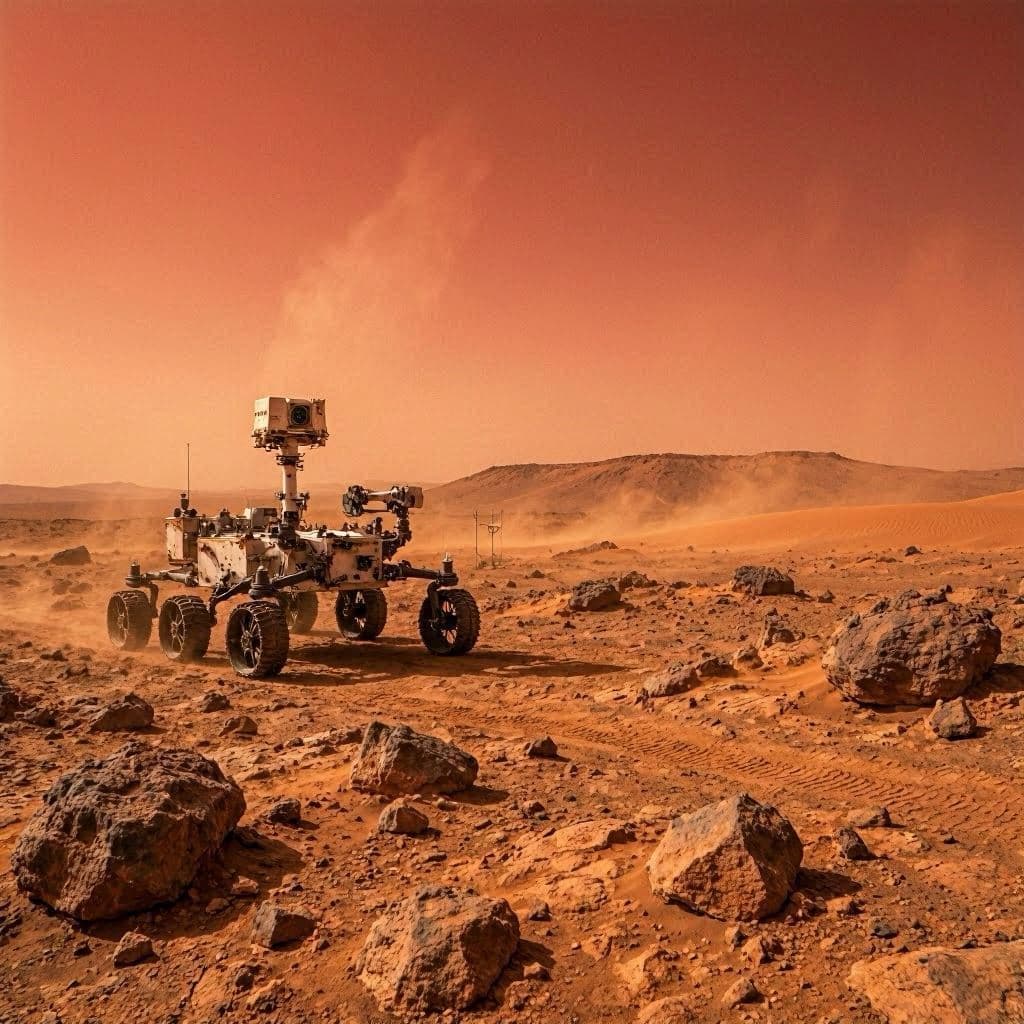
On a planet often described as silent and distant, Mars continues to offer moments of scientific curiosity that feel almost like fragments of a forgotten story. The Perseverance rover, moving steadily across the Jezero Crater, has reportedly identified materials that suggest the presence of complex organic compounds, adding another layer to humanity’s ongoing exploration of the red planet.
Body: NASA’s Perseverance mission was designed to investigate Mars’ geological history and assess its potential to have once supported microbial life. Equipped with advanced instruments, the rover analyzes rock formations, soil samples, and atmospheric conditions with remarkable precision.
The detection of organic material does not automatically indicate biological origin. Organic compounds can form through both biological and non-biological processes, including chemical reactions triggered by radiation or geological activity. This distinction remains central to scientific interpretation.
In the Jezero Crater region, where ancient river deltas once existed, scientists believe conditions may have been favorable for the preservation of chemical signatures over long periods. The rover’s findings in this area are therefore of particular interest to researchers studying planetary evolution.
Data transmitted from Perseverance is carefully reviewed by teams on Earth, who compare results with previous Mars missions, including Curiosity and orbital observations. This layered approach helps build a more complete understanding of Martian geology.
Researchers emphasize patience in interpreting these results. In planetary science, discoveries often require multiple confirmations and peer-reviewed analysis before conclusions can be drawn. The scientific process is deliberately cautious to avoid premature interpretations.
Still, each new dataset contributes to a growing picture of Mars as a planet with a complex and dynamic past. Whether or not life ever existed there remains unanswered, but the chemical evidence continues to encourage deeper exploration.
Closing: As Perseverance continues its mission, scientists will further examine collected data to better understand Mars’ history. The findings add another meaningful step in the long journey of exploring whether Earth is alone in its ability to support life.
AI Image Disclaimer: This article includes AI-generated illustrative visuals created for editorial purposes only.
Sources (source verification check): NASA, Jet Propulsion Laboratory (JPL), Science Magazine, Nature
Published by Banx Network. This article is part of the Banx decentralized media programme, powered by the BXE token on the XRP Ledger.