There is a particular caution that comes from having tried something before and watched it fail—a caution that Al Monaco, the former CEO of Enbridge, carries with him as he considers the newly named Pacific Link pipeline. Monaco knows what it takes to build a major pipeline to Canada's West Coast, because he tried once, with Northern Gateway, and he watched it fall apart. The project was approved by the Harper government with 209 conditions, then overturned by the Federal Court of Appeal in 2016 over inadequate consultation with First Nations. It was effectively killed by a tanker ban on British Columbia's northern coast, and Enbridge took a $373-million impairment charge .
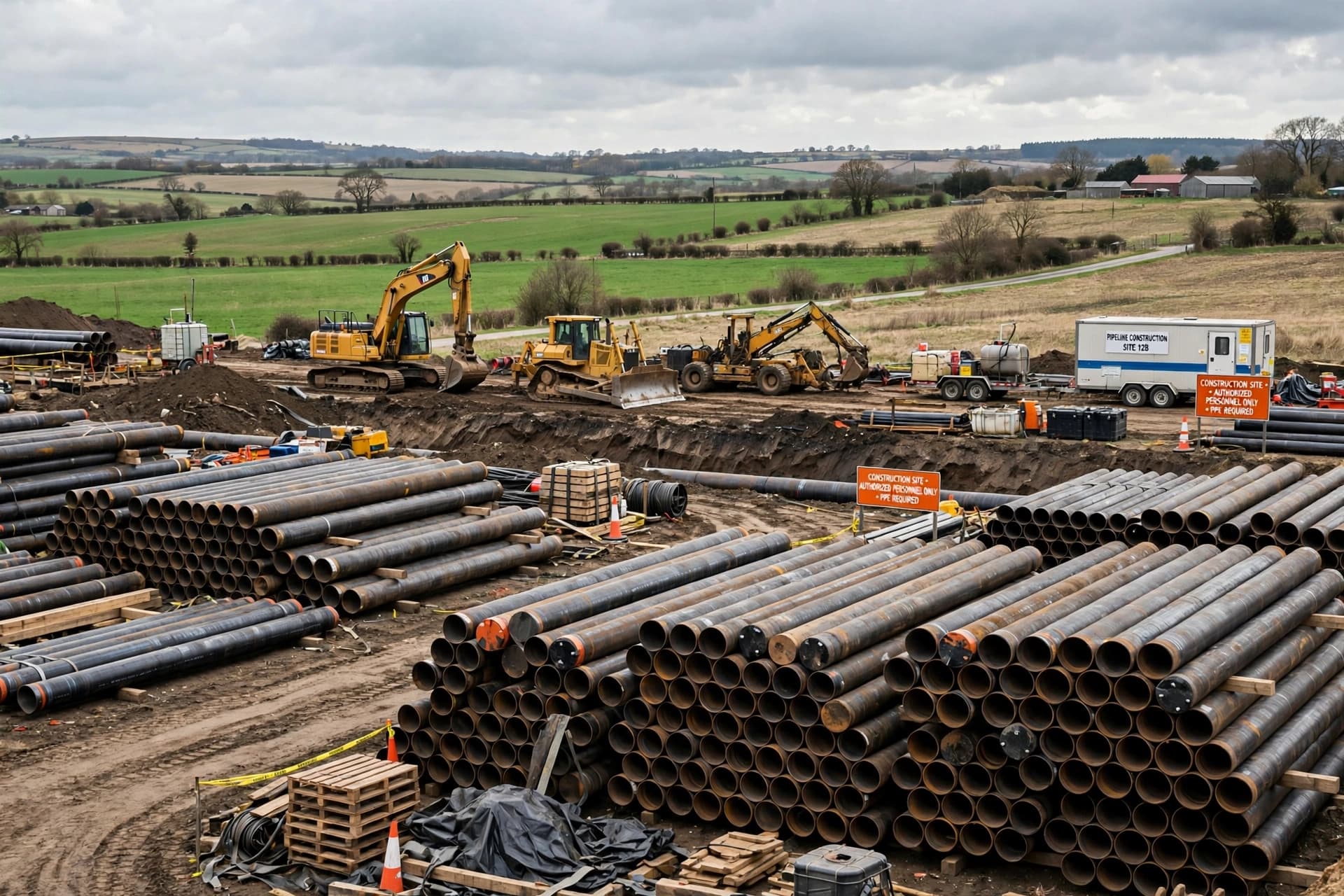
Now, attention has turned to Pacific Link, a proposed pipeline that would move one million barrels per day from Bruderheim, Alberta, to the Roberts Bank terminal in Delta, British Columbia. On Thursday, Prime Minister Mark Carney designated the project as one of national interest under the Building Canada Act, putting it on an expedited path for regulatory approval . The federal Major Projects Office conducted three months of consultations with more than 130 Indigenous communities before making the designation . The conditions for the project are expected to be finalized by September 2027, with construction potentially beginning soon after and commercial startup anticipated in 2032 or 2033 .
Monaco, who served on the province's technical advisory committee for the new West Coast pipeline proposal, believes the designation is a step in the right direction. But he is careful to note that it is only a step. "No surprise here, right? The ducks have been lining up for a while on it," he said. "But I think we have to recognize . . . there's a lot of road yet to travel on this" .
That road includes several obstacles that Northern Gateway exposed. The first is commercial support. Pacific Link will need shippers—oil producers—to commit to using the pipeline, and those commitments require confidence that the project will be built and that the tolls will be viable. Producers will also need to spend money to increase production to fill the pipeline, a decision they will not make lightly after a decade of restrained investment in the oil sands .
The second challenge is Indigenous consultation and ownership. Northern Gateway was undone by a court finding that the federal government had failed to adequately consult. This time, Ottawa has said Indigenous communities will be offered at least a ten percent ownership stake in the project, financed through federal and provincial loan guarantee programs . Monaco sees that as the key to moving forward. "Listening to views on safety and environmental concerns in Indigenous communities and getting alignment through ownership, I think that is going to be the key to this going forward," he said .
The third challenge is political and environmental opposition. The Wilderness Committee has condemned the project, describing it as "Canada's most expensive extinction attempt" and warning that it threatens the southern resident killer whale population . The project's route—following a southern corridor to Roberts Bank rather than the northern route that Northern Gateway proposed—avoids the Great Bear Sea and the tanker ban that killed the earlier project . But opposition remains, and the environmental review process, though expedited, will not be without contention.
For Monaco, the lessons of Northern Gateway are clear: a pipeline to the West Coast is not just an engineering project. It is a political project, an economic project, and a social project, and all three must align for it to succeed. The designation of national interest has given Pacific Link a significant advantage that Northern Gateway never had: the explicit pre-approval of the federal government before the regulatory process has even begun. But as Monaco said, there is still a long road ahead. The project has a name, a route, and a mandate. What it does not yet have is a pipeline.
AI Image Disclaimer: The visual elements in this article were created using AI generation tools and are intended for illustrative purposes only.
Sources: Calgary Herald, Edmonton Journal, Prime Minister of Canada, Trans Mountain, Wilderness Committee
Published by Banx Network. This article is part of the Banx decentralized media programme, powered by the BXE token on the XRP Ledger.