There is a particular arithmetic to the defense of great wealth—a calculation in which the cost of resistance is measured against the cost of compliance, and the difference is weighed not in principle but in dollars. For Sergey Brin, the Google cofounder whose net worth approaches $260 billion, that arithmetic has produced a figure of remarkable clarity: he has spent $102 million to defeat a California ballot measure that, if passed, could cost him approximately $13 billion . The ratio is roughly one to 130—a return on investment that any venture capitalist would recognize, if not admire.
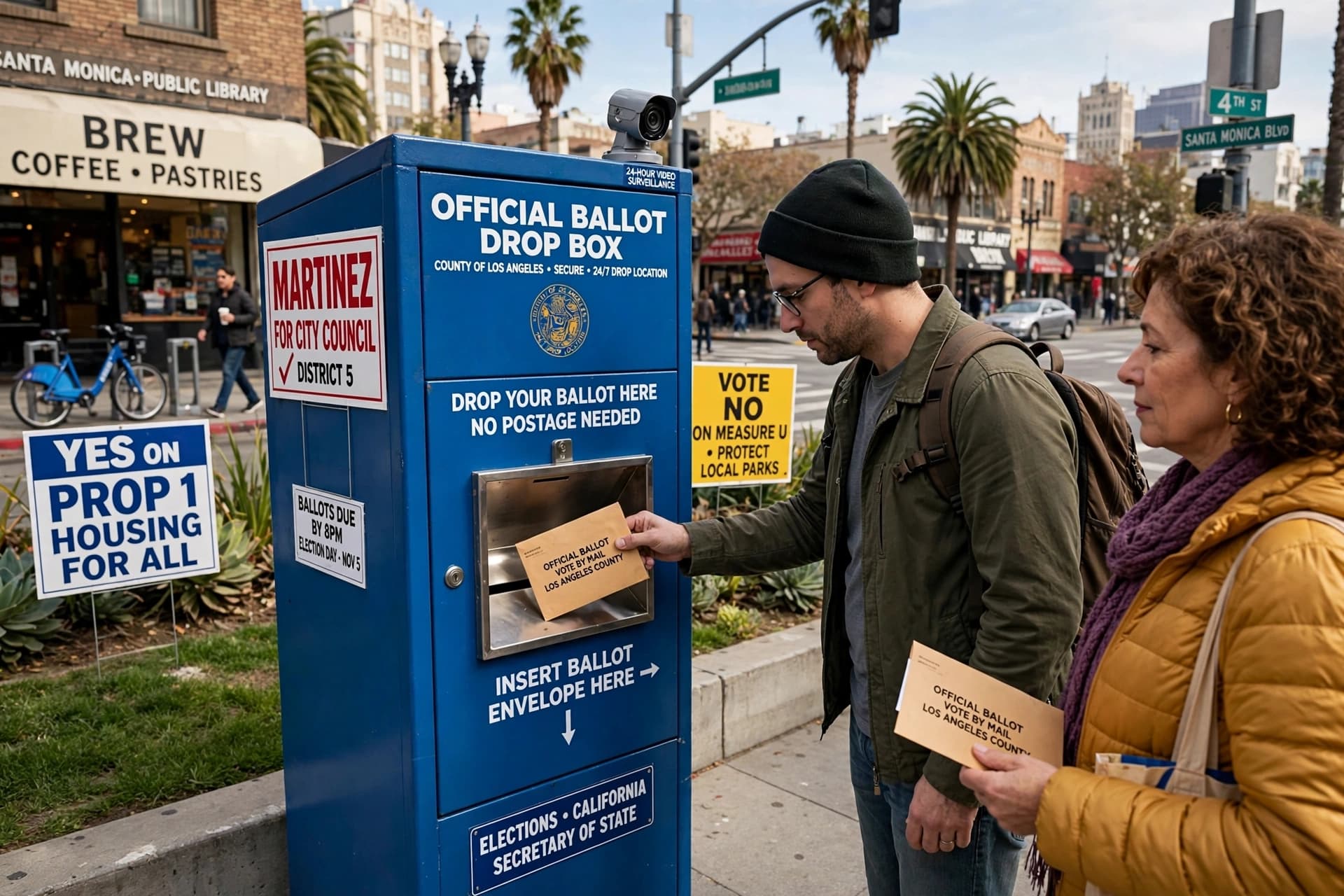
The measure in question is Proposition 40, a one-time 5 percent tax on the assets of California's approximately 200 billionaires. If approved by voters in November, the tax would direct 90 percent of its revenue—estimated at around $100 billion—toward the state's healthcare programs, with the remainder supporting education and food assistance . The initiative was placed on the ballot by the Service Employees International Union-United Healthcare Workers West, which frames it as a response to federal cuts to Medi-Cal, the state's health insurance program for low-income residents .
Brin's contributions have flowed to Building a Better California, a political action committee opposing the measure and supporting other pro-business policies . His total giving makes him the largest single contributor to the opposition effort, which has raised more than $187 million compared to roughly $32 million supporting the proposition . Brin has framed his opposition in personal terms, telling the New York Times that he "fled socialism" with his family in 1979 and knows "the devastating, oppressive society it created in the Soviet Union. I don't want California to end up in the same place" . He has also changed his state of residence to Nevada, moving before the January 1 cutoff date that would determine tax liability .
The measure's path to passage is complicated by two competing initiatives, Propositions 41 and 42, both backed by the same billionaire-funded coalition. Proposition 41 would prohibit new state taxes whose revenues fall outside California's spending limit, effectively nullifying Prop 40 if it receives more votes. Proposition 42 would ban new taxes on personal property and assets entirely . Under California's constitution, if multiple competing measures pass, the one with the most "yes" votes becomes law .
Polls suggest the outcome is far from certain. A Public Policy Institute of California survey of likely voters found 52 percent favoring Proposition 40 and 46 percent opposed—a statistical tie within the margin of error. The countermeasures, Propositions 41 and 42, each held narrow leads . Opponents have argued that the measure's language allows the Legislature to expand the tax to non-billionaires with a two-thirds vote, a claim that fact-checkers have described as partially true: the initiative does permit legislative amendments that "further the purposes" of the act, but expanding the tax beyond billionaires would likely require another trip to the ballot because the measure writes the tax into the state Constitution .
For Brin and other wealthy Californians, the calculation is not merely financial but strategic. The opposition campaign has already succeeded in shaping the terms of the debate, framing the tax as a "Trojan horse" for broader wealth taxation and raising the specter of capital flight . Governor Gavin Newsom, who opposes the measure, has argued that wealth taxation should be a national matter rather than a state-by-state experiment . Whether voters agree will be determined on November 3. For now, the spending continues, the advertisements accumulate, and the question of who pays for what in California remains unsettled.
AI Image Disclaimer: All images in this article are AI-generated and are intended for illustrative purposes only.
Sources: Fortune, NPR, Financial Times, CalMatters, Public Policy Institute of California
Published by Banx Network. This article is part of the Banx decentralized media programme, powered by the BXE token on the XRP Ledger.