In the long human imagination of a journey to Mars, we have drawn landers, rovers, and red plains, but we have rarely paused to consider a simpler question: when astronauts are hundreds of millions of kilometers from Earth, how do they eat a warm meal? This is not a question of luxury but of engineering. Every gram sent to Mars is precious, prepackaged food loses vitamins and flavor over months of travel, and a one-way trip takes at least nine months.
This year, 25-year-old Philadelphia computer scientist and designer Chinyere Ukeje answered that question, winning the top prize of $300,000 in NASA's "Mars to Table" challenge. Her winning design is called Adaptive Nourishment Infrastructure, or ANI, named after the Nigerian goddess of harvest and fertility.
The challenge, run by NASA Marshall Space Flight Center's Centennial Challenges program, asked participants to design a food system for a crew of 15 on a 500-Martian-day (about 513 Earth days) mission. More than 100 entries came from 28 states and 33 countries. NASA's core condition: no more than half of the crew's total food consumption could be shipped from Earth; the rest had to be produced autonomously in space.
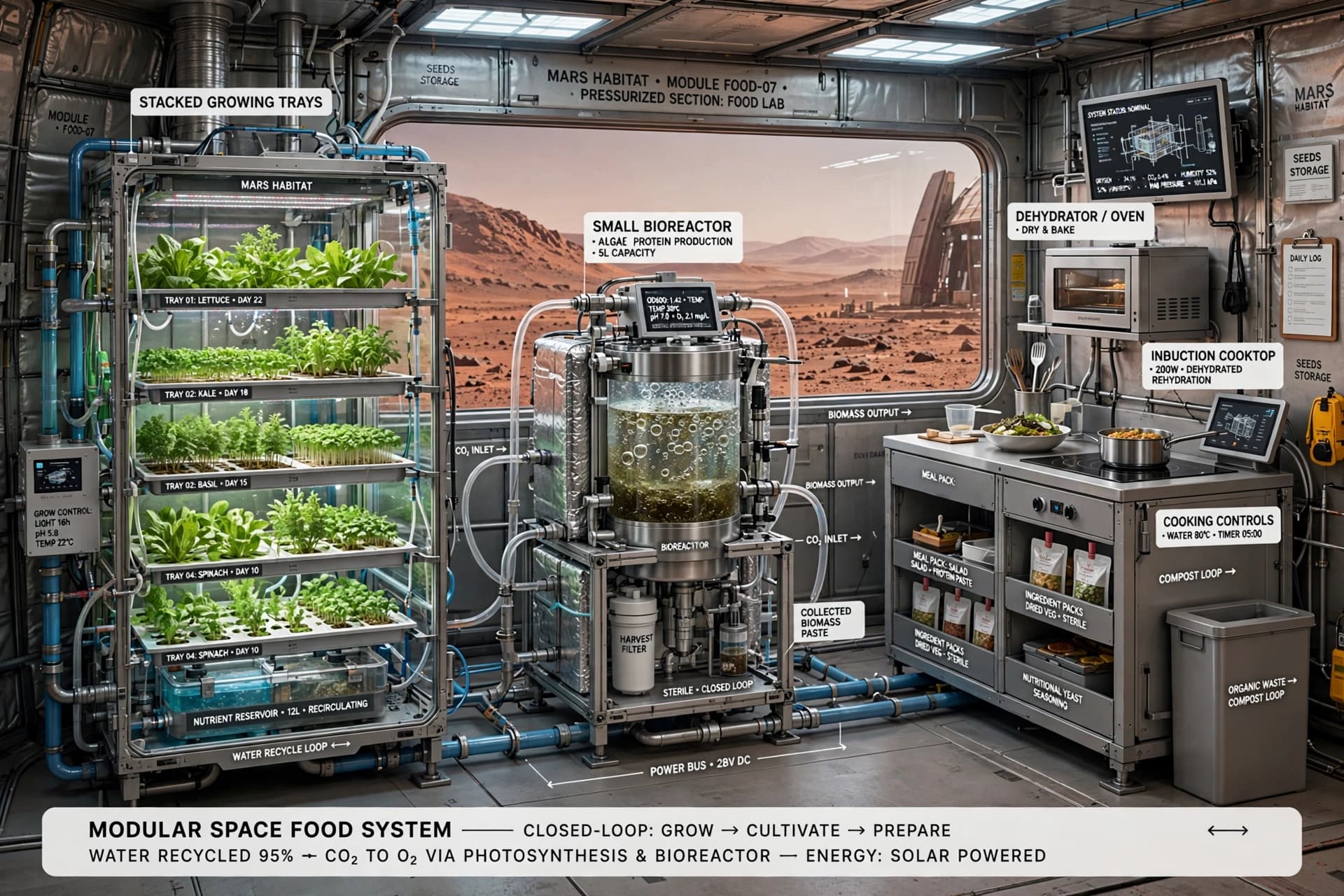
Ukeje's solution is not a single device but a modular ecosystem. It combines controlled-environment agriculture, fermentation, fungal cultivation, and closed-loop nutrient recovery through bioreactors. Building on a limited baseline of Earth-shipped food, ANI aims to produce 50 percent of the food needed in space. The system is designed to keep operating through sudden shortages of power, water, equipment, or crew labor.
Speaking from her home in Northeast Philadelphia, Ukeje said her family comes from the Igbo people of Nigeria. She grew up in Maryland, returned to Nigeria during high school, and later came back to the United States. She earned a bachelor's degree in computer science from the University of Maryland, Baltimore County, and is now pursuing a master's at Johns Hopkins University. She described herself as "completely immersed" in the project, surprised by the win but not by the outcome.
Her design also has a warm dimension. Astronauts would use portable electric lunchboxes to heat food, turning nutrient blocks into recognizable meals, and could even have "taco night" or "spaghetti night." "When they're millions of miles away from home, you want them to feel at home," Ukeje said.
Jennifer Edmunson, project manager for NASA Marshall's Centennial Challenges, said in a statement: "The future of human space exploration will depend on innovative food systems, and the creativity this challenge helped us identify is remarkable, whether participants came from near or far." Lead judge Dr. Alexander Meyers added that the criteria were deliberately challenging, and that each new idea represents a potential new tool for NASA's future space exploration plans.
Ukeje said she has no restrictions on how to use the prize money, but expects to invest part of it in further food technology research. When humans one day set foot on Mars, they may remember that in the first home-cooked meal on the Red Planet, there is the imagination and persistence of a young woman from Philadelphia.
AI Image Disclaimer: The image materials used in this report were synthesized by artificial intelligence and are provided for auxiliary illustration only.
Sources: NDTV, Wichita Eagle, Infobae, Vanguardia MX, NASA Marshall Space Flight Center
Published by Banx Network. This article is part of the Banx decentralized media programme, powered by the BXE token on the XRP Ledger.