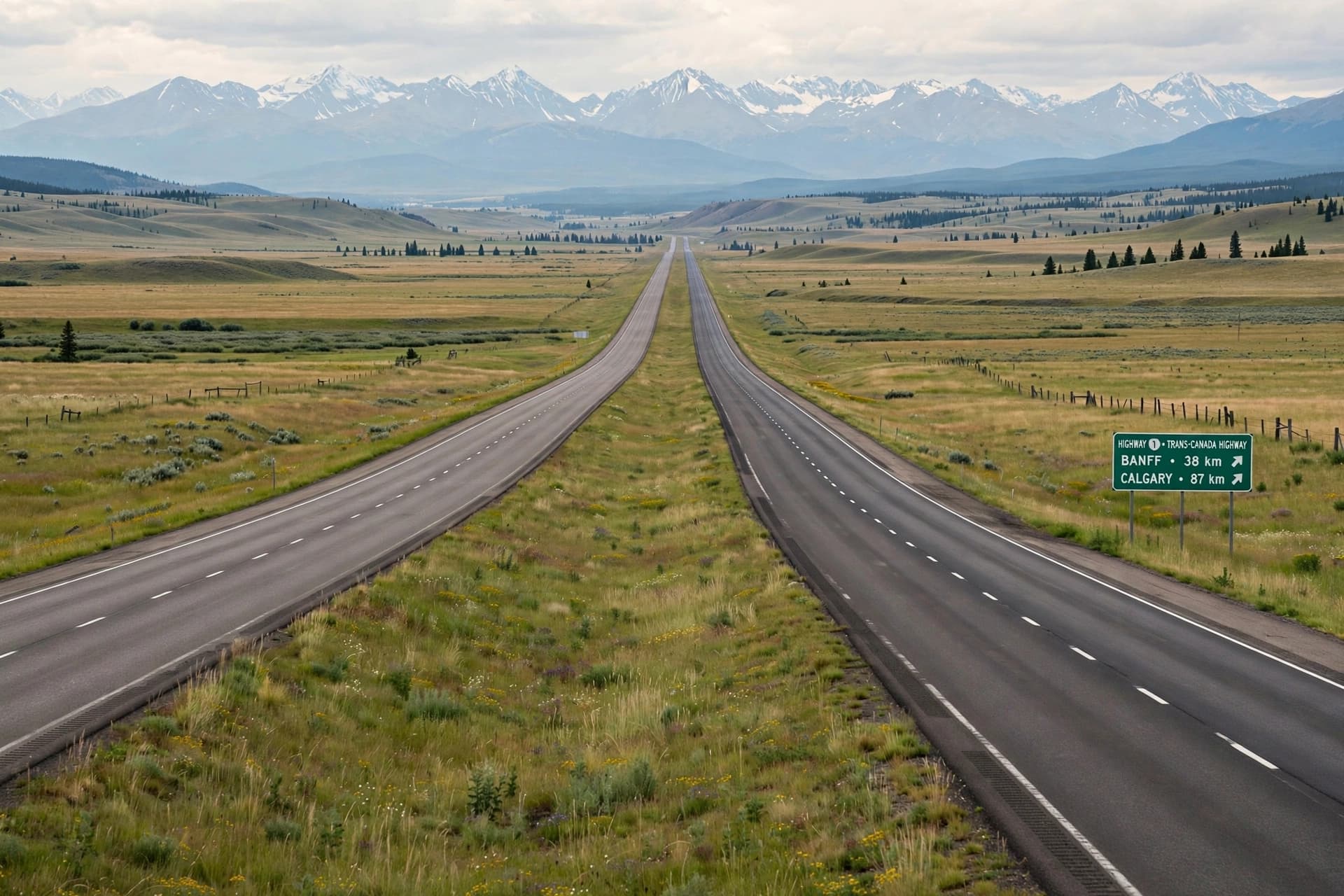
There is a particular conversation that unfolds on long stretches of highway, where the road is wide and the traffic is light, and the posted speed limit feels less like a rule than a suggestion. In Alberta, that conversation has become a formal one. Late last year, nearly 60,000 people responded to a provincial survey about raising the speed limit on divided highways from 110 to 120 kilometers per hour. The responses, obtained through an access to information request, reveal a province divided not simply on a number, but on what that number represents: freedom, efficiency, and trust, or risk, danger, and the fragility of human reaction time .
The survey results show broad support for the increase, with two-thirds of respondents favoring the change. But the support is not evenly distributed. About 87 percent of respondents under 35 agreed with the idea, compared to 76 percent in the 35-54 age group and just 50 percent of drivers 55 and older . Experience, it seems, breeds caution. Nearly a third of drivers with more than a decade behind the wheel were strongly opposed, compared to 8 percent of those with two to five years of experience .
Those in favor speak of time saved and economic benefit. More than half agreed that the time savings would translate into broader economic gains for the province. Some noted that many drivers already exceed the 110 limit, making the change a matter of aligning the law with reality. The phrase “just do it” appeared in 36 responses to an open-ended question . For these drivers, the highway is a tool, and a higher limit is simply using it more efficiently.
Those opposed invoke a different phrase: “speed kills.” Hundreds of respondents used those words, expressing concerns about safety and the increased severity of accidents at higher speeds . For them, the road is not merely a conduit but a place where physics is unforgiving. The energy of a collision rises with the square of speed, and the difference between 110 and 120 is not ten units of time saved, but a measurable increase in the forces that act on the human body.
Older drivers, who have seen more collisions and more near-misses, were more likely to understand this. As one driving instructor noted, “people don’t know what they don’t know,” particularly those with less experience . The survey also revealed frustration with a different kind of driver: the left-lane camper. The most common suggestion for improving highway experience was stricter enforcement and education about keeping slower vehicles in the right lane .
Alberta is already testing the change. A 22-kilometer stretch of Highway 2 south of Leduc began a 120 km/h pilot in late April, with the government monitoring driver behavior and collision data . The divided highways, officials note, were designed for 120 km/h . The question is not whether the pavement can handle it, but whether the drivers can—and whether the culture of the road can adapt without the cost being measured in lives.
A survey of nearly 60,000 Albertans found two-thirds support raising the speed limit on divided highways to 120 km/h, but opposition grows with age and driving experience. Supporters cite time savings; opponents invoke safety concerns. Alberta is testing the change on Highway 2 south of Leduc.
AI Image Disclaimer: Visuals in this article are produced by artificial intelligence for illustrative purposes only.
Sources: CBC News, Calgary Herald, Daily Hive
Published by Banx Network. This article is part of the Banx decentralized media programme, powered by the BXE token on the XRP Ledger.