Sendai, Japan—The floor began to roll in a slow, sickening lateral motion that lasted nearly forty seconds. Office workers ducked beneath heavy wooden desks as ceiling fluorescent tubes swung violently overhead. Bookshelves tipped forward, spilling dense stacks of paper across polished linoleum floors in downtown administrative offices. Train automation systems triggered automatic emergency braking halts across the entire regional Shinkansen network. Power substations flickered briefly before automated backup circuits stabilized local grid stability. Coastal residents ran instinctively toward designated elevated evacuation assembly points.
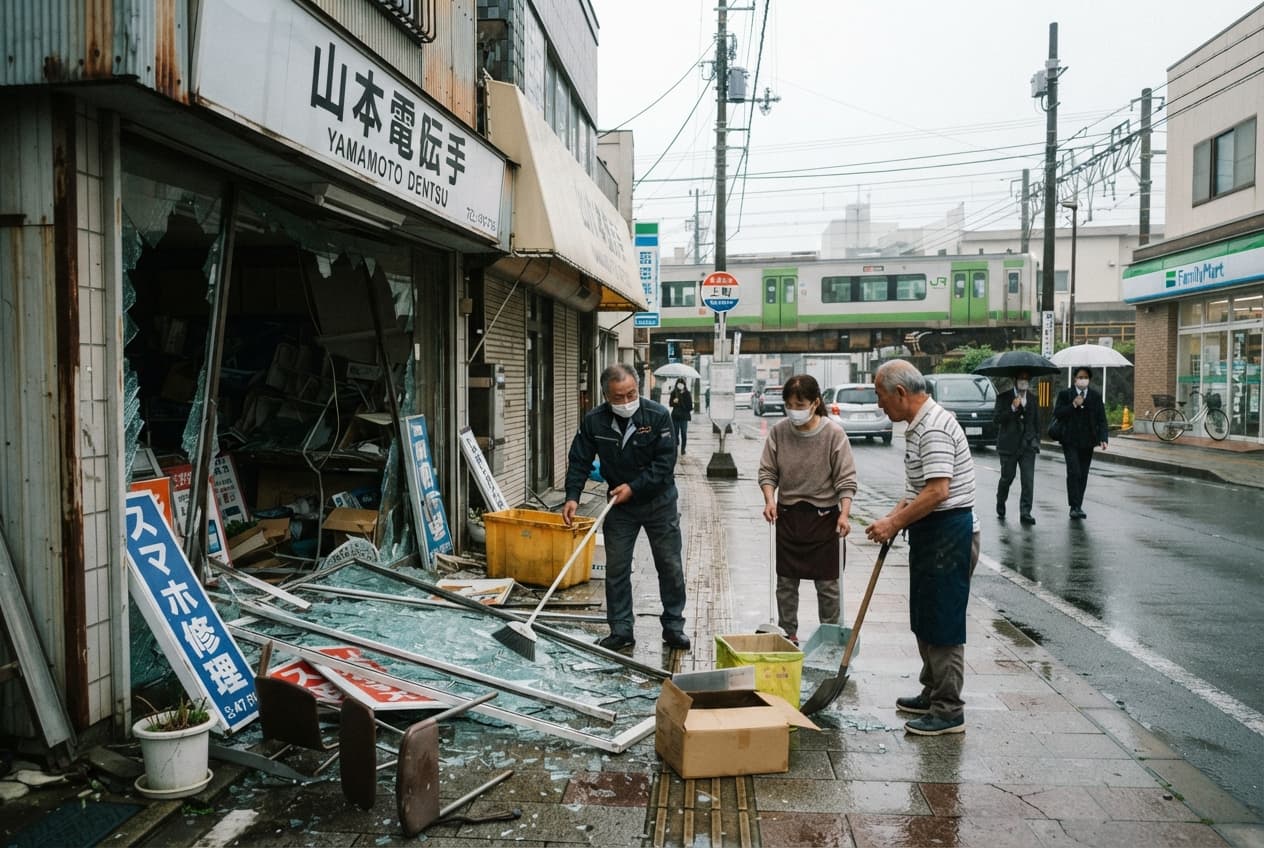
The epicenter registered deep beneath the Pacific floor off the rocky coastline of the Tohoku region. Japan Meteorological Agency issued rapid advisory bulletins warning of potential minor coastal sea level fluctuations. Local police units patrolled seaside neighborhoods broadcasting calm instructions through vehicle loudspeakers. Hospitals in coastal cities reported receiving several patients suffering from minor cuts and bruises caused by falling objects. Store owners swept up shattered window glass and broken ceramic displays from shattered shopfronts.
Shinkansen bullet train operations faced temporary suspension while track inspection crews checked rails for structural warping. Passengers stranded on station platforms waited patiently behind yellow safety lines for service restoration updates. Utility technicians inspected nuclear and thermal power generation facilities across the prefecture, confirming zero operational anomalies. Telecommunications networks experienced brief congestion as millions attempted to contact relatives in distant cities. Regional airports checked runways for surface fissures before clearing commercial flights for takeoff.
Seismologists warned the public to remain prepared for potential strong aftershocks over the coming days. Coastal residents returned cautiously to their homes once tsunami advisories were officially lifted by authorities. Local government offices distributed emergency bottled water supplies to neighborhoods experiencing temporary water line pressure drops. Structural engineers began architectural checks on older unreinforced masonry buildings throughout the commercial district. The infrastructure of the northern region held firm against the sudden subterranean stress test.
Urban life resumed its rapid pace by late afternoon as public transit systems reopened gradually. Commuters navigated past shattered storefront windows while cleanup crews hauled away broken tiles and masonry. Emergency management agencies praised the high level of public preparedness ingrained through routine municipal drills. The resilience of the coastal communities was tested once again by the volatile tectonic forces beneath the sea. Seismological monitoring equipment continues tracking micro-tremors along the offshore fault line.
Published by Banx Network. This article is part of the Banx decentralized media programme, powered by the BXE token on the XRP Ledger.