There is a particular stillness that follows a night of violence. Streets may empty, windows remain closed, and the ordinary sounds of commerce and travel become quieter. In southern Lebanon, such moments have become part of a repeating rhythm as communities move between brief pauses and renewed strikes.
Seven people were killed in southern Lebanon on September 6, including two women, according to Lebanon’s Health Ministry. Reuters reported that the strikes occurred amid continuing military activity along the southern part of the country.
The deaths added to the growing number of casualties recorded during the latest period of violence. Civilian areas have remained particularly vulnerable because many communities are located close to routes and locations affected by military operations.
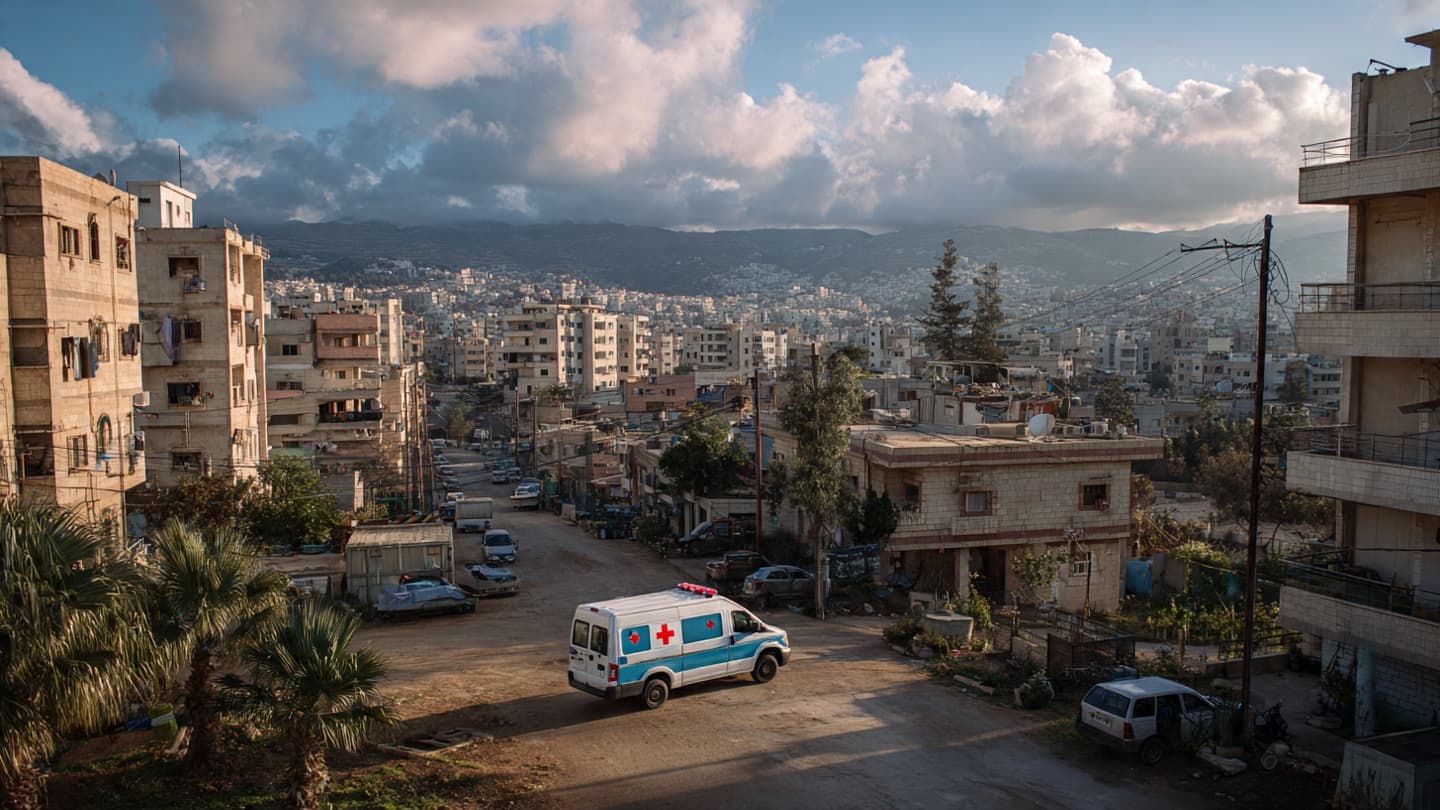
Health services in the region continue to operate under pressure. Hospitals and emergency responders must maintain readiness while also managing the consequences of displacement, damaged infrastructure, and the movement of people seeking safer locations.
For families, uncertainty can be as disruptive as the physical damage. Parents must consider where children can sleep, whether roads remain open, and whether medical care is accessible if someone becomes ill or injured.
The southern Lebanese landscape is largely rural, with villages, agricultural fields, small roads, and towns spread across the hills. When strikes occur, movement between these communities can become more complicated, particularly when roads or nearby infrastructure are affected.
Displacement also changes the relationship between people and place. A house may remain standing but become difficult to inhabit. A school may remain intact but be unable to operate normally. A local clinic may continue functioning while receiving patients from communities farther away.
These circumstances place additional pressure on local health workers. Medical teams must work within a system where demand can change rapidly, while supplies, transport, and staffing remain important practical concerns.
The latest deaths therefore form part of a wider humanitarian picture rather than an isolated statistic. For communities in southern Lebanon, the immediate concern remains remarkably simple: finding a safe place to sleep, keeping families together, and reaching medical care when it is needed. Beyond the headlines, those routines continue to shape daily life beneath an uncertain sky.
AI Image Disclaimer The images accompanying this article were produced with AI technology for contextual illustration only and are not authentic photographs of the reported strikes, victims, hospitals, or affected communities.
Sources Reuters Lebanon Ministry of Public Health United Nations World Health Organization Lebanese Red Cross
Published by Banx Network. This article is part of the Banx decentralized media programme, powered by the BXE token on the XRP Ledger.