For decades, the icy moon Europa — orbiting the giant planet Jupiter — has captured imaginations as one of the most promising places in our solar system to search for life beyond Earth. Beneath its cracked surface lies a vast global ocean, hidden under miles of ice, and that water — a key ingredient for life as we know it — has long sparked hope that this moon might be teeming with something unexpected.
But a new study led by planetary scientists is adding an important note of caution to those hopes. Using computer models that simulate Europa’s internal structure and seafloor conditions, researchers found that its rocky ocean bottom is likely cold and geologically quiet — very different from the dynamic, energy-rich environments that on Earth support life around deep-sea vents. This tranquility, the scientists say, means there may be little of the chemical energy needed to sustain ecosystems in Europa’s deep ocean today.
On Earth, active tectonics and underwater volcanoes create hot, mineral-rich plumes that fuel thriving communities of microbes and other life forms around hydrothermal vents. Those energetic environments provide chemical fuel that organisms can use in the absence of sunlight. The new models suggest that similar activity may be rare or absent on Europa’s seafloor, because its interior has cooled more than expected and the tidal forces from Jupiter are not strong enough to drive the vigorous geology needed to keep the seafloor active over long periods.
That doesn’t erase the possibility of life entirely, but it does reshape scientists’ expectations about where, and how abundantly, life could exist if it does at all. Some limited chemical reactions could still occur in shallow rocks or through radiation-driven processes that split water molecules, generating tiny amounts of reactive chemicals. But these would likely support only very sparse ecosystems at best, rather than the rich biological communities seen near Earth’s deep-ocean vent systems.
Europa’s ocean remains one of the most intriguing places in the solar system because of its sheer volume (estimated to be twice as much water as on Earth) and its connection to a world of ice and complex surface features. These features, including cracks and ridges in the ice shell, suggest that some material does move between the surface and the ocean below — a process that could transport nutrients or clues to life if it ever arose.
The findings arrive just as NASA’s Europa Clipper mission is on its way to the Jupiter system, with scheduled arrival in the early 2030s. Clipper’s suite of instruments will investigate Europa’s ice thickness, ocean depth, composition and possible zones of recent exchange between surface and subsurface. While the spacecraft isn’t equipped to detect life directly, its data could help scientists assess whether the conditions necessary for life exist somewhere beneath the ice.
In the end, this new research doesn’t close the book on Europa’s habitability — it refines the questions scientists are asking and helps guide future exploration to the most promising regions. The possibility of life on Europa may be more challenging than once believed, but the effort to understand this distant ocean world continues to underscore our broader quest to explore life’s potential beyond Earth.
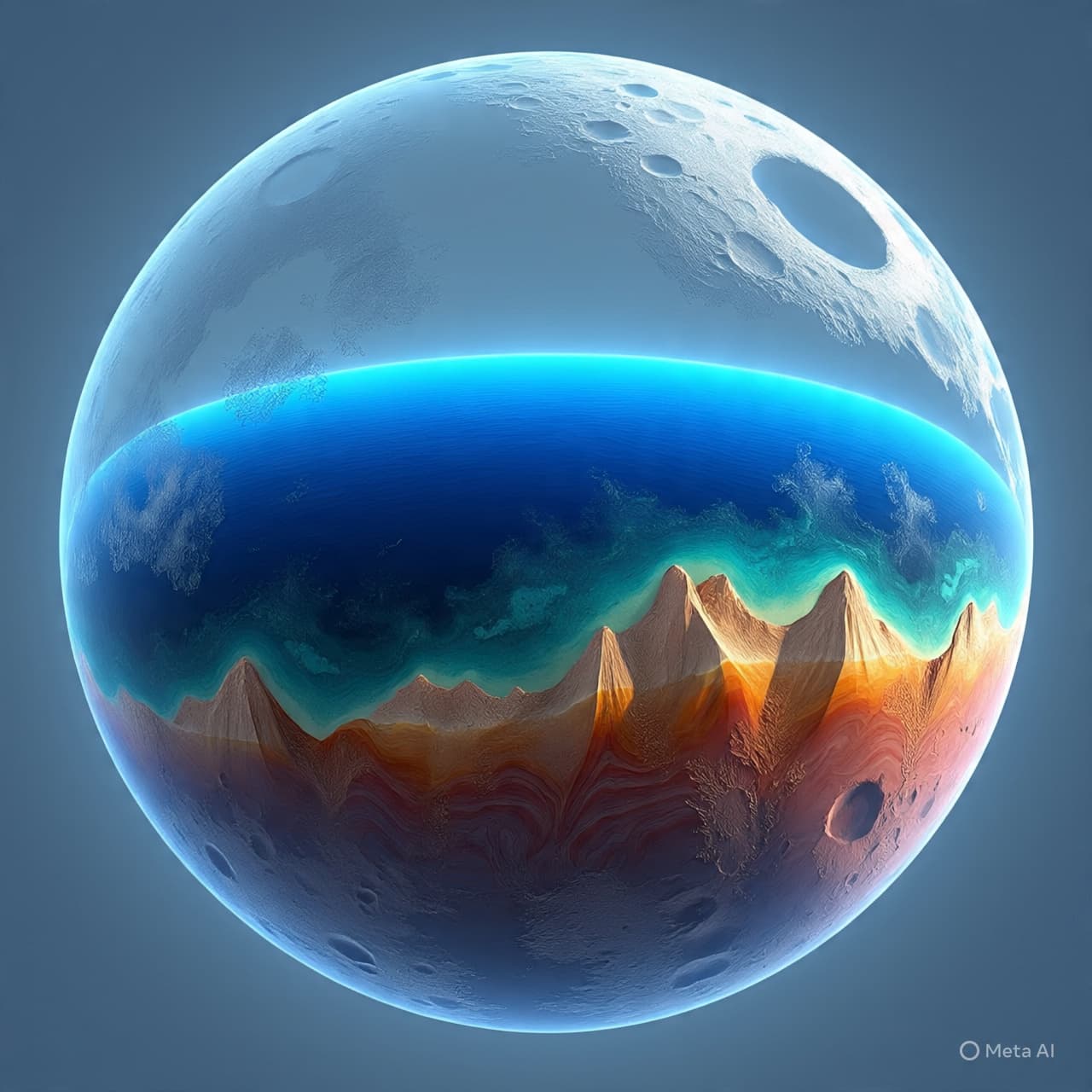
AI Image Disclaimer Visuals are created with AI tools and are not real photographs.
Sources
• New modeling research suggesting Europa’s ocean may be geologically quiet and unlikely to support life.
• Additional reporting on Europa’s role as a key target in the search for life beyond Earth.
• Information on NASA’s Europa Clipper mission and its objectives.
Published by Banx Network. This article is part of the Banx decentralized media programme, powered by the BXE token on the XRP Ledger.