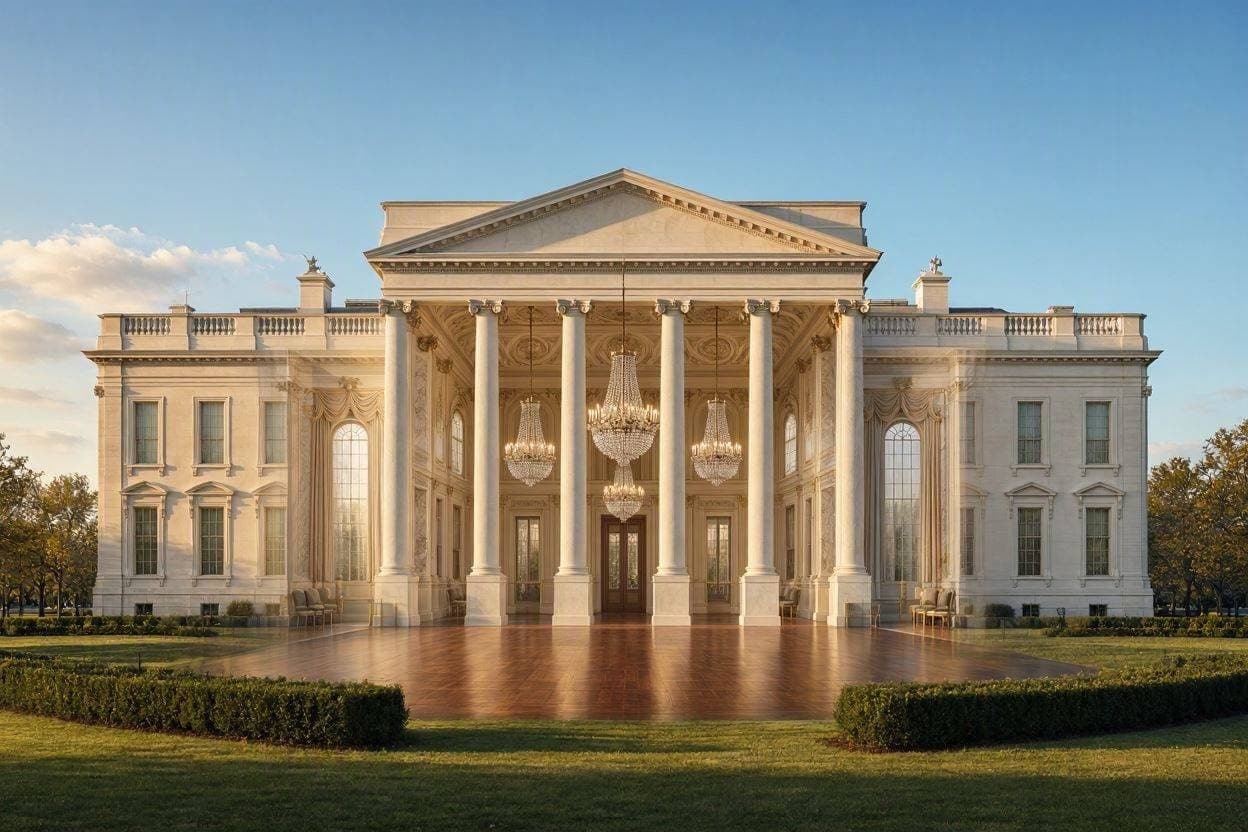
The White House is more than a residence; it is a symbol of the presidency, held in trust for the nation rather than owned by any single individual. Recently, this principle was reaffirmed by a federal appeals court, which blocked the construction of a new ballroom proposed by former President Donald Trump. The ruling stated that such a significant alteration requires congressional approval and is "not a matter for Executive self-help." This decision underscores the constitutional checks and balances that define American democracy, reminding us that even the highest office is subject to the rule of law. It is a moment of legal clarity in a debate over power, property, and precedent.
The proposed ballroom, estimated to cost hundreds of millions of dollars, was intended to expand the event capacity of the executive mansion. Supporters argued it was necessary for modern diplomatic functions, while critics viewed it as an overreach of executive authority. The court’s decision hinged on the interpretation of federal laws governing federal property and the separation of powers. Judges emphasized that presidents are tenants, not owners, and cannot unilaterally alter the historic structure without legislative consent.
This ruling has significant implications for future administrations. It sets a precedent that major renovations to federal buildings must go through proper legislative channels, ensuring transparency and public oversight. For Congress, it reinforces its role as the guardian of public funds and national heritage. The decision may prompt lawmakers to revisit existing guidelines for White House modifications, clarifying what constitutes routine maintenance versus substantial expansion.
For former President Trump, the blockage is a setback but not necessarily the end of the project. He has indicated intentions to appeal, arguing that the executive branch has inherent authority to manage its facilities. The legal battle is likely to continue, drawing attention to the boundaries of presidential power. Regardless of the outcome, the case highlights the enduring tension between efficiency and accountability in governance.
Public reaction has been mixed, with some viewing the ballroom as a necessary upgrade and others seeing it as an extravagant misuse of resources. The debate reflects broader discussions about government spending and priorities. In a time of economic uncertainty, large-scale construction projects often face scrutiny. The court’s intervention ensures that such decisions are made democratically, rather than by fiat.
Historians note that the White House has undergone many changes since its construction, but most were approved by Congress or funded privately. The current controversy serves as a reminder of the importance of adhering to established procedures. It protects the integrity of the institution, ensuring that it remains a symbol of the people’s will.
The appeals court’s decision to block the White House ballroom construction reinforces the principle of congressional oversight. As the legal process continues, the focus remains on maintaining the balance of power and preserving the historic integrity of the executive mansion.
AI Image Disclaimer: Visuals associated with this article are AI-generated to illustrate the themes of politics, law, and architecture.
Sources: PBS NewsHour Reuters NBC News
Published by Banx Network. This article is part of the Banx decentralized media programme, powered by the BXE token on the XRP Ledger.