Key Highlights
- New research suggests comets may not have delivered life's building blocks to early Earth.
- Computer simulations indicate comets traveled too fast to preserve organic molecules.
- The study opens up alternative theories for the origin of life on Earth.
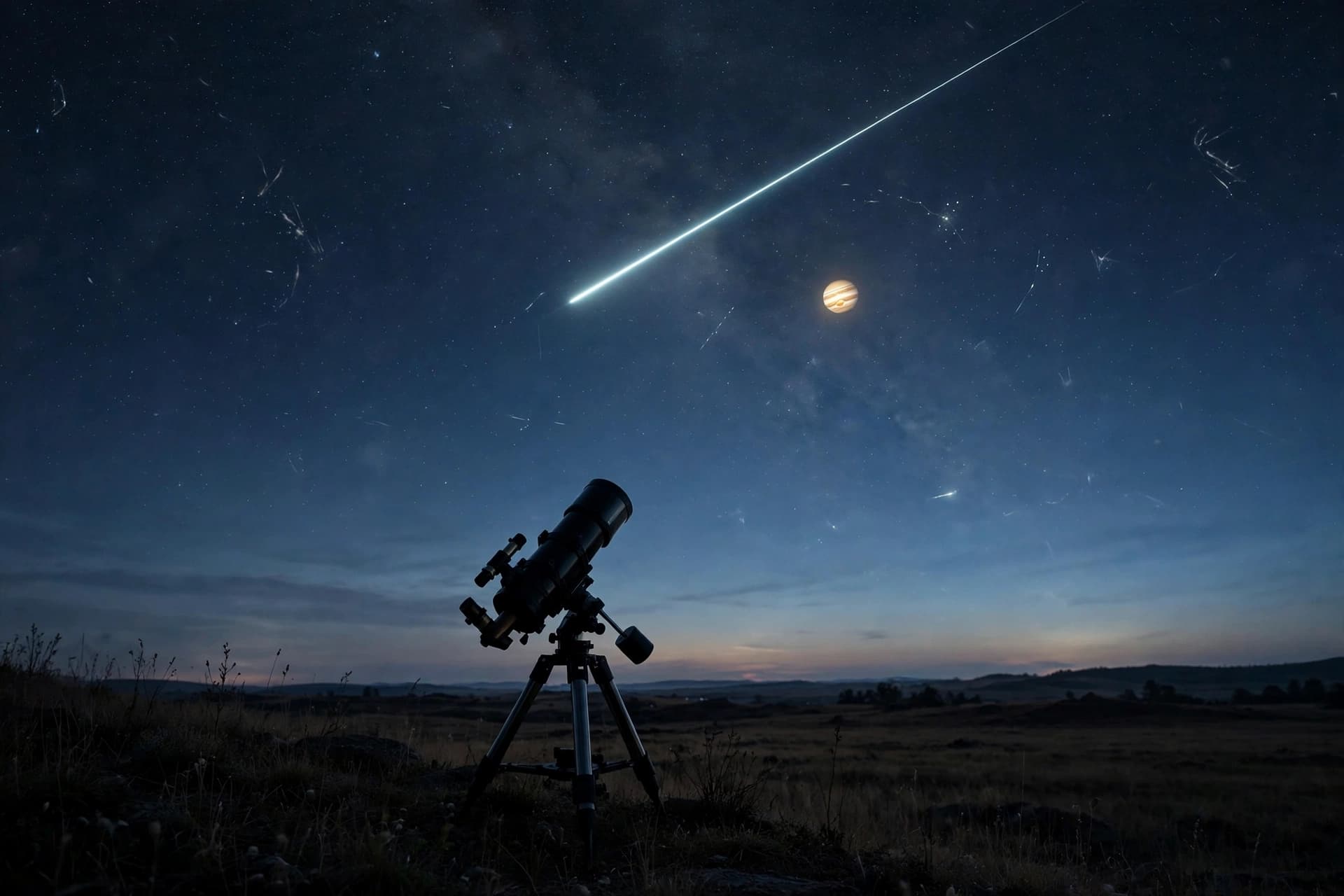
A captivating notion has long persisted that life on Earth may have originated from the cosmos, delivered by comets that traversed the early atmosphere, bringing essential ingredients for existence. This idea, rooted in scientific speculation since at least 1961, has influenced educational materials and popular media, fostering a belief that humanity is, in some sense, composed of stardust. However, a recent study published in Scientific Reports challenges this romanticized view, suggesting that the physics of comet impacts may have rendered such delivery impossible.
Led by Richard Anslow at the University of Cambridge's Institute of Astronomy, the research utilized computer simulations to model the bombardment of early Earth by comets over four billion years ago. The team specifically examined hydrogen cyanide (HCN), a molecule prevalent in numerous comets, including Halley's and Hale-Bopp, and considered crucial for prebiotic chemistry—the processes that yield the building blocks of life. The underlying premise of the comet-delivery hypothesis is straightforward: comets contain organic materials, and since early Earth experienced significant bombardment, these ingredients could have arrived from space.
However, the simulations, conducted 100,000 times, revealed a different narrative. The comets were found to be traveling at such high velocities that their impacts generated extreme temperatures and pressures, likely obliterating the delicate organic molecules they carried. In 54 percent of the simulations, no successful impacts occurred, while in the remaining 46 percent, only a small fraction resulted in multiple collisions. Anslow noted, "The typical velocities of these comets when they impact the Earth meant that actually very few, if any, would have been able to deliver intact organic molecules."
Even in the rare event that a comet did manage to deliver its cargo intact, the study argues that the impact would have been of limited utility. For the delivery to be effective, it would need to occur in an area already rich in liquid water and other necessary chemicals for prebiotic chemistry. Moreover, the HCN would have to arrive in a concentration sufficient to be significant. In an ocean impact scenario, the HCN would likely dissolve rapidly. Anslow emphasized that while comets are adept at delivering hydrogen cyanide, they do not guarantee the simultaneous delivery of all other required chemicals.
The scientific community has responded to the study with cautious interest. César Menor Salván, a researcher not involved in the study, warned against overstating its implications. He pointed out that the research does not definitively rule out the role of comets in the origin of life; rather, it calculates that a specific mechanism—the direct delivery of intact, high-concentration HCN—is improbable. Comets harbor a diverse array of organic compounds, and their contribution to life's origins cannot be simplified to the survival of a single molecule. Impacts can also catalyze chemical reactions and create environments conducive to prebiotic processes, highlighting the complexity of the issue.
If comets are not the primary delivery mechanism for life's building blocks, what alternatives exist? The study suggests several possibilities. One theory posits that Earth's primordial environment may have synthesized the necessary molecules independently. Additionally, asteroids, which typically struck Earth at slower speeds and in greater numbers, may have been more effective sources of organic compounds. Recent findings from samples of asteroids Bennu and Ryugu have revealed the presence of many amino acids essential for protein synthesis. Furthermore, the study hints at an intriguing possibility: ancient Mars, with its smaller size and distance from the Sun, might have provided conditions more favorable for HCN production from comet impacts than early Earth.
The quest to understand the origin of life remains one of science's most profound inquiries, and each new discovery tends to raise further questions. While the comet hypothesis is not entirely dismissed, it has been significantly challenged, reminding us that our narratives about life's beginnings must align with the principles of physics and chemistry. The ingredients for life may have originated from the cosmos, or they may have been formed right here on Earth. The search for answers continues, driven by ongoing research and exploration.
AI Image Disclaimer: The images in this article were generated by AI and are illustrative only; they do not depict the actual simulations, the researchers, or any specific comet.
Published by Banx Network. This article is part of the Banx decentralized media programme, powered by the BXE token on the XRP Ledger.