There is a moment in every disaster when the living must turn away from the dead—not from indifference, but from the grim necessity of tending to those who survived. This week, more than a month after a catastrophic flood swept through Nepal's Himalayan valleys, authorities made that turn official.
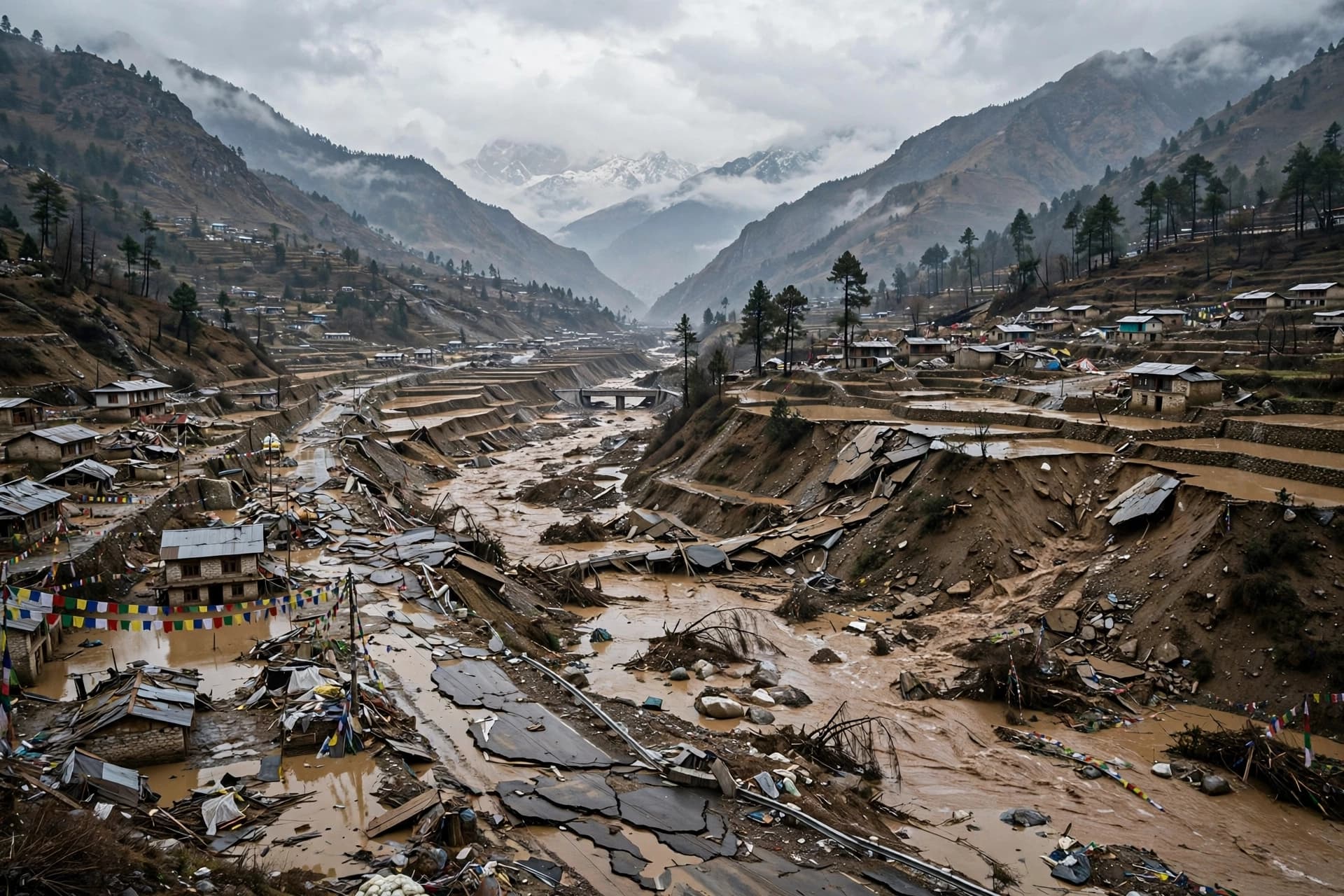
Nepal has ended its search and rescue operation for those still missing after the August 26 flood, which originated at the border with China's Tibet region. At least 1,455 people are confirmed dead, while 5,285 remain unaccounted for. Another 13,795 were rescued . "We are moving from the search and rescue phase to the search and rehabilitation phase," said Phanindra Paudel, chief of the National Emergency Operation Center .
The practical consequences of that shift are profound. Authorities are now considering how to legally declare the missing dead, so families can complete insurance claims, banking matters, and other legal formalities . Dharam Raj Uprety, chief of the National Disaster Risk Reduction and Management Authority, said officials would no longer actively search for bodies but would recover any remains or valuables found during rehabilitation work . Emergency rescues would still be conducted if needed.
The flood's toll extends far beyond human loss. Twelve hydroelectric projects were destroyed, along with roads, bridges, farms, and settlements . Authorities say they need nearly $7 billion for early recovery and rehabilitation of the thousands displaced . Nepal's government is also preparing to drain four glacial lakes identified as at high risk of collapse, a project that could take up to eight years .
The disaster has renewed attention on the intersection of climate change and Himalayan vulnerability. In recent years, Nepal has experienced increasingly erratic weather, with nearly 600 floods and landslides reported since September 22 alone . The August flood was triggered by a glacial lake outburst, a phenomenon that scientists warn will become more frequent as temperatures rise.
For the families of the 5,285 missing, the end of the search operation brings a different kind of grief—one without a body, without a grave, without the certainty that allows mourning to begin. The legal declaration of death may provide closure on paper. It cannot provide it in the heart.
AI Image Disclaimer: The images accompanying this article are generated by artificial intelligence and are intended for illustrative purposes only.
Sources: Australian Broadcasting Corporation, NBC News, Reuters, Yonhap News Agency, TheStarTV.com
Published by Banx Network. This article is part of the Banx decentralized media programme, powered by the BXE token on the XRP Ledger.