When rare cold winds blew through South Florida in early February 2026, they brought an unusual sight along with them: thousands of large reptiles becoming incapacitated and literally falling from trees, prompting residents to take action in what felt at times like an unexpected scene from a nature documentary played out on neighborhood sidewalks. The event has drawn attention to the complex interplay between extreme weather and invasive species in the region.
South Florida experienced record‑breaking low temperatures around January 30 to February 1, dipping into the 30s — a rarity not seen in “over a century,” meteorologists said. These conditions plunged cold‑blooded animals into a state called torpor, leaving them cold‑stunned and immobile. For the region’s abundant invasive green iguanas, the result was extraordinary: residents reported hundreds of pounds of iguanas collected in short spans of time, with one individual saying they gathered “over 100 pounds of iguanas within 45 minutes to an hour.”
Typically active and seen climbing trees or darting across lawns, these iguanas became helpless in the cold. Videos circulated on local media of iguanas motionless on sidewalks and tumbling from branches, creating a surreal scene that merged environmental vulnerability with community action.
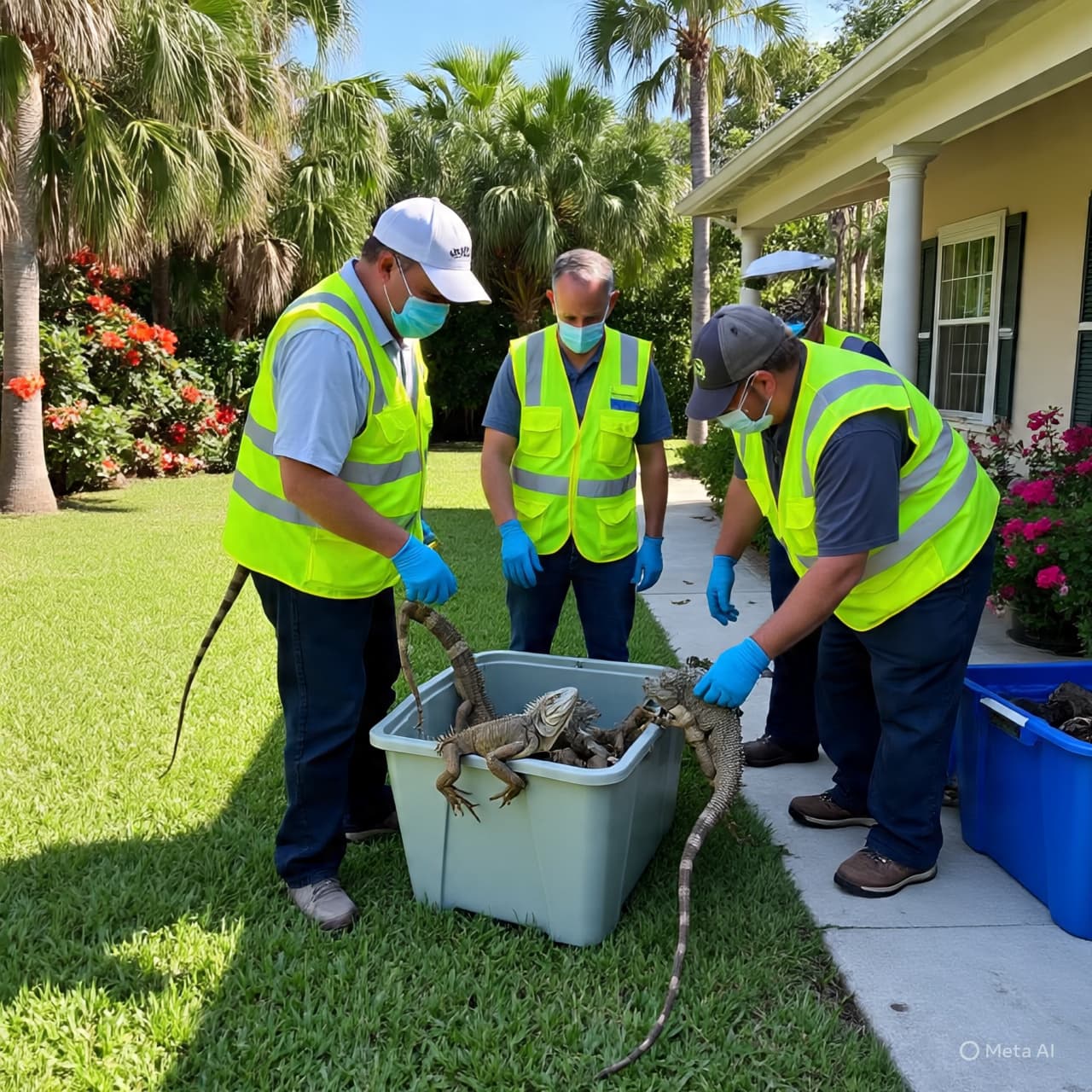
In response, the Florida Fish and Wildlife Conservation Commission (FWC) issued an executive order allowing residents to collect these cold‑stunned iguanas without requiring a permit for a limited period, aiming to leverage the weather event to reduce the invasive population. Thousands of iguanas were brought to designated collection centers where wildlife officials processed them — a measure that would normally be surrounded by strict permitting and control due to their status as a prohibited invasive species in the state.
This unusual episode highlights the broader challenges Florida faces with nonnative reptiles, which have proliferated in recent years, competing with native wildlife, damaging habitats, and straining local ecosystems. It also underscores how extreme weather events, increasingly influenced by global climate patterns, can produce unexpected ecological consequences — in this case turning a nuisance species into a community‑wide emergency catch effort.
Many residents pitched in, gathering stunned iguanas and delivering them to collection points, actions that reflected both local concern for ecosystem health and a unique response to a rare weather‑induced situation. As the region watches for further cold fronts, wildlife officials continue to offer guidance on safety and handling of wildlife affected by such extreme conditions.
AI Image Disclaimer “Visuals are created with AI tools and are not real photographs.”
📚 Sources Yahoo News Singapore reporting on the unusual scene of cold‑stunned iguanas falling in South Florida and residents collecting them under a temporary FWC permit.
Published by Banx Network. This article is part of the Banx decentralized media programme, powered by the BXE token on the XRP Ledger.