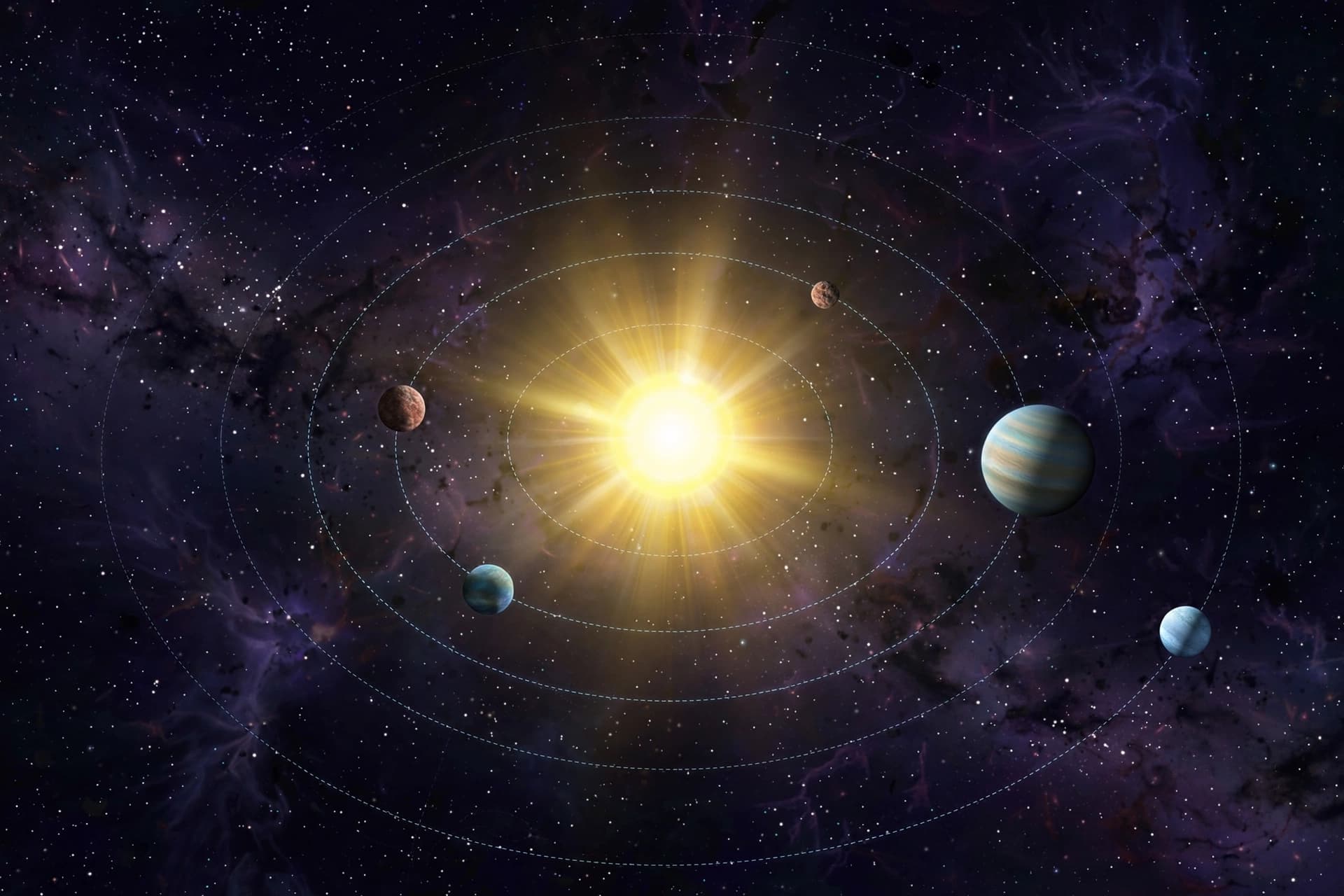
Somewhere in the quiet folds of our galaxy, beyond the reach of ordinary sight, a beam of invisible energy cuts through space. It does not flicker like a star nor flare like a supernova. It hums — steady, focused, and astonishingly powerful. Astronomers have now observed what can only be described as a vast natural microwave laser, blasting across interstellar distances with a precision that feels almost engineered.
Of course, it is not a laser in the household sense. In the language of astrophysics, it is known as a maser — short for “microwave amplification by stimulated emission of radiation.” These cosmic masers occur when molecules in space, often water or hydroxyl, become energized in just the right conditions and emit amplified microwave radiation. Under extraordinary circumstances, that emission can intensify into a beam detectable across thousands of light-years.
Recent findings reported in Nature Astronomy and discussed by outlets such as Space.com describe the detection of an unusually powerful maser emanating from a distant region of star formation. The source appears to be associated with a massive young star, still cocooned within dense clouds of gas and dust. In these turbulent nurseries, gravity compresses matter until nuclear fusion ignites. The surrounding environment becomes chaotic — hot, energetic, and dynamic — ideal conditions for maser amplification.
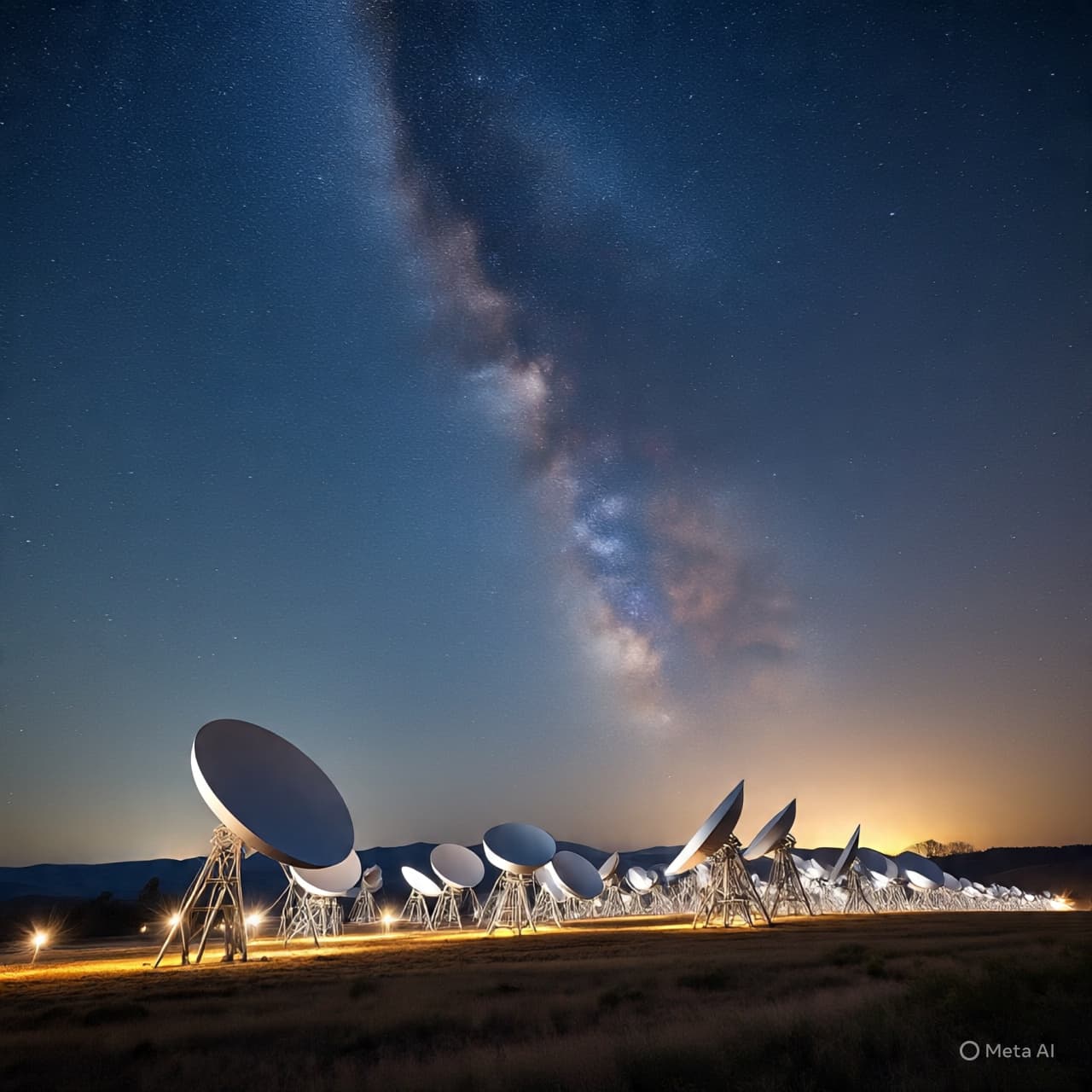
What makes this observation notable is the scale. The detected maser is significantly brighter and more energetic than typical examples. Astronomers used radio telescopes capable of capturing microwave frequencies, mapping the structure of the emission and tracing it back to its cosmic origin. The beam, though invisible to human eyes, represents a colossal release of coherent microwave radiation, shaped by the physics of molecular excitation.
Water masers are among the most studied in astronomy. When water molecules in interstellar clouds are pumped by shock waves or intense radiation from newborn stars, their energy states align in a way that allows stimulated emission to cascade. The result is a naturally occurring microwave laser, shining across space. These signals are invaluable to scientists. They act as cosmic signposts, revealing details about star formation, galactic rotation, and even the expansion of the universe.
In some cases, masers have been used to measure precise distances to galaxies. Because their emissions can be sharply defined and extremely bright at specific frequencies, they provide reliable markers for astronomical calculations. The newly spotted maser adds another data point to this intricate cosmic map, offering insight into the extreme environments where massive stars take shape.
It is tempting to imagine such a beam as dramatic — a visible spear of light piercing the darkness. In reality, its power lies in subtlety. Microwave radiation does not dazzle; it resonates quietly through radio receivers on Earth. Yet the physics behind it is no less remarkable. Nature, without circuitry or mirrors, constructs its own amplification systems amid dust clouds and gravitational collapse.
Researchers emphasize that while the maser is enormous by cosmic standards, it poses no threat to Earth. Its detection is purely observational, expanding understanding rather than signaling danger. The event underscores how much of the universe operates in wavelengths far beyond human senses, waiting for instruments sensitive enough to listen.
For now, astronomers continue to analyze the data, refining models of how such powerful masers form and evolve. Observatories around the world may turn their dishes toward the source again, tracking changes over time. The discovery adds depth to an already complex picture of stellar birth and molecular physics.
In the vast silence of space, not all light is visible, and not all brilliance shines in colors we can see. Sometimes it arrives as a microwave whisper — amplified, coherent, and traveling across unimaginable distances. Thanks to modern radio astronomy, we are learning how to hear it.
AI Image Disclaimer
Graphics are AI-generated and intended for representation, not reality.
---
Sources
The Conversation BBC News Space.com Nature Astronomy Scientific American
Published by Banx Network. This article is part of the Banx decentralized media programme, powered by the BXE token on the XRP Ledger.