The Earth’s climate is not a static machine but a living, breathing system, responsive to every whisper of change. For decades, scientists have warned that rising temperatures could trigger natural processes that amplify warming, creating a cycle that accelerates beyond human control. A new study now quantifies this risk, suggesting that unaccounted-for climate feedback loops could increase global warming by an additional 30 percent, a finding that reshapes our understanding of the crisis ahead.
These feedback loops are nature’s amplifiers. As the planet warms, permafrost thaws, releasing methane, a potent greenhouse gas. Forests stressed by heat and drought absorb less carbon dioxide, while melting ice reduces the Earth’s ability to reflect sunlight. Each of these processes feeds back into the system, driving temperatures higher in a self-reinforcing spiral. The study highlights that current climate models may underestimate the strength and speed of these interactions.
Researchers analyzed data from various Earth systems, including ocean currents, soil respiration, and cloud formation. They found that many of these feedbacks are interconnected, meaning that triggering one can set off others. For example, warming oceans release more CO2, which warms the atmosphere, which in turn melts more ice. This complexity makes prediction difficult but underscores the urgency of reducing emissions to prevent these loops from gaining momentum.
The implication is that the window for limiting warming to 1.5 or 2 degrees Celsius may be narrower than previously thought. If feedback loops contribute an extra 30 percent to warming, then the same amount of human emissions will result in significantly higher temperatures. This requires a more aggressive approach to mitigation, with faster transitions to renewable energy and greater protection of natural carbon sinks like forests and wetlands.
However, the study also offers a path forward. By identifying the most sensitive feedbacks, scientists can prioritize areas for conservation and restoration. Protecting peatlands, for instance, can prevent massive methane releases. Reforestation efforts can enhance carbon uptake, helping to counteract some of the amplifying effects. These nature-based solutions are critical components of a comprehensive climate strategy.
Public awareness of these dynamics is growing, fostering a deeper appreciation for the interconnectedness of Earth’s systems. Understanding that our actions have ripple effects encourages more responsible behavior and support for policy changes. It transforms the abstract concept of climate change into a tangible reality, where every degree matters and every action counts.
Governments and international bodies are beginning to incorporate these findings into their planning. The Paris Agreement and subsequent accords are being reevaluated in light of new data, with calls for more ambitious targets. While the challenge is immense, the clarity provided by this research empowers decision-makers to act with greater precision and purpose.
In the end, the story of climate feedback loops is one of both warning and hope. It warns us of the consequences of inaction but also highlights the power of proactive stewardship. By working with nature rather than against it, we can dampen these loops and secure a more stable future for generations to come.
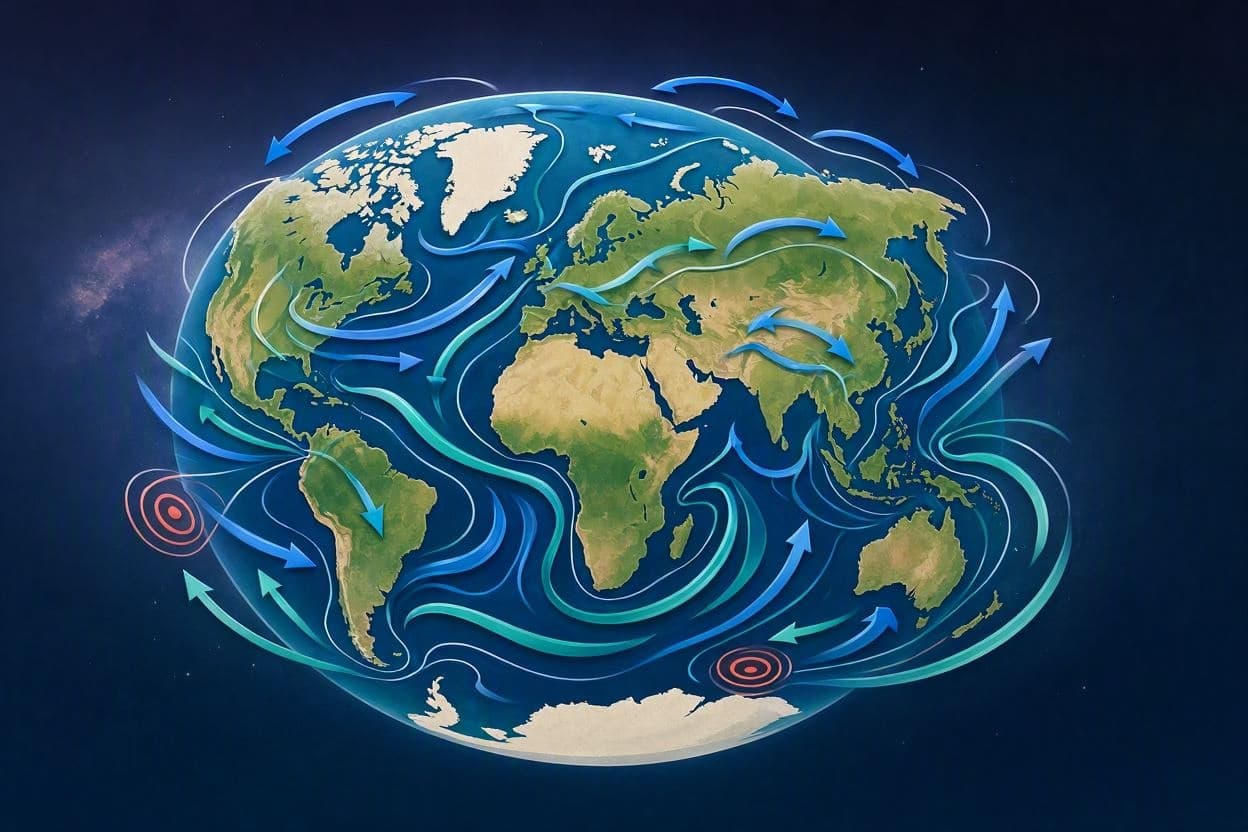
AI Image Disclaimer: The visual elements accompanying this article are AI-generated interpretations designed to illustrate the concepts of climate systems and environmental interconnectivity, without depicting specific real-world data or disaster scenes.
Sources: The Guardian, Phys.org, MDPI, Alliance of World Scientists
Published by Banx Network. This article is part of the Banx decentralized media programme, powered by the BXE token on the XRP Ledger.