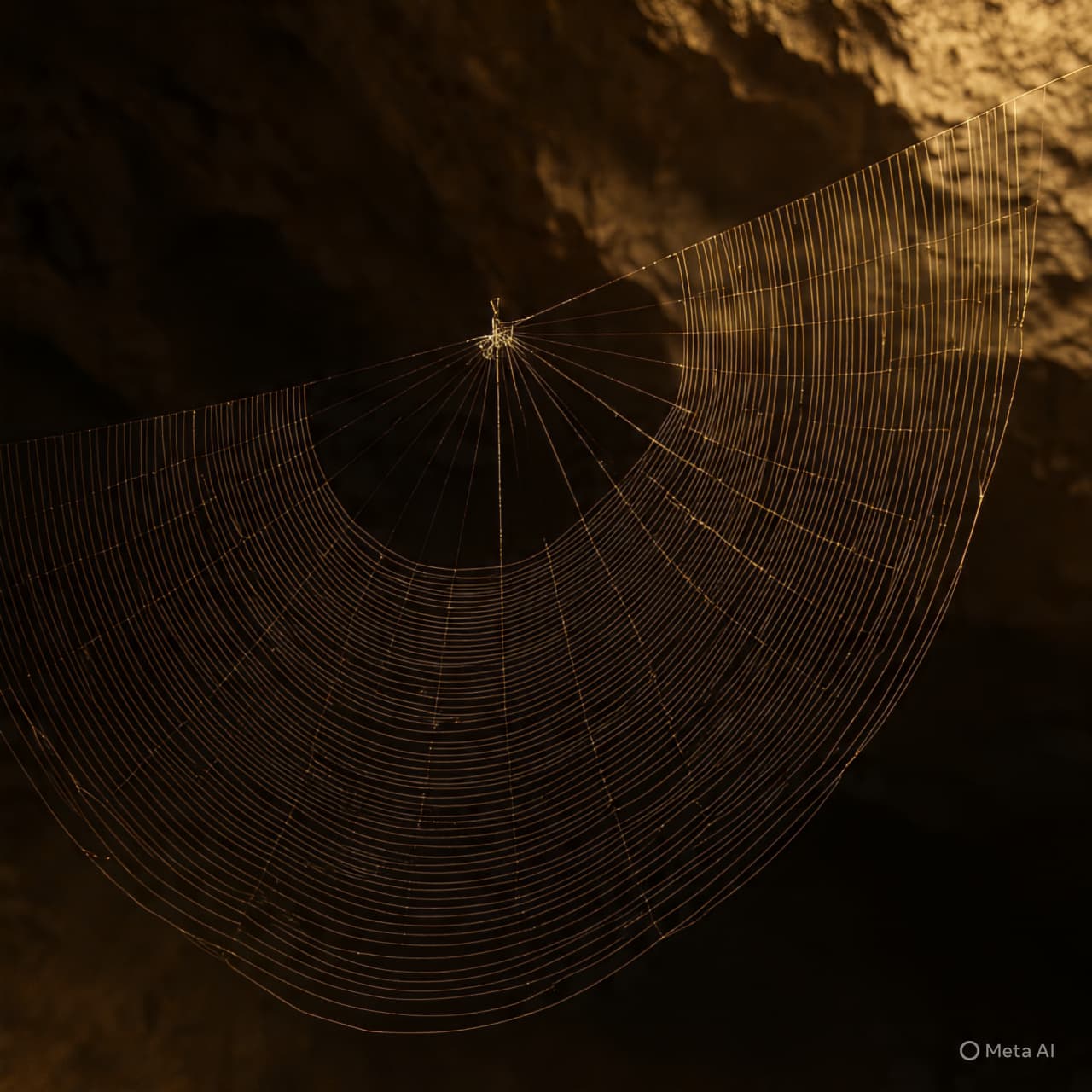
We think of spider webs as fragile — delicate spirals that tremble in the light. But the world is older, stranger, and more ambitious than that. In a cave, nearly hidden from civilization, 111,000 arachnids worked together to construct what is now considered the largest spider web known — a silk structure so massive that researchers described it as big enough to snare a whale.
The idea isn’t purely hyperbole. It’s a gesture of scale: a way to translate the unimaginable into the human mind. Because our instinct is to think in house corners and garden branches — not ecosystems where tiny architects form a single distributed engineering system.
This event isn’t about fear. It’s about humility. The web signals the possibility of collective design in nature without blueprint, without hierarchy, without committee — only instinct, time, and the physics of tensile strength. Humans invented networks. Nature invented them first.
The cave remains a place where the world reminds us there are still frontiers within the planet we thought we mapped. The grandest constructions are not always skyscrapers, bridges, satellites, or rockets. Sometimes, they are built by creatures we ignore — until the scale forces us to pay attention.
Published by Banx Network. This article is part of the Banx decentralized media programme, powered by the BXE token on the XRP Ledger.