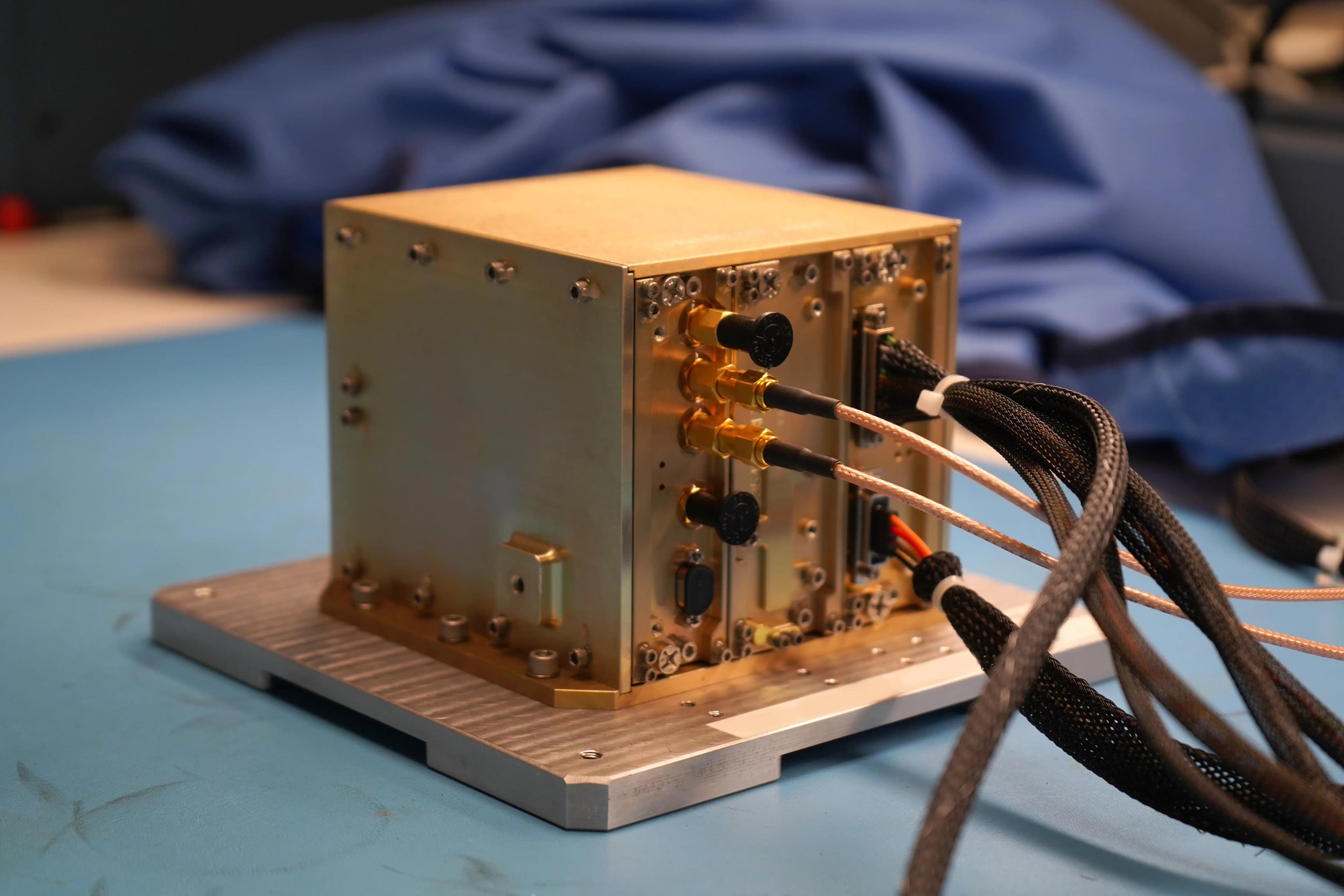
NASA is preparing to demonstrate a new generation of autonomous navigation technology through its NavCube3 mission, a compact spacecraft payload designed to improve how future lunar missions determine their position without relying continuously on Earth-based tracking. As international interest in returning humans to the Moon accelerates, navigation systems capable of operating independently are becoming increasingly important for long-term exploration. Traditional deep-space missions rely heavily on communication with ground stations to calculate spacecraft positions and trajectories. While highly accurate, that approach can introduce delays and requires constant support from Earth. NavCube3 seeks to reduce this dependence by allowing spacecraft to process navigation data onboard, enabling faster decision-making and greater operational flexibility. The miniature navigation system incorporates advanced software, precision sensors and autonomous computing technologies capable of identifying a spacecraft's location relative to celestial bodies. By processing information directly in space, future lunar missions could react more efficiently to changing conditions while reducing communication requirements with mission control. NASA believes autonomous navigation will become increasingly valuable as exploration expands beyond low-Earth orbit. Upcoming Artemis missions, commercial lunar landers and robotic scientific expeditions are expected to benefit from technologies that improve precision while lowering operational complexity. Similar systems could eventually support missions to Mars and other destinations deeper within the solar system. The development also highlights the growing role of miniaturized spacecraft technology. Smaller payloads reduce launch costs while allowing researchers to rapidly test innovative concepts in real-world space environments. Successful demonstrations can accelerate adoption across future scientific and commercial missions. International cooperation remains a defining feature of modern space exploration. Government agencies, private aerospace companies and research institutions are collaborating to develop technologies supporting sustainable lunar exploration. Navigation, communications, power systems and autonomous robotics all represent critical building blocks for establishing a long-term human presence beyond Earth. If NavCube3 performs as expected, it could represent another important step toward more independent spacecraft capable of navigating deep space with minimal intervention from Earth. Such capabilities will become increasingly valuable as humanity expands its exploration of the Moon and prepares for even more ambitious interplanetary missions.
Published by Banx Network. This article is part of the Banx decentralized media programme, powered by the BXE token on the XRP Ledger.