There is a particular stillness that descends upon a landscape at dawn—a stillness made of long shadows and soft light, of the world not yet awake but no longer asleep. On Mars, that stillness has been captured by a rover that has spent more than a decade climbing a mountain, and the image it returned is one of the most striking ever taken from the surface of another planet.
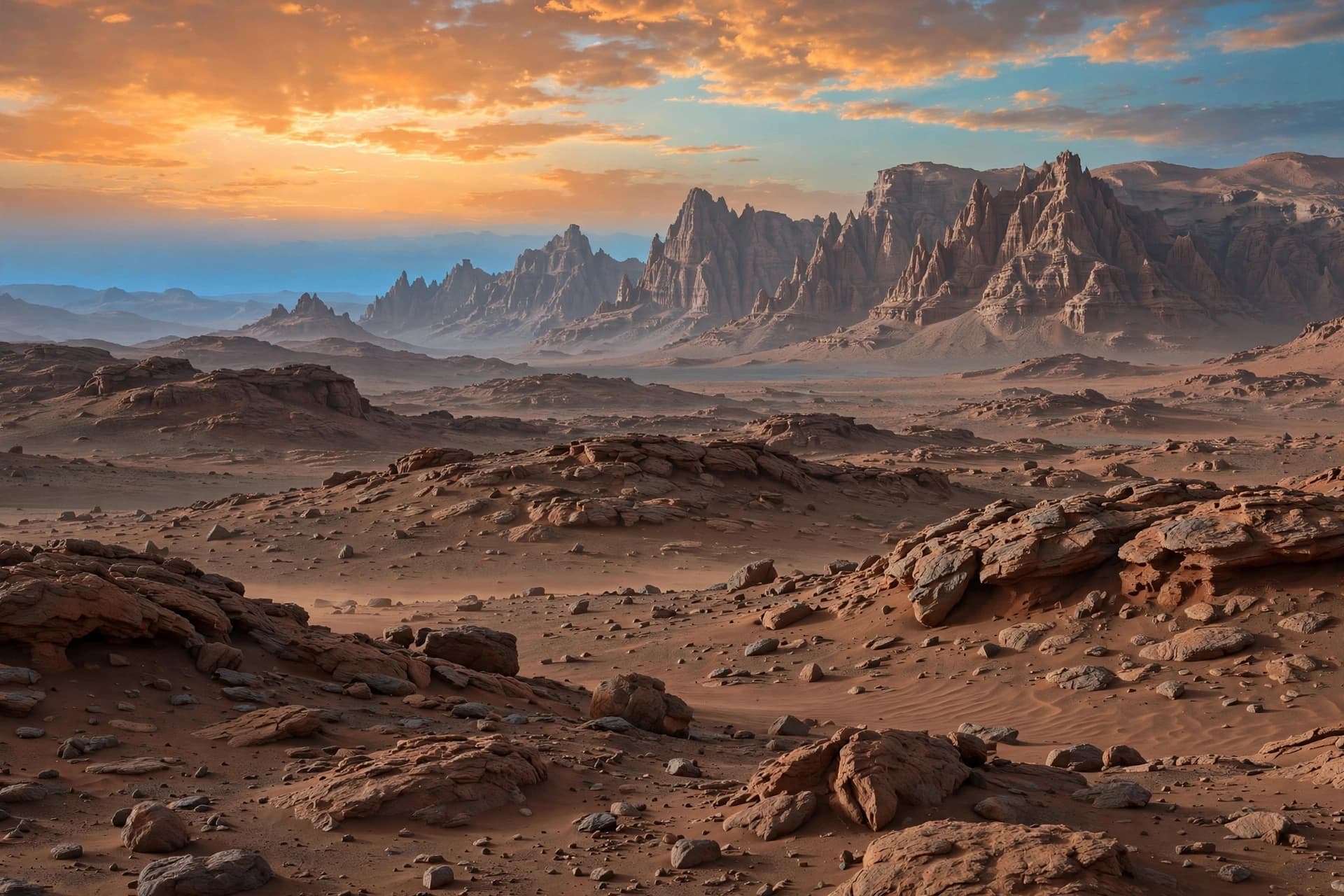
NASA released the image this week, taken by the Curiosity rover's Mastcam camera about an hour after sunrise. It shows sunlight bathing jagged, wind-carved cliffs in the distance, their peaks glowing against an orange sky that fades into shades of blue near the horizon . The scene is both alien and oddly familiar—a landscape that reminds scientists of the American Southwest, but with colors that could only belong to Mars.
The cliffs in the image are known as yardangs, ridges of rock that were carved by wind over eons. According to Ashwin Vasavada, the Curiosity project scientist at NASA's Jet Propulsion Laboratory, the yardang layer was likely formed about three billion years ago from wind-blown sediment—sand or volcanic ash that hardened into rock and was then sculpted by the planet's relentless winds . The layer spans about 16 kilometers across the northwestern reaches of Mount Sharp, the five-kilometer-tall mountain that Curiosity has been climbing since 2014.
What makes this particular image notable is not just its beauty but its geological significance. The yardang layer sits above what geologists call an unconformity—a gap in the rock record where previous layers eroded away before new material was deposited on top . Studying this layer could help scientists understand a period of Martian history that is not recorded in the continuous stack of sedimentary layers that make up most of Mount Sharp.
Curiosity has now gained more than a kilometer in elevation during its ascent, the most any rover has ever climbed on Mars . The journey has taken it through layers of rock that record the planet's transition from a wetter, warmer world to the cold, dry place it is today. Each layer tells a story of lakes and streams that once existed in Gale Crater, and of the conditions that might have supported microbial life.
The rover is expected to reach the yardang layer in 2027 or 2028, when it will use its instruments to analyze the rock up close . For now, the image serves as a preview—a glimpse of a landscape that has been waiting billions of years for someone to see it. "This scene has a wildness that reminds me of a road trip through Monument Valley, Arizona," Vasavada said. "You can almost feel the silence and the endless open space under the sky. But as familiar as that sounds, the sky is orange and the sunrise has shades of blue. It's like Earth, but it's definitely Mars" .
AI Image Disclaimer: The images accompanying this article were generated by artificial intelligence and are for illustrative purposes only.
Sources: NASA, Jet Propulsion Laboratory, Reuters
Published by Banx Network. This article is part of the Banx decentralized media programme, powered by the BXE token on the XRP Ledger.