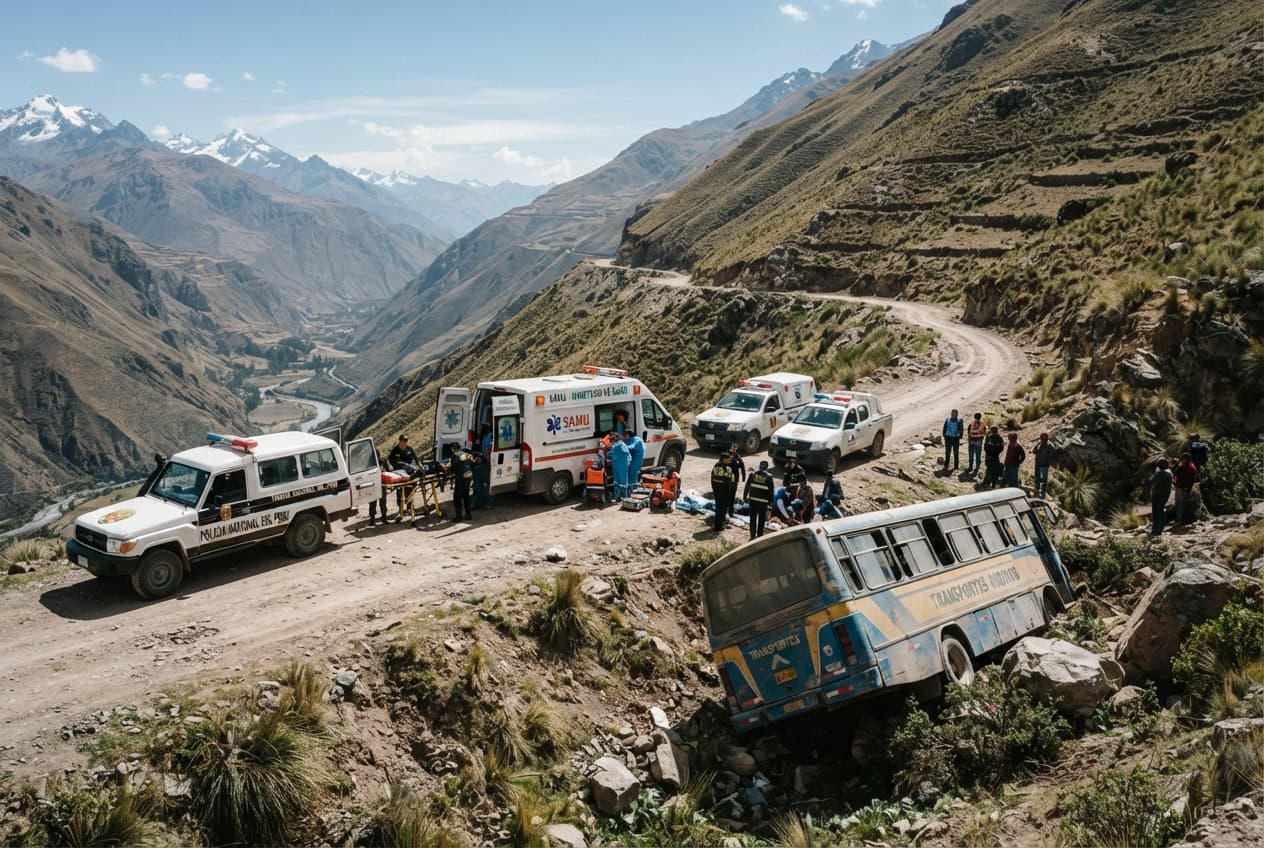
Lima, Peru—A long-distance passenger bus plummeted off a narrow, unpaved mountain highway into a five-hundred-meter ravine early Friday morning, resulting in catastrophic loss of life. Regional transit authorities reported that the high-speed vehicle failed to negotiate a sharp curve along the treacherous Andean pass before plunging down the sheer cliff face. National police and civil defense squads rushed to the remote gorge to initiate desperate rescue operations under difficult terrain conditions.
Emergency medical personnel confirmed that at least twenty-two passengers died instantly upon impact, while dozens of survivors sustained severe polytrauma injuries. Rescue workers used ropes, stretchers, and portable lighting to hoist injured travelers up the steep canyon wall to waiting ambulances. Local clinics in nearby provincial towns quickly exhausted their medical supplies as waves of injured victims arrived via police transport.
Transport ministry inspectors examining the crash site noted an absence of protective guardrails along the precipitous mountain ledge. Preliminary witness accounts suggest the bus was traveling above recommended speed limits for wet, winding mountain roads prior to losing traction. Prosecution officials seized company dispatch logs and driver licensing records from the interprovincial transport operator's headquarters.
Families of the passengers gathered outside regional morgues and bus terminal offices demanding immediate information regarding missing relatives. Government disaster response teams deployed heavy cranes to begin the complex process of recovering the crushed vehicle frame from the bottom of the ravine. National lawmakers renewed longstanding criticisms regarding lax safety enforcement and inadequate maintenance standards across Andean transport routes.
Presidential representatives announced emergency financial assistance packages to cover funeral expenses for the victims and medical care for the surviving passengers. Local community volunteers worked alongside firefighters to clear debris and assist medical triage teams operating at the base of the canyon. Transport unions called for an immediate nationwide safety review of intercity bus fleets operating through high-altitude mountain passes.
Rescue operations continued into the afternoon hours as specialized mountaineering police units searched the surrounding riverbanks for any additional uncounted victims. Hospital administrators appealed for blood donations from local residents to support emergency surgeries required for critically injured passengers. The tragedy highlights the enduring dangers posed by Peru's rugged geography and poorly regulated commercial transport sector.
Published by Banx Network. This article is part of the Banx decentralized media programme, powered by the BXE token on the XRP Ledger.