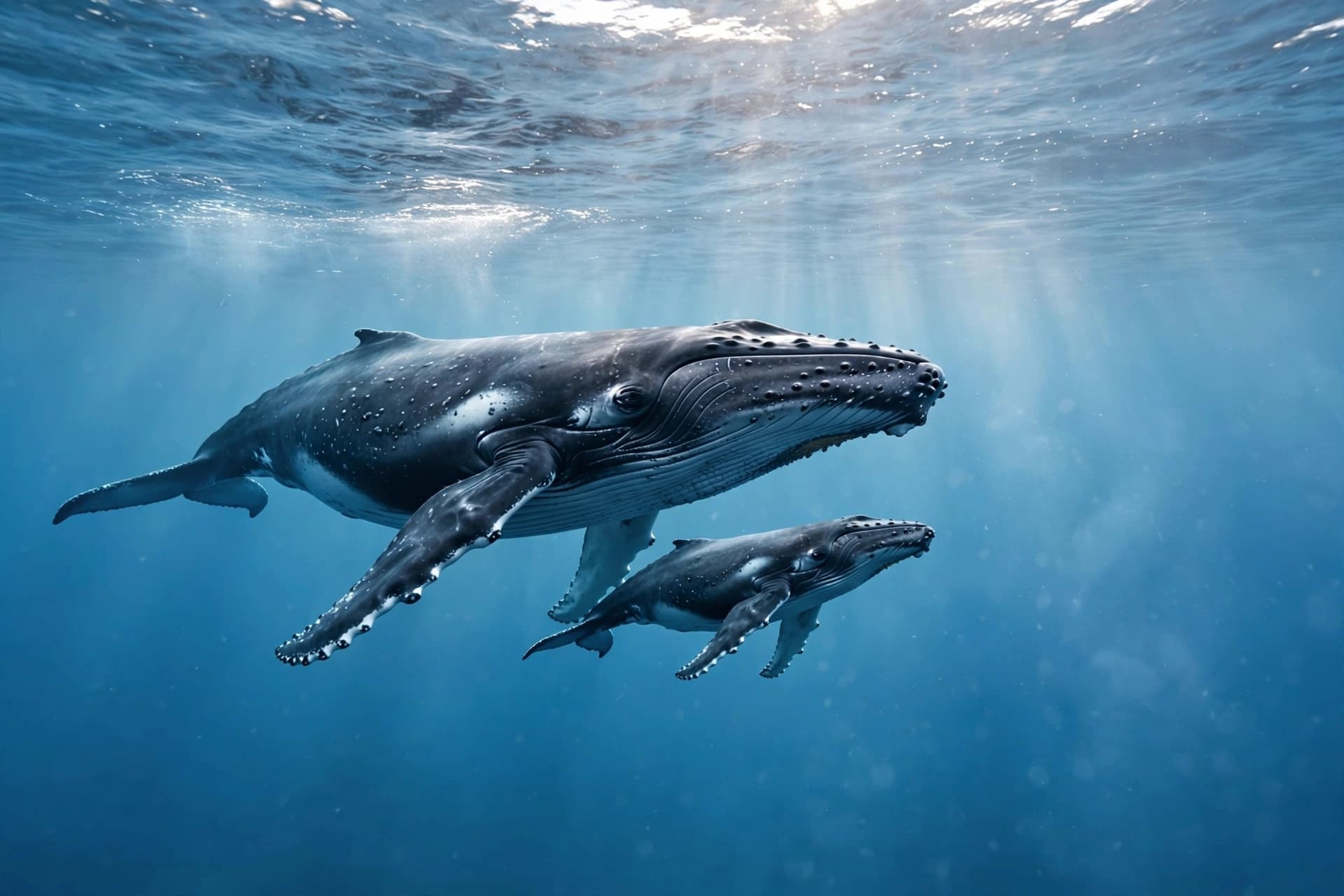
In the deep, blue expanse of the ocean, a moment of profound sorrow was captured on camera, offering a rare glimpse into the emotional lives of whales. Off the coast of Brazil, researchers recorded a mother humpback whale carrying her stillborn calf on her head and fins for hours, refusing to let go. The footage, described as heartbreaking and extremely rare, has sparked a global conversation about animal grief and the complex social bonds of marine mammals.
Humpback whales are known for their intelligence and strong maternal instincts. The mother in the video was seen gently balancing the lifeless body, keeping it above the water’s surface. This behavior, often referred to as "post-mortem transport," has been observed in other cetaceans, including dolphins and sperm whales. It suggests a level of awareness and attachment that challenges our understanding of non-human emotions. For scientists, it is a poignant reminder of the depth of whale society.
The incident occurred in the Abrolhos Bank, a critical breeding ground for humpbacks. Researchers from the Projeto Baleia Jubarte were monitoring the population when they witnessed the event. The mother’s persistence, despite the calf’s lack of movement, indicates a refusal to accept the loss. Such behavior may serve as a processing mechanism, allowing the mother to come to terms with the death of her offspring. It is a natural, albeit painful, part of life in the wild.
For those who watched the video, the reaction was one of empathy and sadness. Many drew parallels to human experiences of loss, recognizing the universal language of grief. The image of the massive whale tenderly holding her small calf resonated deeply, breaking down barriers between species. It reminded viewers that animals are not just biological machines but sentient beings capable of deep feeling.
Scientifically, such observations are valuable for understanding cetacean behavior. While anecdotal evidence of animal grief has existed for decades, documented cases like this provide concrete data. They help researchers build a more comprehensive picture of whale psychology and social structure. It also highlights the importance of protecting these animals, not just for ecological reasons but for their intrinsic value as emotional creatures.
The stillbirth itself may have been caused by various factors, including natural complications or environmental stressors. Humpback populations are recovering from historical whaling, but they still face threats from ship strikes, entanglement, and climate change. Each loss is a blow to the population’s resilience. Understanding the causes of stillbirths is crucial for conservation efforts aimed at ensuring the health of future generations.
Public interest in the footage has led to increased support for marine conservation organizations. People are moved to act when they see the personal side of wildlife. This emotional connection can be a powerful tool for advocacy, driving policy changes and funding for research. It transforms abstract statistics into real stories that demand attention and care.
In the end, the mother humpback’s vigil is a testament to the bond between parent and child, a bond that transcends species. It invites us to look at the ocean with new eyes, seeing not just resources but relationships. As we continue to study and protect these giants, we honor their lives and their losses. The footage remains a powerful symbol of love and grief in the natural world.
AI Image Disclaimer: The visual aids included here are AI-generated illustrations depicting whale behavior and ocean scenes, not actual frames from the specific video footage recorded by Projeto Baleia Jubarte.
Sources: Projeto Baleia Jubarte National Geographic The Guardian
Published by Banx Network. This article is part of the Banx decentralized media programme, powered by the BXE token on the XRP Ledger.