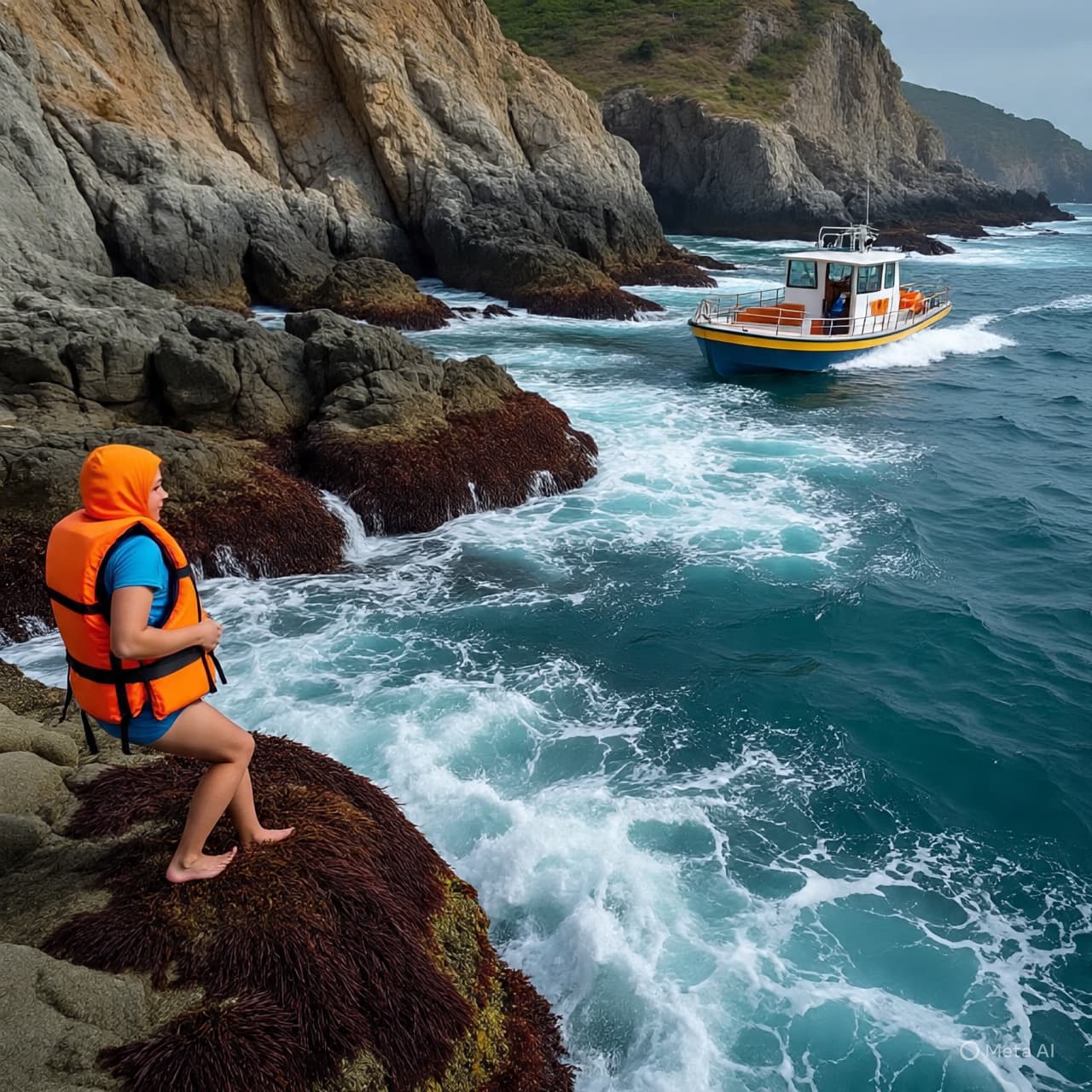
The ocean has its own language — one of rhythm, pull, and patience — and it does not easily forgive miscalculation. Along the coast of Sully Island in Wales, two swimmers learned this the hard way when their trust in artificial intelligence nearly cost them their lives.
The men, planning a short swim to the mainland, had asked ChatGPT to calculate the tide time for their return. The AI tool, designed for conversation rather than maritime navigation, gave an incorrect forecast. When the pair began swimming back, they discovered too late that the tide had already turned.
As the sea surged and currents strengthened, the men were pulled off course and began to struggle. Their cries for help were heard by a nearby restaurant owner, who rushed to their aid and managed to rescue both before the situation became fatal.
Local authorities later confirmed that the tide data provided by the AI was inaccurate, and that official marine forecasts or tide charts should always be used for such activities. One of the swimmers admitted afterward that he had made “a big mistake” by trusting a general-purpose chatbot instead of verified maritime sources.
The episode has since sparked a broader discussion about overreliance on artificial intelligence — and how even seemingly harmless queries can turn dangerous when mixed with nature’s unpredictability. The sea, as the Welsh coast reminds us, listens only to the moon, not to the machine.
AI Image Disclaimer: AI-generated illustrations are conceptual and not depictions of real people or events.
Sources: BBC News The Guardian Sky News Reuters Wales Online
Published by Banx Network. This article is part of the Banx decentralized media programme, powered by the BXE token on the XRP Ledger.