There is a quiet comfort in looking up at the Moon and knowing exactly what to expect—the same silver disc that has hung over every human evening, keeping its appointments with a precision that predates calendars and will outlast them. On the first night of November, it kept that appointment once more, though not in the full brilliance that some might have hoped for.
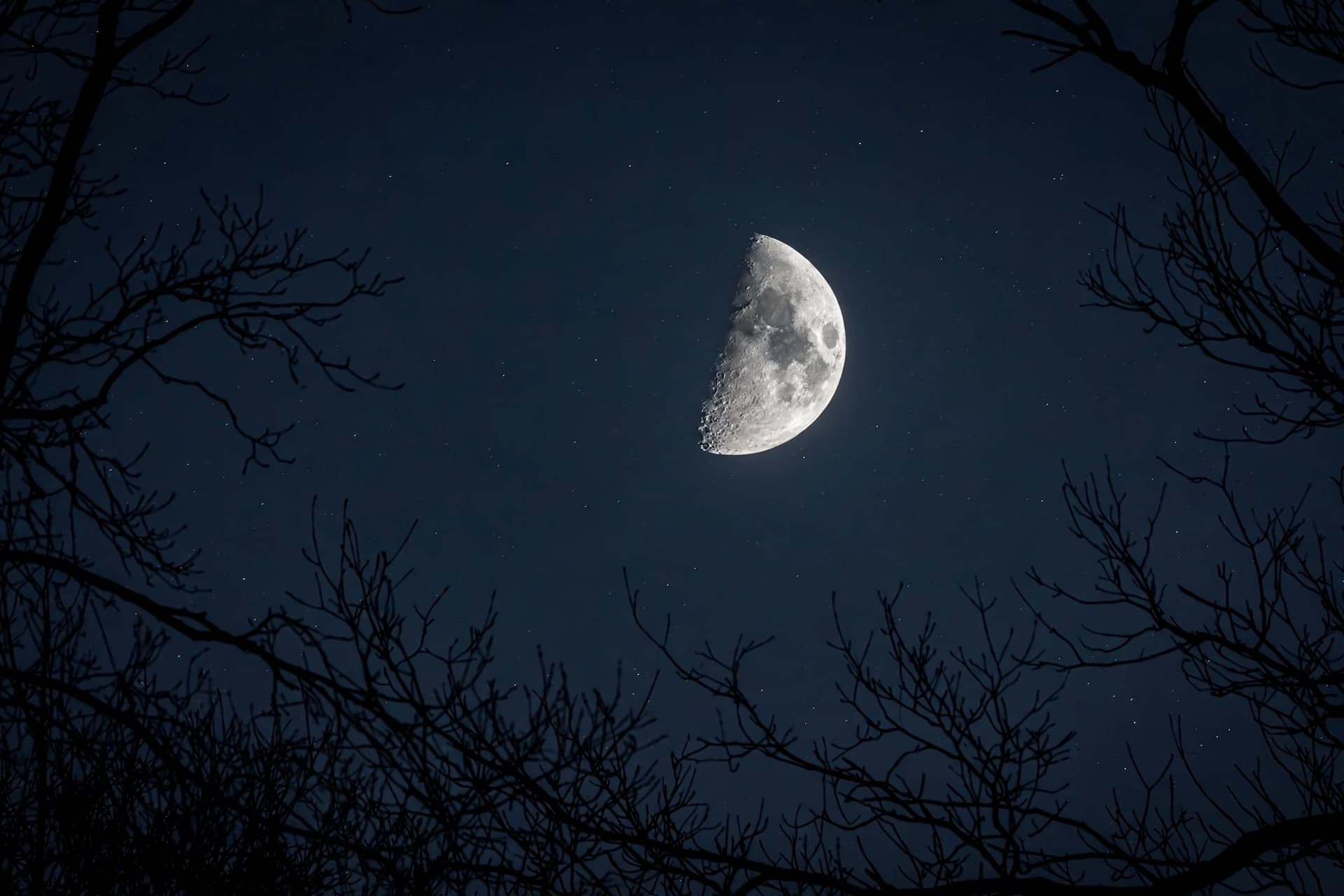
The Moon on November 1, 2026, was in its Last Quarter phase, appearing roughly half-illuminated from the perspective of Earth . According to NASA's Daily Moon Guide tracker, approximately 56 percent of the lunar surface was visible, a slight variation from the ideal half that reflects the ongoing dance between the Moon, Earth, and Sun . The Old Farmer's Almanac placed the precise moment of the Last Quarter at 3:30 p.m. Eastern time that afternoon, while Brazilian observers noted the phase officially beginning at 5:30 p.m. local time .
For those who stepped outside after sunset, the Moon would have risen in the east around midnight, reached its highest point near sunrise, and set in the west around noon—a schedule that belongs to the waning half of the lunar cycle . This is the Moon in retreat, a body shedding its light night by night as it moves toward the New Moon on November 9 . It is not the Moon of poetry and romance, the full face that draws crowds to beaches and rooftops. It is the Moon of quiet early mornings, of commuters who notice it hanging pale in the dawn sky and wonder, briefly, what time it is.
The Last Quarter carries a particular character in the rhythm of the lunar month. It arrives after the intensity of the full phase, after the harvest moons and the supermoons and the nights when the Moon seems to demand attention. What follows is a gradual dimming, a return to darkness that is not an ending but a preparation. In the language of lunar calendars, this is the Third Quarter—the last of the primary phases before the cycle begins again.
For astronomers, the phase is unremarkable, a predictable consequence of orbital mechanics. For anyone else, it is a reminder that the sky is not static, that even the most familiar object in the night changes shape and position with a constancy that can feel, on the right evening, like company. The Moon on November 1 was half there, half gone, and entirely on schedule.
Image Disclaimer: The visual accompanying this article was generated by artificial intelligence and is not a photograph of the Moon on November 1, 2026.
Sources: Catalina Sky Survey, Mashable, The Old Farmer's Almanac, O POVO, Star Walk
Published by Banx Network. This article is part of the Banx decentralized media programme, powered by the BXE token on the XRP Ledger.