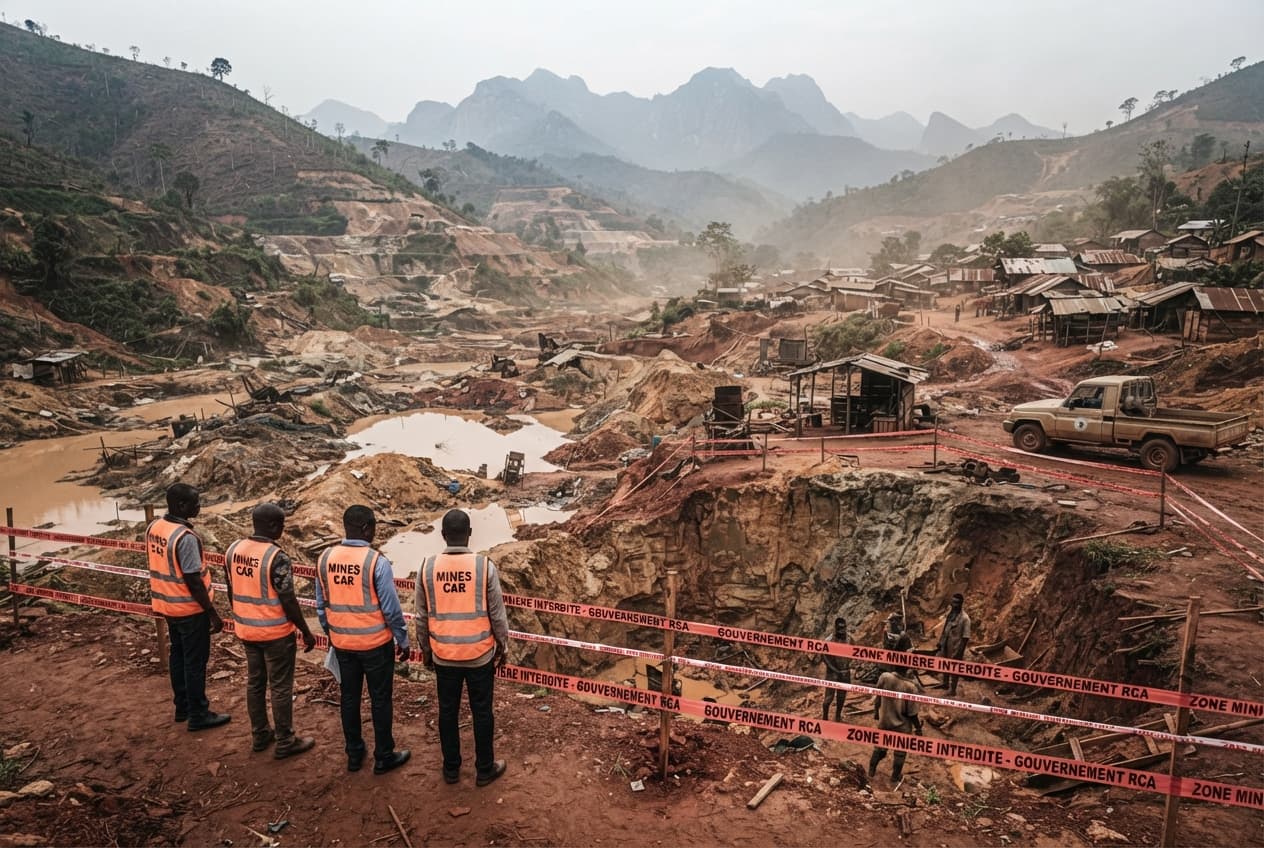
Bangui, Central African Republic—Government inspectors fanned out across informal mining sectors, slapping red stop-work notices onto unsecured timber supports and rusted extraction machinery. Ministry officials moved with grim urgency following a catastrophic double disaster that claimed dozens of lives across unstable artisanal pits and overcrowded suburban settlements. Local police cordoned off perimeter access points as mining executives and municipal leaders were hauled before regional tribunals to answer for widespread safety failures. The state apparatus attempted to assert control over chaotic extraction zones that operated completely outside national labor and environmental protections.
Investigators confirmed that unregulated excavation practices directly triggered the recent wall failures, burying workers beneath tons of shifting earth and gravel. Heavy seasonal downpours exacerbated structural instability across the hillside pits, turning makeshift tunnels into lethal death traps for informal laborers. Rescue teams wrapped up recovery operations late into the night, pulling out bodies from waterlogged trenches while grieving relatives kept a silent vigil. Public anger mounted outside ministry headquarters as families demanded accountability from concession owners who ignored repeated hazard warnings.
The cabinet held an emergency session to approve sweeping regulatory overhauls, granting regional inspectors the authority to shut down non-compliant operations immediately. Military police units were assigned to back up civil inspectors enforcing the new decrees across remote diamond and gold extraction corridors. Mining syndicates protested the abrupt closures, warning of massive economic fallout and widespread job losses among impoverished rural populations. State prosecutors dismissed the objections, pointing to the mounting death toll and total disregard for basic human safety standards.
Municipal authorities simultaneously targeted high-risk urban slums prone to similar landslide dynamics during the peak of the rainy season. Bulldozers began clearing unauthorized hillside structures identified as immediate threat zones following structural collapses earlier in the week. Displaced residents clashed with municipal clearance crews, refusing to abandon their homes without guaranteed relocation housing or financial compensation. Riot police deployed tear gas to disperse angry crowds gathering along the main arterial roads leading into the capital.
International human rights monitors noted that decades of institutional neglect and state fragility allowed unregulated extraction to flourish unchecked across the interior. Local community organizations pushed for long-term economic alternatives, arguing that criminalizing artisanal mining without support would only drive the trade deeper underground. Labor representatives testified before parliamentary committees, detailing widespread corruption among local licensing officials who accepted bribes to overlook safety violations. The government promised transparent audits of all active concessions, though skepticism remained high among survivors.
Relief organizations rushed emergency food and medical aid to families affected by the overlapping disasters in both mining districts and urban slums. Makeshift relief camps struggled to accommodate the influx of newly homeless residents whose houses were demolished during preemptive safety clearances. Public health teams distributed water purification packets to prevent waterborne disease outbreaks within the congested displacement settlements. Regional hospital wards remained filled with survivors recovering from severe crush injuries and trauma.
The enforcement campaign pushed logistics networks to their limits as inspectors traveled between distant regional outposts under heavy armed escort. Communication infrastructure failures delayed operational updates from remote interior provinces where illegal extraction continued despite government prohibitions. Ministry spokespersons maintained a defiant stance during daily press briefings, insisting that the state would no longer tolerate reckless disregard for human life. Commercial transport vehicles carrying confiscated mining equipment arrived at central government depots throughout the afternoon.
The unfolding crisis highlighted deep structural vulnerabilities within the nation's economy, which relied heavily on informal resource extraction for survival. Bureaucrats wrestled with the immense challenge of enforcing federal mandates across vast territories controlled largely by armed factions and local strongmen. Evening curfews went into effect across targeted mining zones to prevent nocturnal illicit operations and deter violent clashes with security forces. Government patrols maintained high visibility along key transport routes while engineers finalized technical assessments for site remediation.
Published by Banx Network. This article is part of the Banx decentralized media programme, powered by the BXE token on the XRP Ledger.