There are histories written not in ink, but in fragments—scattered traces of bone, quiet impressions left in sediment, and the faint signatures of lives that once moved through ancient waters. The sea, in particular, keeps its memories with a certain patience. It does not preserve stories in full, but offers them in pieces, waiting for someone to notice how they might fit together.
In the region we now call the , a new piece of that story has come into focus. Scientists examining fossil evidence have found signs that sharks once fed on whales in these waters, not only scavenging their remains but, at times, actively hunting them. It is a quiet revelation, one that reshapes our sense of what these ancient ecosystems may have looked like.
The evidence does not arrive dramatically. It appears in the form of fossilized whale bones marked by distinctive bite patterns—traces left behind by large sharks whose teeth interacted with bone in ways that can still be recognized today. These marks suggest encounters that were more than incidental. Some indicate scavenging, where sharks fed on carcasses drifting through the water. Others, more suggestive in their placement and pattern, hint at predation, moments when sharks may have engaged living whales.
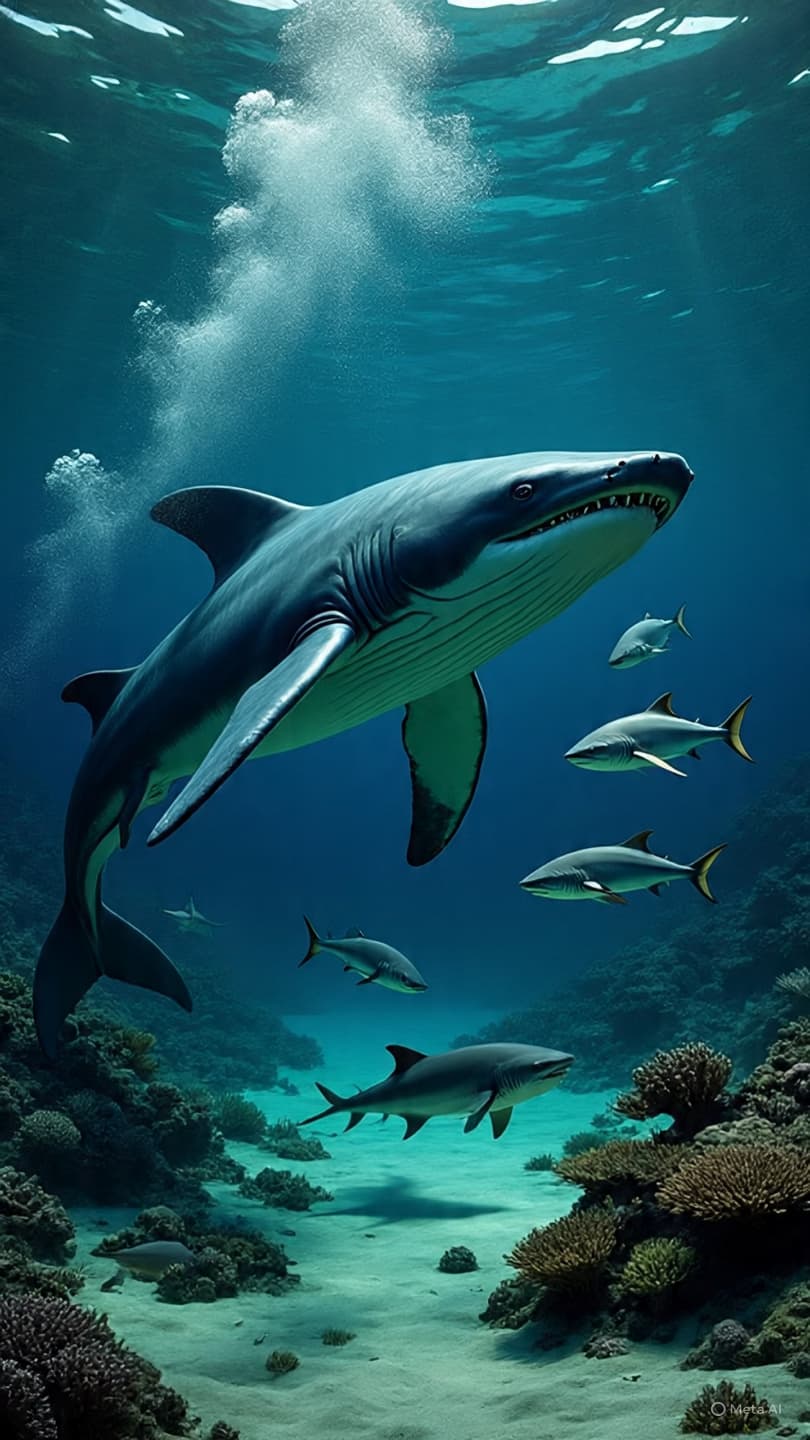
To imagine such scenes is to step into a different version of the North Sea—one not defined by its current boundaries and rhythms, but by a richer and more varied marine life. Whales, moving through these waters, would have shared their environment with formidable predators. The interactions between them, while rarely preserved, were part of a larger ecological balance, one shaped by opportunity, adaptation, and survival.
For scientists, the distinction between hunting and scavenging is not a simple one. Both behaviors leave marks, but interpreting them requires careful analysis. The location of bite marks, their depth, and the condition of the surrounding bone all contribute to the picture. A bite near vital areas may suggest an attempt at predation, while marks on already decayed bone may point more clearly to scavenging. In many cases, the line between the two remains soft, inviting cautious interpretation rather than firm conclusions.
What emerges from this research is not a single narrative, but a layered one. Sharks were not solely opportunistic feeders, nor were they exclusively active hunters. Instead, they likely occupied a flexible role, responding to the conditions around them. A weakened whale might become prey; a dead one, a resource. This adaptability reflects a broader truth about marine ecosystems, where roles are rarely fixed and behaviors often overlap.
There is also a sense in which these findings connect past and present. Modern sharks are known to scavenge when the opportunity arises, even as some species are capable hunters. The fossil record, in this case, does not contradict what we observe today, but extends it, suggesting that such behaviors have deep roots in evolutionary history.
Yet the discovery does more than fill a gap in scientific knowledge. It invites a reconsideration of how we imagine ancient seas. Rather than tranquil expanses punctuated only by slow-moving giants, they may have been places of interaction and tension, where large animals encountered one another in ways that were both ordinary and consequential.
The North Sea, as it exists now, offers few visible traces of this past. Its surface gives little indication of the lives that once moved beneath it. And yet, through careful study, those lives begin to reappear—not as complete stories, but as impressions that hint at something larger.
As research continues, scientists aim to gather more evidence, refining their understanding of these interactions and exploring how widespread such behaviors may have been. Each new fossil, each carefully examined mark, adds another detail to a picture that is still forming.
For now, the findings suggest that sharks in the ancient North Sea were both hunters and scavengers, engaging with whales in ways that reflect a complex and dynamic ecosystem. It is not a dramatic overturning of what we know, but a gentle expansion—one that adds depth to the quiet history of the sea.
AI Image Disclaimer Graphics are AI-generated and intended for representation, not reality.
Source Check (Credible Media Mentions)
Nature Science BBC The Guardian Smithsonian Magazine
Published by Banx Network. This article is part of the Banx decentralized media programme, powered by the BXE token on the XRP Ledger.