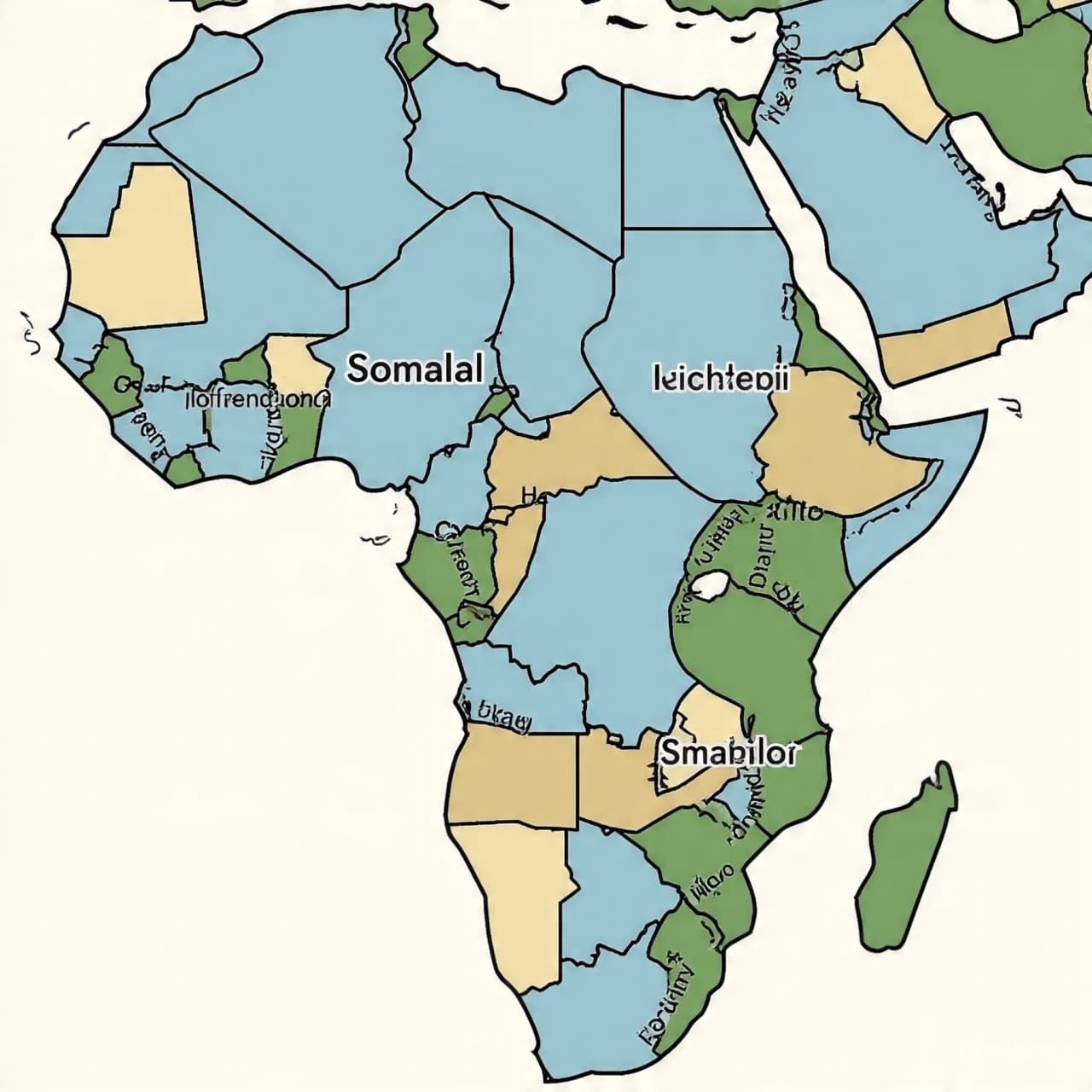
Maps have a way of holding history still, even as politics keeps moving. On the Horn of Africa, borders drawn decades ago continue to carry meanings far heavier than ink on paper — shaping identity, allegiance, and international order. In recent days, those lines have been quietly but firmly reinforced from afar, as Beijing weighed in on a question that reaches beyond Somalia’s shores and into the wider architecture of global diplomacy.
China has publicly opposed international recognition of Somaliland, the self-declared republic that broke away from Somalia more than three decades ago, reaffirming its support for Somalia’s sovereignty, unity, and territorial integrity. The statement, delivered during a routine foreign ministry briefing in Beijing, arrived at a sensitive moment, following Israel’s decision to formally recognize Somaliland — a move that has drawn mixed reactions across Africa and the Middle East.
For China, the issue is framed less as a regional dispute and more as a matter of principle. Officials emphasized opposition to what they described as separatist activity, warning against external actors encouraging divisions within sovereign states. In Beijing’s view, Somaliland’s status should be resolved through dialogue within Somalia’s political and constitutional framework, without outside intervention reshaping borders.
Somaliland, which declared independence from Somalia in 1991 after the collapse of the central government, has maintained its own administration, currency, and security forces for decades. Yet it remains unrecognized by most of the international community, with the African Union and the United Nations continuing to treat it as part of Somalia. China’s stance aligns closely with this prevailing position, reinforcing Mogadishu’s claim to authority over the region.
For Somalia’s federal government, Beijing’s words offer diplomatic reinforcement at a time when recognition of Somaliland by any foreign state risks altering long-standing norms. Somali officials have argued that unilateral recognition undermines regional stability and sets a precedent that could inflame other territorial disputes across the continent.
China’s position also reflects its broader foreign policy approach, one that prioritizes state sovereignty and existing borders, shaped in part by its own sensitivities around territorial integrity. By opposing recognition of Somaliland, Beijing signals continuity in its diplomatic doctrine while safeguarding relationships in East Africa, where it maintains significant economic and political interests.
The debate over Somaliland’s future, however, is unlikely to fade. Supporters of independence point to decades of relative stability and self-governance, while opponents stress the risks of fragmentation in an already fragile region. As global powers weigh in, each statement adds another layer to a question that resists easy resolution.
For now, China’s message is measured but unmistakable: recognition should not precede consensus, and sovereignty, once established, should not be reshaped lightly.
AI Image Disclaimer “Graphics are AI-generated and intended for representation, not reality.”
Sources Reuters The Straits Times Asharq Al-Awsat Al Arabiya English South China Morning Post
Published by Banx Network. This article is part of the Banx decentralized media programme, powered by the BXE token on the XRP Ledger.