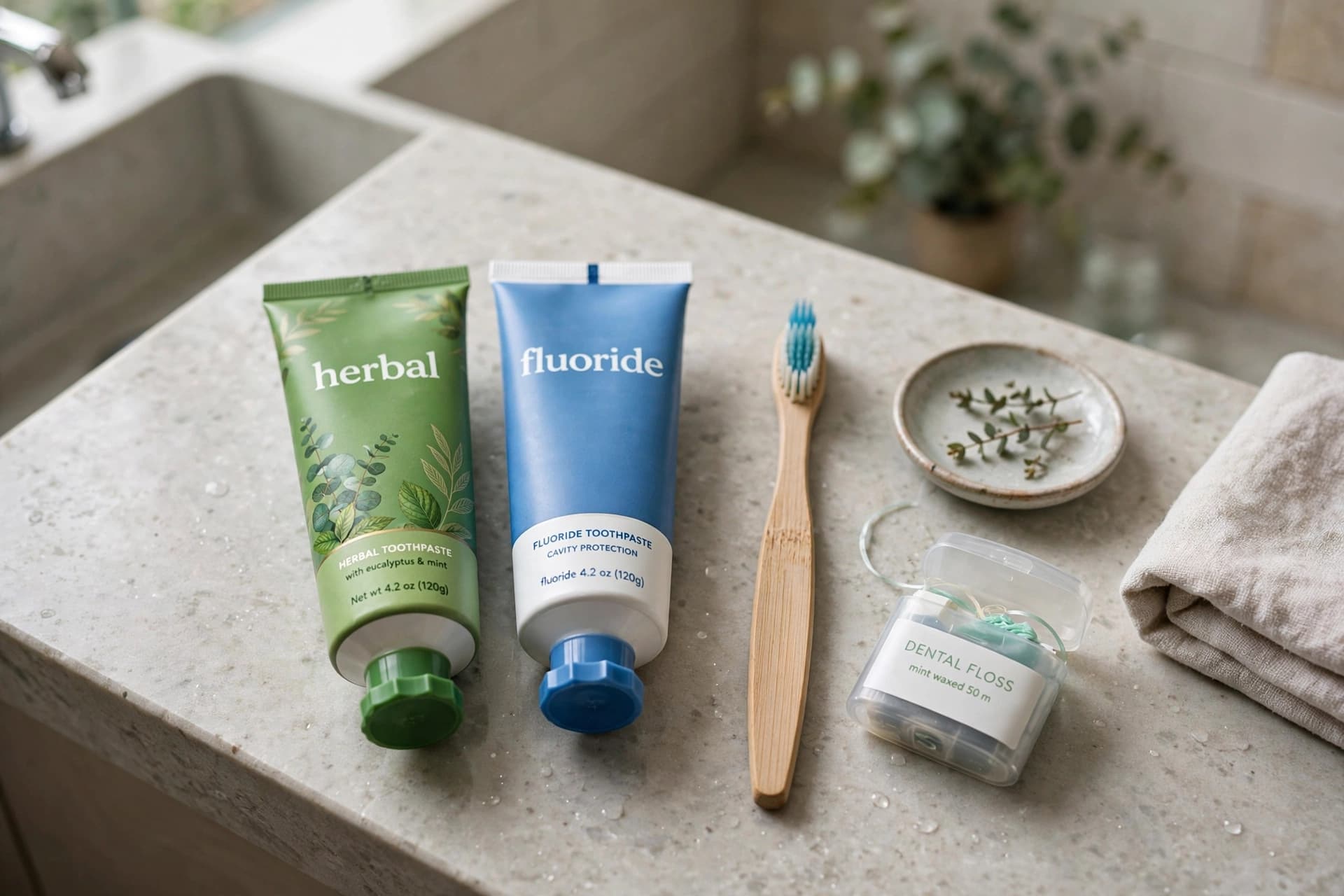
There is a particular appeal to the word "natural"—a promise of purity, of safety, of a return to simpler and gentler ways. It is a promise that the herbal toothpaste industry has cultivated with considerable success, presenting its products as free from the harsh chemicals and artificial additives of conventional brands. But a closer look at the ingredient lists—and the science behind them—reveals a gap between the marketing and the reality. Many herbal toothpastes, research suggests, fall short on the one ingredient that has been proven to prevent cavities: fluoride.
The evidence is not confined to a single study. A 2024 study published in the African Journal of Clinical and Experimental Microbiology examined the antimicrobial activity of several common herbal toothpastes and found that their effectiveness varied widely. Among the tested brands, some herbal formulations showed no activity at all against certain oral bacteria at the concentrations used . A separate review of herbal toothpaste efficacy noted that while some herbal ingredients have antimicrobial properties, the absence of fluoride is a serious concern—particularly for people with limited access to professional dental care .
The mechanism of fluoride's cavity-fighting action is well established. Fluoride strengthens tooth enamel and helps remineralize damaged areas, making teeth more resistant to acid attacks from bacteria. A review of plaque reduction studies found that fluoride achieved a 67.3 percent reduction in plaque scores—the highest among all ingredients tested, including various herbal combinations . Many herbal toothpastes, by contrast, contain only trace amounts of fluoride or none at all. India's consumer affairs guidelines, for instance, set the maximum fluoride limit for non-fluoridated toothpastes at 50 parts per million—far below the 1,000 ppm typically found in fluoridated products .
What makes the situation particularly concerning is the gap between consumer perceptions and the facts. A study examining public knowledge about toothpaste ingredients found that 72 percent of subjects perceived herbal toothpaste to be completely free from chemicals, and 64 percent believed it was safer than conventional toothpaste . But only 18 percent of herbal toothpaste users were aware of fluoride's role in cavity prevention. The study authors noted that the absence of fluoride in herbal toothpaste is a "serious matter" and that the "safety myth" of fluoride has been maintained through advertising and media misinformation .
The clinical implications are not abstract. Without adequate fluoride, users of herbal toothpaste may be at higher risk of dental caries, particularly if they do not receive regular professional dental care. The study authors called for "immediate public health education programs to correct misconceptions" and "enforcement of stronger labeling by regulatory agencies" .
For consumers who prefer herbal products for their taste, texture, or personal values, there is a middle path: toothpastes that combine natural ingredients with effective levels of fluoride. The choice between "natural" and "effective" is not necessarily binary. But the evidence suggests that consumers who assume "herbal" means "better for teeth" may be making a decision based on marketing rather than science—and paying for it at the dentist's office.
AI Image Disclaimer: The visual elements in this article were created using AI generation tools and are intended for illustrative purposes only.
Sources: Bioinformation, African Journal of Clinical and Experimental Microbiology, Indian Consumer Affairs, Dentin Journal
Published by Banx Network. This article is part of the Banx decentralized media programme, powered by the BXE token on the XRP Ledger.