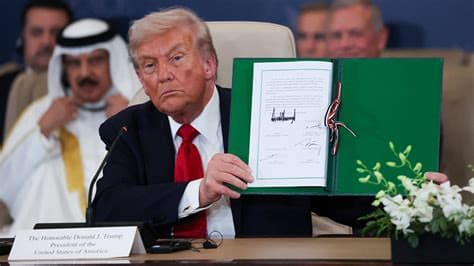
In the delicate architecture of diplomatic discourse, precision is not merely a preference but a necessity. Words carry weight, shaping public perception and international relations with every syllable uttered. Recently, Howard Lutnick found himself at the center of such a linguistic storm after stating that no Americans had died in the conflict involving Iran. The remark, quickly identified as factually incorrect, prompted a swift apology. This incident serves as a gentle reminder of the high stakes involved in public commentary on geopolitical matters, where accuracy is the bedrock of credibility.
The error likely stemmed from a conflation of direct combat casualties with broader military engagements or a misinterpretation of recent data. In the fog of complex international conflicts, details can sometimes become blurred, even for seasoned officials. However, the sensitivity surrounding American lives lost in foreign theaters demands rigorous verification. The immediate correction offered by Lutnick reflects an understanding of this responsibility, acknowledging the pain of families who have suffered loss and the public’s right to truthful information.
Apologies in the political sphere are often scrutinized for their sincerity and timing. In this case, the promptness of the retraction suggests a commitment to rectifying the record before misinformation could take deeper root. It highlights the importance of accountability, not just in policy decisions but in the daily communication that informs the citizenry. By owning the mistake, Lutnick sought to restore trust and demonstrate respect for the gravity of the subject matter.
The context of U.S.-Iran relations adds another layer of complexity to the statement. Tensions between the two nations have fluctuated for decades, with periods of heightened hostility and cautious diplomacy. Discussing casualties in such a volatile environment requires nuance, as any assertion can be interpreted through various political lenses. The correction helps to de-escalate potential misunderstandings that could arise from inaccurate reporting on such a sensitive topic.
For the media and the public, this episode underscores the value of critical engagement with news sources. In an era of rapid information dissemination, verifying claims against multiple reliable outlets is essential. It also highlights the role of journalists and fact-checkers in holding public figures accountable, ensuring that the narrative remains grounded in reality. The collaborative effort between officials and the press helps to maintain the integrity of public discourse.
The families of those who have served and sacrificed deserve nothing less than absolute accuracy when their loved ones are discussed. An error, however unintentional, can feel like a dismissal of their sacrifice. The apology, therefore, is not just a procedural correction but a gesture of empathy and respect. It acknowledges the human cost behind the statistics and the profound impact of these losses on communities across the nation.
As the situation stabilizes, the focus returns to the broader strategic discussions regarding Iran and regional stability. The incident serves as a cautionary tale for all public speakers, emphasizing the need for diligence and care. In the realm of international affairs, where consequences are far-reaching, the power of accurate speech cannot be overstated.
Howard Lutnick’s apology for his incorrect statement regarding American casualties in the Iran conflict highlights the importance of precision and accountability in political communication and diplomatic relations.
AI Image Disclaimer: Please note that any accompanying visuals for this report are artificially generated representations intended for illustrative purposes only.
Sources: Fox Business Politico The Hill Reuters
Published by Banx Network. This article is part of the Banx decentralized media programme, powered by the BXE token on the XRP Ledger.