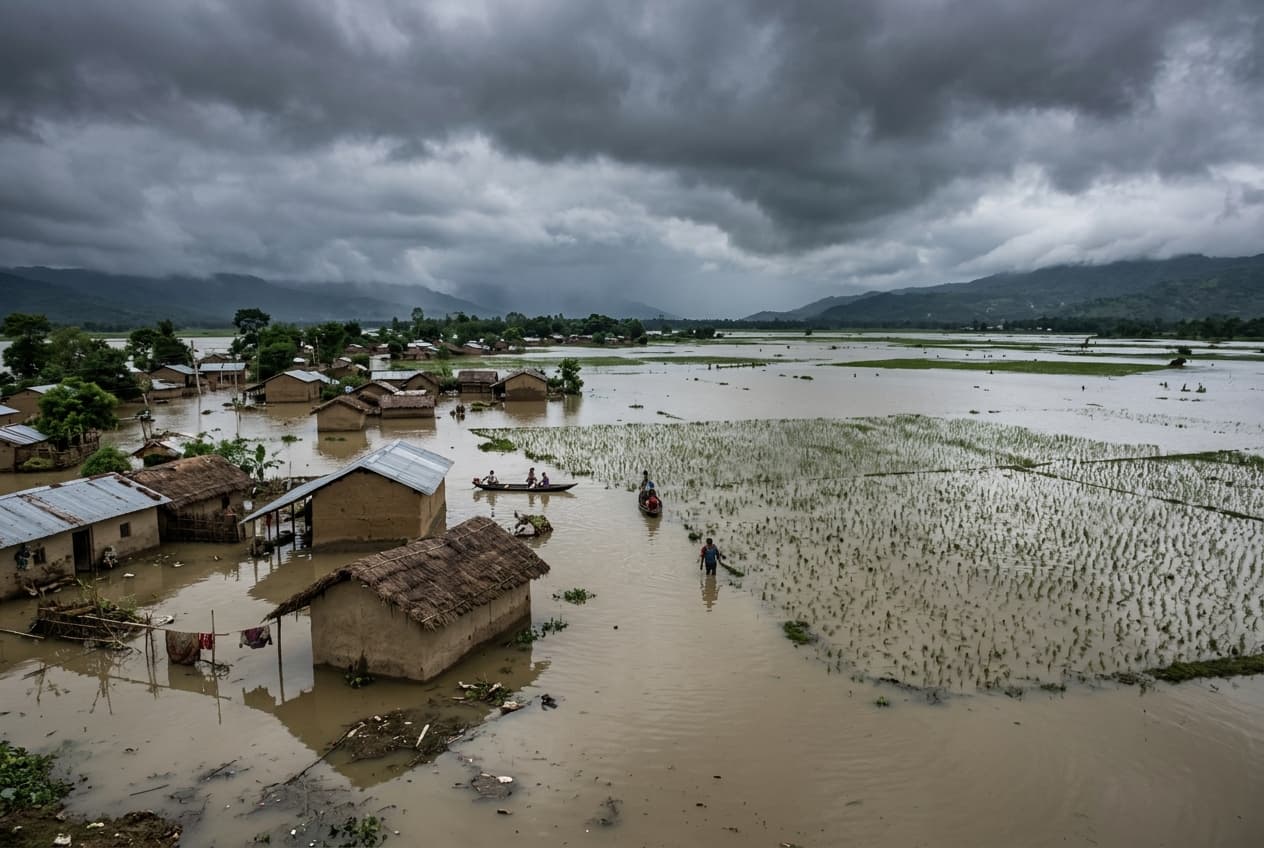
Arba Minch, Ethiopia—Raging flash floods swept through lowland agricultural settlements overnight, destroying standing crops and displacing more than twelve hundred rural households across the southern region.
Continuous torrential rain over the highlands sent massive torrents of water surging down river basins into flat agricultural valleys. Water levels rose several feet in minutes, overflowing earthen banks and inundating mud-brick homes before residents could salvage livestock or stored grain supplies. Families fled toward higher ground in total darkness as floodwaters cut off dirt access roads.
Local emergency committees reported that entire fields of maize, sorghum, and teff lie completely submerged under muddy silt. The loss of standing harvests threatens food security across multiple rural farming communities already facing seasonal economic pressures. Smallholders watched their primary sources of food and income vanish beneath fast-moving currents.
Displaced residents established temporary shelters using plastic sheets and wooden branches along elevated road embankments and school grounds. Local authorities dispatched basic medical supplies, but clean drinking water remains scarce throughout the affected lowland zones. Stagnant floodwaters raise immediate concerns about waterborne disease outbreaks over coming days.
Regional disaster risk management personnel deployed rescue boats to extract stranded villagers caught on isolated patches of high ground. Emergency teams face significant logistical hurdles as washed-out culverts and submerged bridges prevent trucks from reaching remote communities. Communication lines to several rural villages remain severed.
Disaster response officials confirmed that field teams are conducting rapid damage assessments to quantify total crop and property losses. Local administrators appealed to federal relief agencies for emergency food rations, blankets, and water purification tablets. National weather services warn that additional heavy rainfall remains forecast for highland catchments this week.
Community centers and religious buildings opened their doors to host hundreds of families who lost everything in the deluge. Local volunteers prepared basic hot meals using supplies pooled from neighboring villages untouched by the floodwaters. Medical units began administering oral cholera vaccines as a preventive measure in overcrowded shelter areas.
State disaster agencies are attempting to deliver emergency food packs via high-clearance military vehicles where roads remain passable. Civil defense teams continue monitoring river levels upstream as runoff flows south toward the lowland basin. Affected families remain in makeshift camps while waiting for floodwaters to recede.
Published by Banx Network. This article is part of the Banx decentralized media programme, powered by the BXE token on the XRP Ledger.