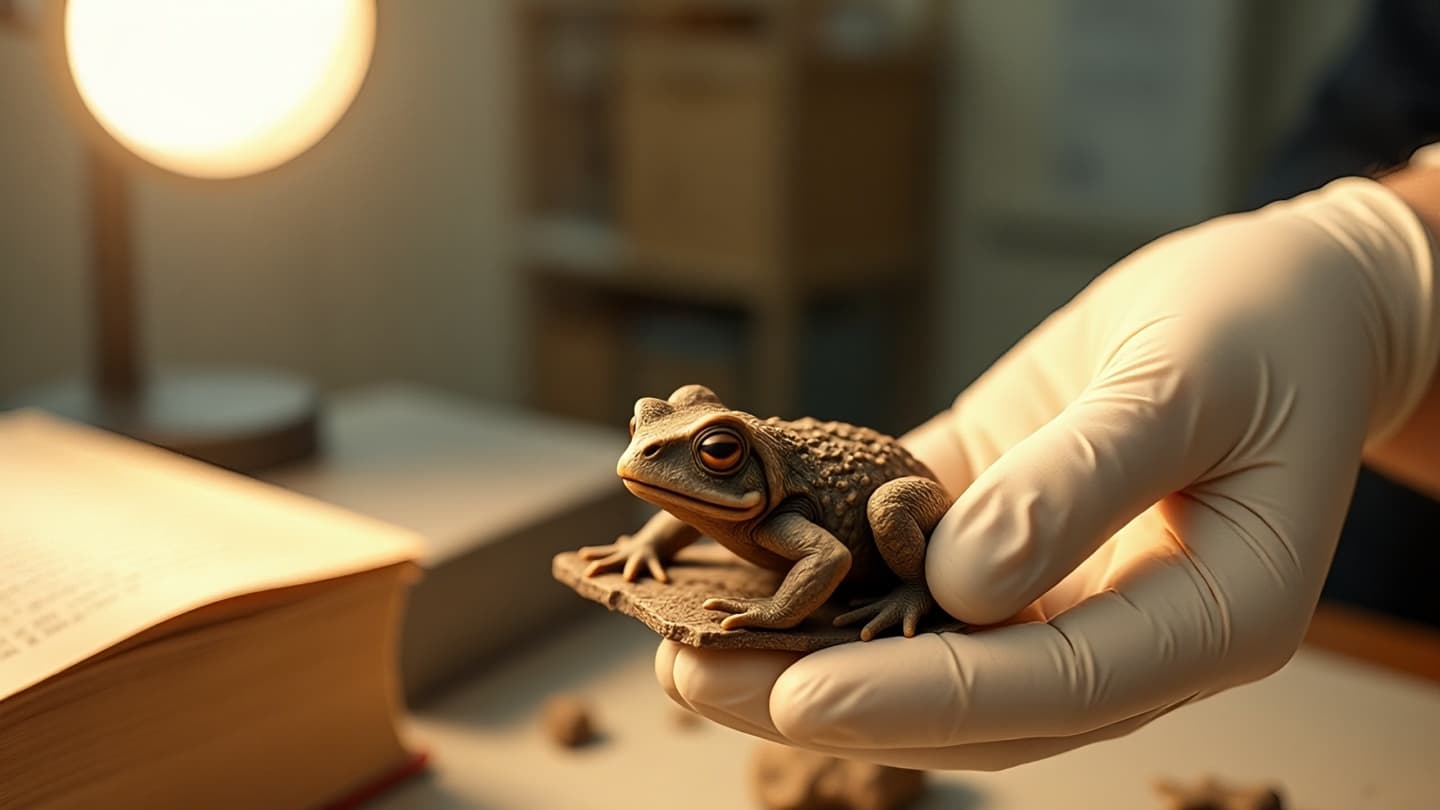
Beneath the bustling streets of Los Angeles lies a prehistoric treasure trove, the La Brea Tar Pits, where time seems to have stood still for tens of thousands of years. For over a century, researchers have sifted through the asphalt, uncovering fossils of saber-toothed cats, mammoths, and giant sloths. But recently, a much smaller creature has stolen the spotlight. A tiny toad, preserved in the tar, has been identified as a new species from the Ice Age, reminding us that even the smallest lives leave a mark on history. It is a discovery that highlights the diversity of ancient ecosystems and the importance of meticulous scientific review.
The toad, named Anaxyrus laevipes or the Western Toad, was found in specimens collected decades ago but only recently analyzed in detail. Paleontologists at the Natural History Museum of Los Angeles County used advanced imaging techniques to study the delicate bones, which had been overlooked due to their size. The discovery reveals that this species has inhabited the region for at least 40,000 years, surviving significant climate changes and environmental shifts.
This finding is significant because it provides a continuous record of amphibian presence in Southern California. Amphibians are sensitive indicators of environmental health, and their fossil record helps scientists understand past climate conditions. The fact that this toad survived the Pleistocene extinctions, which wiped out many larger mammals, suggests a remarkable resilience. It offers clues about how small species adapted to changing habitats and temperatures.
The La Brea Tar Pits are unique in their ability to preserve soft tissues and small bones, which are often lost in other fossil sites. The sticky asphalt trapped animals quickly, preventing decomposition and scavenging. This preservation allows for detailed studies of anatomy and evolution that are impossible with skeletal remains alone. The tiny toad is a testament to the quality of the La Brea archive and the potential for future discoveries.
For the researchers involved, the discovery is a reminder that science is often a process of re-examination. Collections held in museums contain countless unstudied specimens, waiting for new technologies and fresh perspectives. The identification of the new toad species encourages further exploration of existing archives, potentially revealing more hidden gems from the past.
The public reaction has been one of delight and curiosity. The idea that a tiny toad could share its home with megafauna captures the imagination. It humanizes the prehistoric world, showing that it was not just a realm of monsters but also of small, everyday creatures. This connection helps bridge the gap between the distant past and the present day.
The discovery of the Ice Age toad in the La Brea Tar Pits is a charming yet scientifically significant find. It underscores the value of preserving natural history collections and the endless potential for new knowledge within them. As research continues, we may find that even the smallest fossils have the biggest stories to tell.
AI Image Disclaimer: The images provided are AI-generated to visually represent the paleontological and historical aspects of the story.
Sources: Natural History Museum of Los Angeles County Live Science Smithsonian Magazine
Published by Banx Network. This article is part of the Banx decentralized media programme, powered by the BXE token on the XRP Ledger.