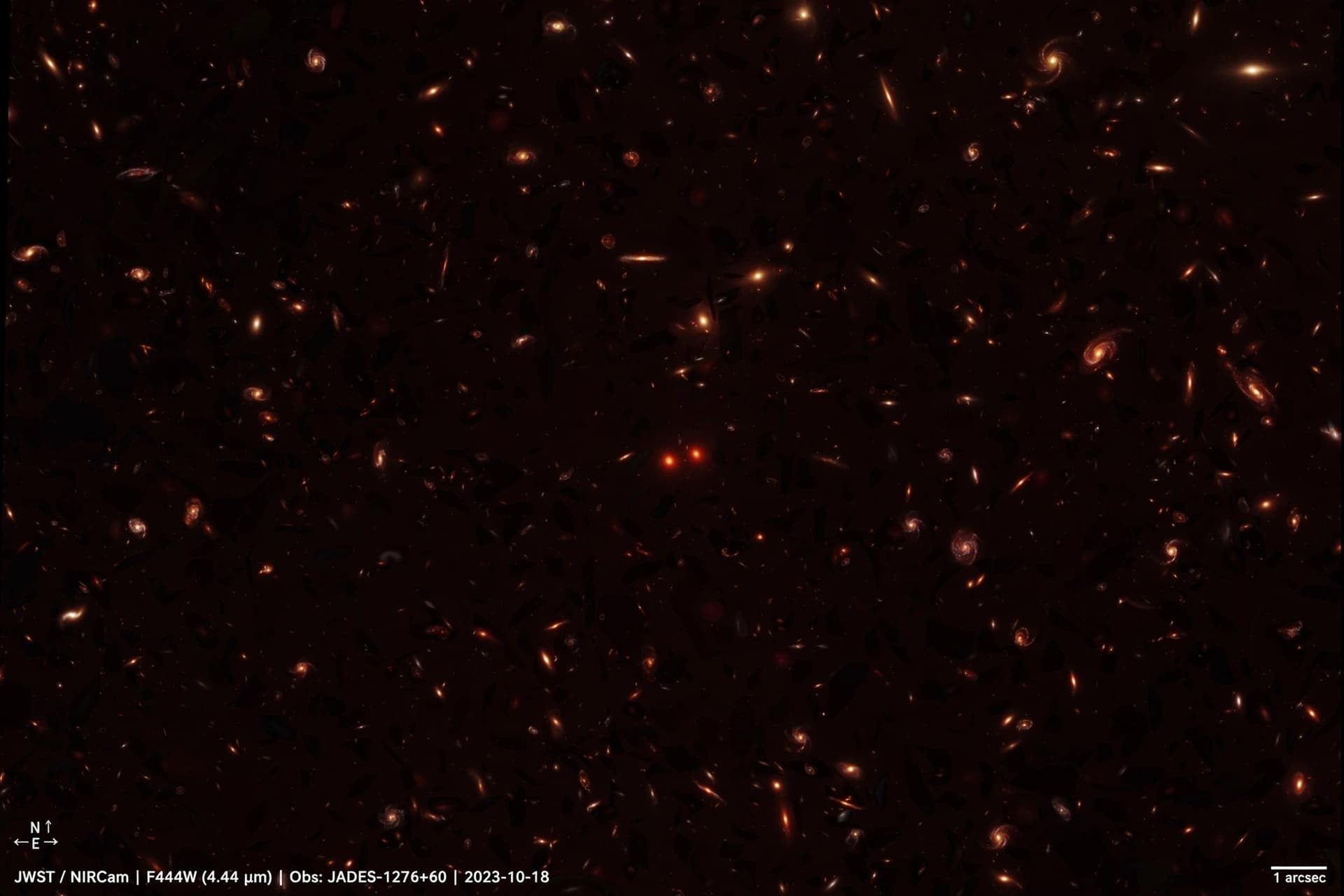
For generations, humanity has lifted its eyes to the night sky, searching for signs of company—signals, lights, whispers across the cosmic sea. But what if the silence isn’t because we are alone, but because the others are just like us?
NASA astrophysicist Robin Corbett has offered a theory he calls radical ordinariness, suggesting that extraterrestrial civilizations may exist, yet remain as technologically limited as humanity. His idea strips away the grandeur of imagined alien empires and brings them down to familiar scale: curious, capable, but still bound by the same physical and technological chains.
According to Corbett, the absence of detectable signals doesn’t prove solitude; it may simply reveal a universe full of civilizations that are trying—and failing—to reach across its vastness. “We may all be shouting into the void with the same primitive microphones,” he writes. Faster-than-light travel, interstellar beacons, and galactic megastructures, he argues, belong more to science fiction than to probable physics.
Corbett’s argument stands as a counterpoint to the traditional optimism of the SETI movement, which assumes advanced species can easily broadcast or visit. Instead, he proposes that evolution and discovery likely advance at similar cosmic rhythms across worlds. “If life follows comparable rules elsewhere, their progress would be incremental, fragile, and familiar,” he notes.
In essence, we may share not just a galaxy with other beings, but a sense of limitation—a mutual infancy beneath the same indifferent stars. The silence, then, becomes not a mystery but a mirror: perhaps the universe is full of listeners, none yet able to speak loud enough to be heard.
AI Image Disclaimer Visuals are created with AI tools and are not real photographs.
Sources NASA Research Notes Scientific American Nature Astronomy The Guardian Reuters
Published by Banx Network. This article is part of the Banx decentralized media programme, powered by the BXE token on the XRP Ledger.