The universe often reveals its oldest stories slowly, carried across unimaginable distances by fragile streams of light. Long before Earth existed, before oceans formed or life emerged, galaxies were already gathering beneath the expanding fabric of space. Now, astronomers say a gravitational lens has helped them observe a galaxy dating back only about 800 million years after the Big Bang.
The discovery relies on a phenomenon first predicted by Albert Einstein’s theory of general relativity. Gravitational lensing occurs when massive objects such as galaxy clusters bend and magnify light traveling behind them. In effect, gravity itself acts like a natural telescope, allowing scientists to see objects that would otherwise remain too faint or distant to detect clearly.
Researchers used advanced observatories, including space-based telescopes, to analyze the ancient galaxy and the distorted light reaching Earth. Scientists believe observations like these provide important clues about how the earliest galaxies formed, evolved, and contributed to shaping the young universe.
The period shortly after the Big Bang remains one of astronomy’s most intensely studied eras. During that time, the universe transitioned from darkness into an age filled with stars and galaxies. Astronomers refer to part of this transformation as the “cosmic dawn,” when the first luminous structures began illuminating space.
The newly observed galaxy appears remarkably distant not only in space, but also in time. Because light requires billions of years to travel across the cosmos, telescopes effectively function as time machines, allowing scientists to observe ancient stages of universal history.
Researchers say gravitational lensing is becoming increasingly important as astronomers search for earlier and fainter galaxies. Powerful instruments such as the James Webb Space Telescope have dramatically expanded humanity’s ability to detect distant cosmic objects, but natural gravitational magnification can push those capabilities even further.
Scientists continue studying the galaxy’s structure, composition, and star formation activity. Such details may help researchers better understand how early galaxies contributed to the reionization era, a critical phase when radiation from young stars transformed the universe’s intergalactic environment.
The discovery also reflects the growing precision of modern astronomy. Combining advanced imaging technology, theoretical physics, and international collaboration, researchers are piecing together a clearer timeline of how the cosmos evolved from its earliest stages into the universe visible today.
Astronomers say future observations could reveal even older galaxies, offering deeper insight into the first generations of cosmic structure after the Big Bang.
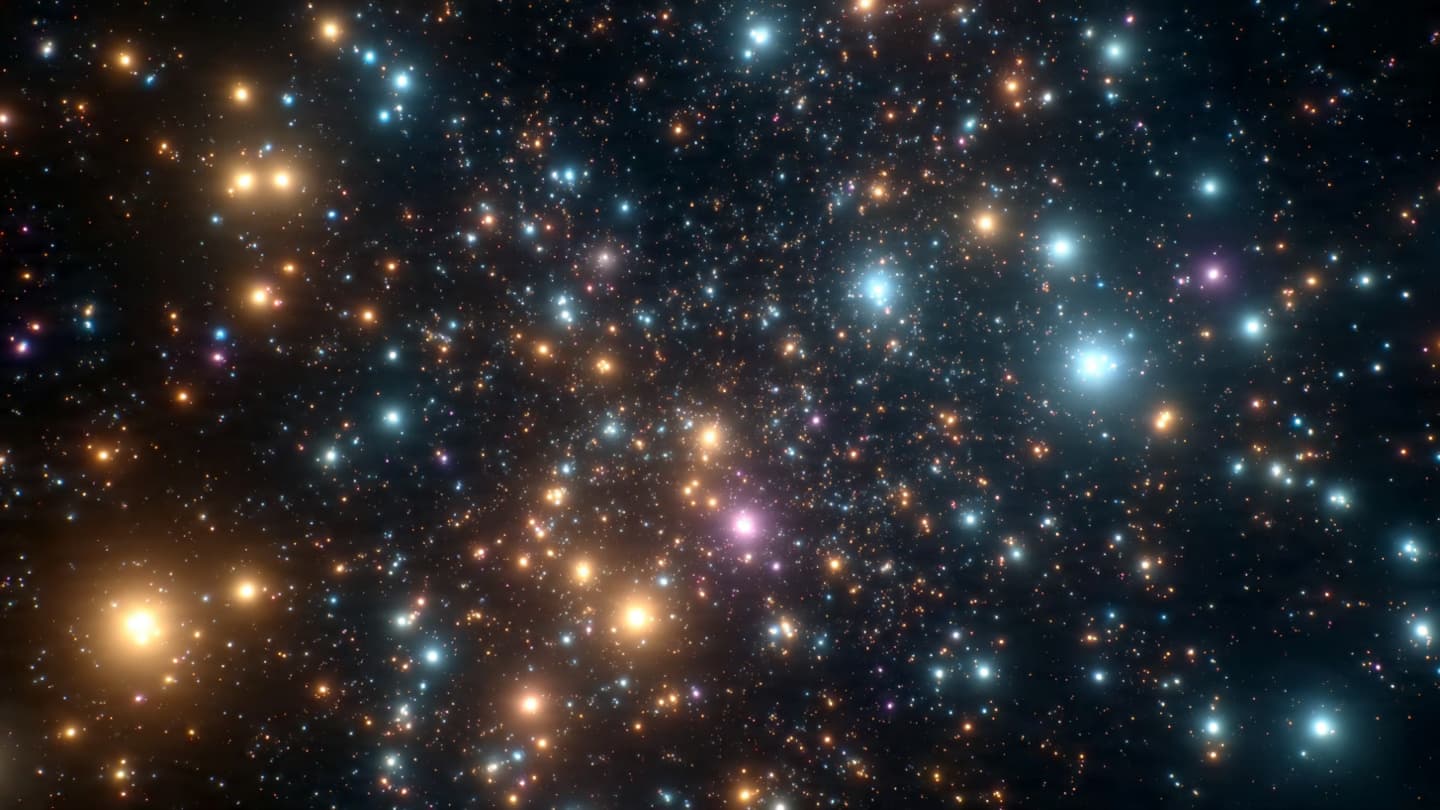
AI Image Disclaimer: Certain astronomical visuals connected to this article were created using AI-generated scientific artwork.
Sources: NASA, European Space Agency, Nature Astronomy, Space.com, Scientific American
Published by Banx Network. This article is part of the Banx decentralized media programme, powered by the BXE token on the XRP Ledger.