Key Highlights
- Peak Viewing:The Leonid meteor shower peaks on November 17-18.
- Historic Event:The 1833 meteor storm remains a significant astronomical event.
- Celestial Show:Mars, Jupiter, Venus, and Mercury will be visible during the shower.
The Leonid meteor shower, a celestial event that occurs every November, is a reminder of the wonders that the night sky holds. This year, the peak viewing nights are set for November 17 and 18, coinciding with a historical memory that dates back to 1833. On that fateful night, observers across North America witnessed a meteor storm that produced tens of thousands of meteors per hour, an event so spectacular that it sparked the birth of meteor astronomy as a scientific discipline.
The 1833 meteor storm was a transformative moment in the understanding of meteors. People who witnessed the event were awestruck, with many believing the world was coming to an end as the sky seemed to rain down fire. This event not only captivated the public but also ignited scientific inquiry into the nature of meteors, shifting perceptions from omens to objects of study. The Leonids have since become a staple of annual stargazing, offering a quieter yet still enchanting display each November.
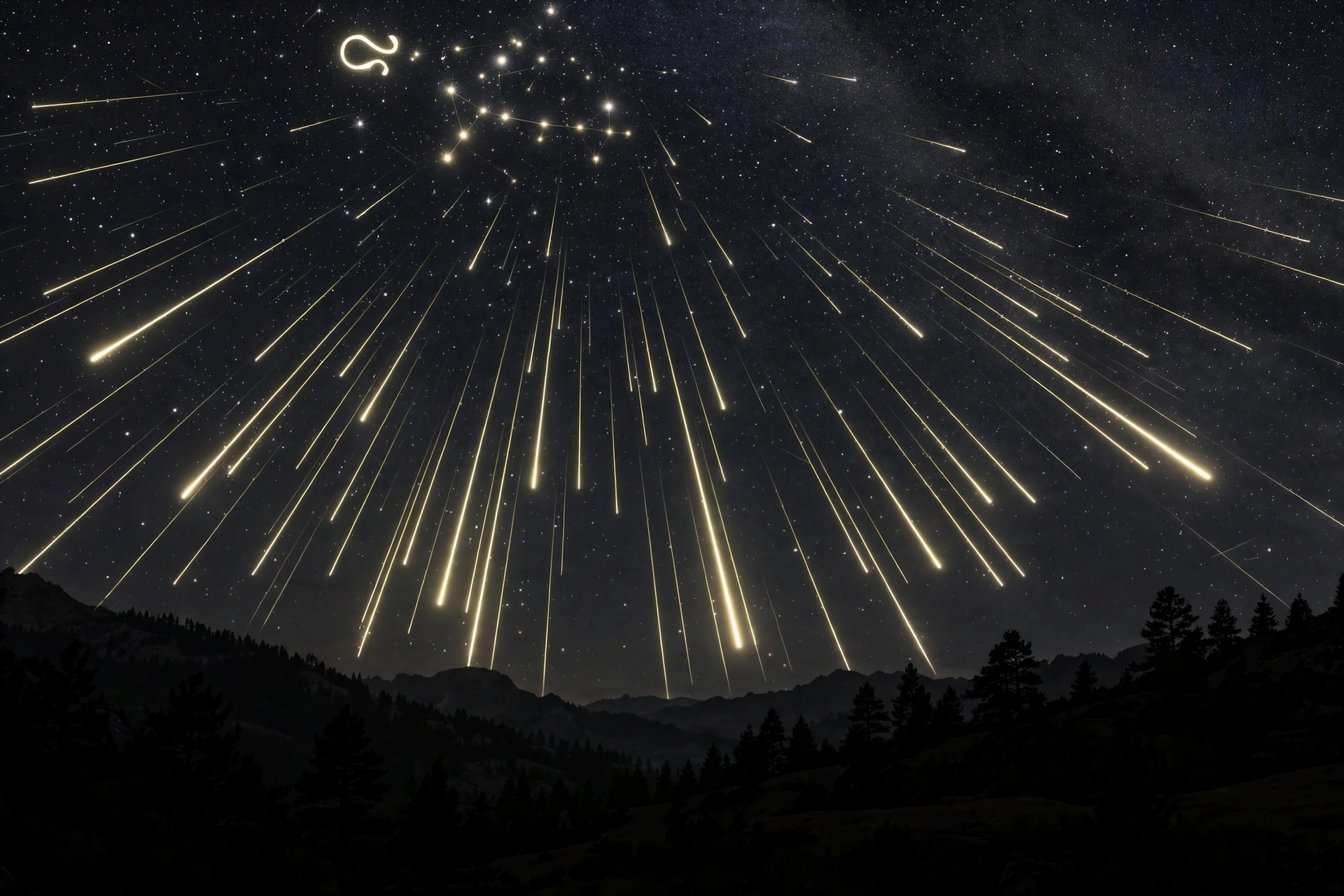
This year's Leonid peak is expected to be modest, with a zenithal hourly rate of around fifteen meteors under ideal conditions. The Moon will set before midnight, providing a dark sky for optimal viewing. The radiant point, located in the constellation Leo, will rise higher as the night progresses, making the early hours of November 17 and 18 particularly promising for North American observers. In Europe, the pre-dawn hours of November 18 will offer the best chance to catch the meteors.
While the theoretical rate of fifteen meteors per hour is enticing, it is essential to approach the experience with realistic expectations. Factors such as light pollution and weather conditions can significantly affect visibility. Observers may see only a handful of meteors in some hours, while others may be pleasantly surprised. The Leonids are known for rewarding patience, encouraging stargazers to embrace the stillness of the night.
Adding to the allure of this year's event, Mars and Jupiter will be visible close together in the constellation Leo, near the radiant point of the meteor shower. Venus and Mercury will also join the celestial display before sunrise, creating a brief planetary parade that enhances the viewing experience. Even if the meteors are sparse, the sky will offer a captivating show of its own.
To make the most of the Leonid meteor shower, find a location far from artificial lights, dress warmly, and allow your eyes to adjust to the darkness for at least twenty minutes. It is advisable to avoid looking directly at the radiant point in Leo; instead, focus on the wider sky to catch the meteors as they streak across your peripheral vision. This act of waiting and watching is a small but meaningful escape from the fast-paced world we live in.
While this year's Leonids will not replicate the extraordinary storm of 1833, the shower serves as a reminder of the dynamic nature of our sky. It carries the remnants of ancient comets, and each November, it allows us to witness the beauty of these celestial remnants. As we prepare for the Leonids, let us remember that even a modest display of ten or fifteen meteors an hour is a reminder of our place in the solar system and the wonders that await us in the night sky.
The images accompanying this article are AI-generated illustrations and are not actual photographs of the Leonid meteor shower.
Published by Banx Network. This article is part of the Banx decentralized media programme, powered by the BXE token on the XRP Ledger.