
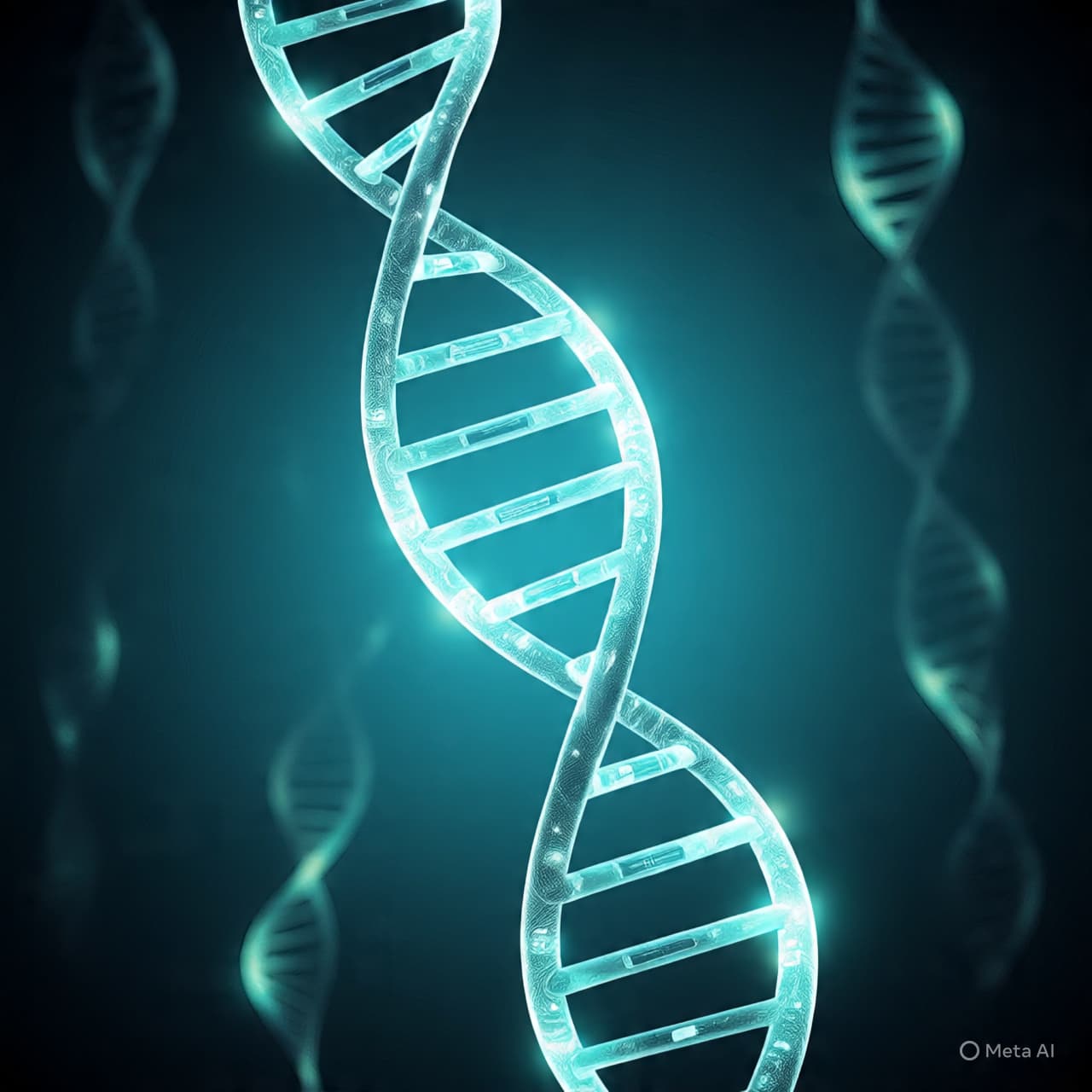
Life has always written itself quietly. In spirals too small to see, instructions repeat, mutate, and endure, carried forward through generations without annotation or explanation. For decades, scientists have learned to read fragments of this script, line by line, knowing the language but not always the meaning. Now, a new reader has joined them.
Researchers at Google’s DeepMind have developed an artificial intelligence model capable of interpreting DNA in ways that edge closer to understanding how genetic instructions translate into life itself. Rather than examining genes in isolation, the model looks across vast stretches of genetic code, identifying patterns that shape how cells behave, adapt, and survive.
DNA has often been described as a blueprint, but the metaphor has limits. The same sequence can behave differently depending on context, timing, and environment. The DeepMind model approaches this complexity by treating the genome less like a static manual and more like a living text, where meaning emerges from relationships rather than single lines.
By training on enormous datasets of genetic information, the system learns to predict how variations in DNA influence biological function. This includes how genes are activated, how they interact, and how small changes can cascade into significant biological outcomes. In practical terms, it could help scientists better understand disease mechanisms, identify potential drug targets, and explore why certain genetic mutations matter while others remain silent.
The promise is not replacement but acceleration. Human researchers still ask the questions, frame the hypotheses, and interpret the consequences. The AI’s role is to sift through complexity at a scale no individual could manage, surfacing connections that might otherwise remain hidden for years.
There is also restraint in how the breakthrough is being presented. Reading DNA is not the same as mastering it. The genome remains influenced by chance, environment, and evolution’s long memory. The model does not decode destiny; it offers probability, insight, and a sharper lens.
What changes is the pace of understanding. The genetic text that once took generations to interpret may now yield its patterns faster, reshaping how biology is studied and how medicine is imagined. In learning to read the recipe for life more fluently, science moves closer to understanding not just how we are built, but how fragile and adaptable that construction truly is.
AI Image Disclaimer Illustrations were created using AI tools and are conceptual representations, not real photographs.
Sources Google DeepMind Nature Scientific research institutions Genomics research community
Published by Banx Network. This article is part of the Banx decentralized media programme, powered by the BXE token on the XRP Ledger.



.jpg&w=3840&q=75 "The Artemis Revolution: How NASA Plans to Build Humanity's Future on the Moon")